Why Did the BBC Take so Long to Cover the Palestine Hunger Strikers?
A glaring omission.
by Joshua Carroll
10 December 2025
Since mid-November, BBC News Online has published three articles and a video about a British couple who went on hunger strike in an Iranian jail.
Another article refers to an opposition figure refusing food in a Tunisian prison, while yet another highlights the case of a Ukrainian former military officer doing the same in an Italian prison.
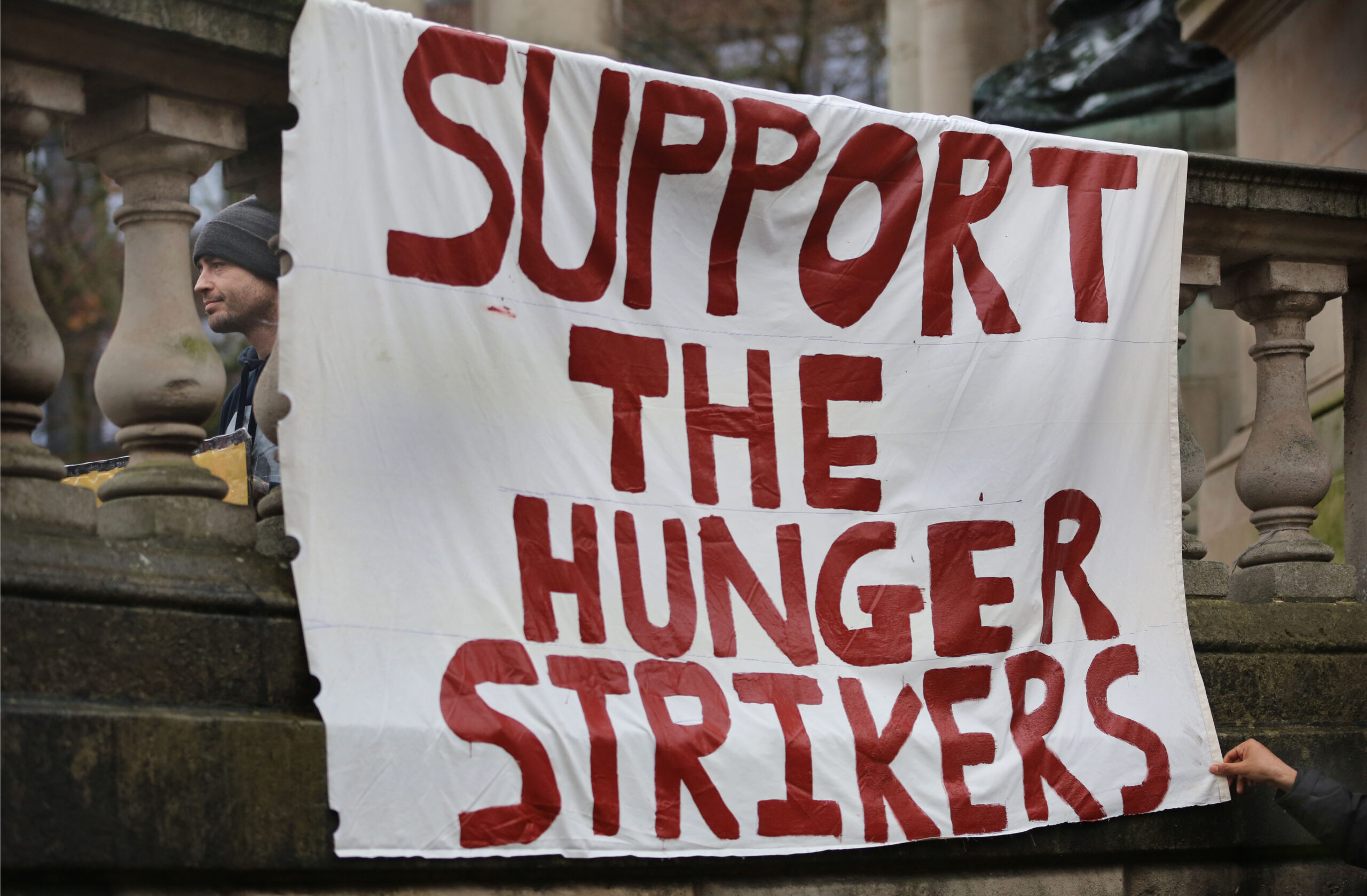
There is not a single mention, however, of the weeks-long mass hunger strike happening in British prisons, organised by inmates awaiting trial for alleged break-ins at military and weapons facilities by Palestine Action.
Seven inmates across five prisons have been refusing food for between six and 38 days, while an eighth, Lewie Chiaramello, has been fasting on alternate days, which supporters say could be life-threatening because he is diabetic.
At least four of the hunger strikers have been hospitalised, with fears that some of the inmates may die.
The establishment media blackout has persisted despite the fact numerous prominent figures and groups have called attention to the story. Green party deputy leader Mothin Ali visited HMP Bronzefield last week and described inmate Jon Cink as “almost skeletal”.
Former Labour leader Jeremy Corbyn and MP Zarah Sultana have also visited hunger strikers, while Pulitzer-winning journalist Chris Hedges and prominent US congresswoman Rashida Tlaib have spoken up on their behalf.
The inmates are among 32 people on remand accused either of damaging two military aircraft at an RAF base in Brize Norton or of taking part in a break-in at an Israeli-owned weapons facility near Bristol. Both actions were aimed at disrupting UK support for Israel’s genocide in Gaza.
Organisers say the hunger strike is the largest of its kind in UK prisons since Irish republicans led by Bobby Sands refused food in 1981.
The BBC’s silence on the current strike has sparked protests outside its offices in London, Manchester, Leeds, Edinburgh and elsewhere.
“The BBC once again shows its willingness to facilitate state corruption, cruelty and injustice by, in the case of the hunger strike, ignoring it completely,” said a spokesperson from Prisoners for Palestine, the group representing the hunger strikers.
“Their silence about this daring political action keeps the public in the dark about what would otherwise rightly be a huge scandal.”
Other establishment outlets have also ignored the story. The Independent has not covered it on its website despite publishing a piece in August about one of the same prisoners during a previous hunger strike. The Telegraph ran a story in October when inmates announced their plans to refuse food, but has not followed up since.
The prisoners, none of whom have been convicted of any crime, are facing lengthy pre-trial detention periods; some are not due in court until January 2027. Supporters believe this is a way of punishing the inmates despite their right to be presumed innocent.
One of the inmates’ key demands is immediate bail. They are also calling for the closure of the UK branch of Israeli arms maker Elbit Systems, the reversal of the ban on Palestine Action, an end to censorship of their communications and a fair trial.
“They could quite easily be released on remand,” Corbyn told Novara Media during a visit on Tuesday to HMP Bronzefield, where his constituent Amu Gib has been on hunger strike since early November.
“What has happened to the principle of fearless investigative reporting by the British media?” he added. “Why can’t they report this case? Why can’t they make a comment about the unusual nature of being held all this time on remand with apparently little prospect that they will be released ahead of the trial date?”
The British government is also silent about the hunger strike. Confronted by protesters on Friday 5 December, justice secretary David Lammy claimed he knew nothing about it.
“I’ve written to David Lammy, so the fact he’s saying he doesn’t know about this is a lie,” Sultana told Middle East Eye.
Lammy has ignored a letter from dozens of MPs asking for a meeting on the situation, sparking criticism from House of Commons speaker Lindsay Hoyle on Wednesday.
“It is totally unacceptable,” Hoyle said. “The ministerial teams need to get their act together.”
The BBC was contacted for comment.
Editor’s note: The original headline of this report ‘Why Isn’t the BBC Covering the Palestine Hunger Strikers?’ has been updated after BBC News later published its first article on the hunger striking detainees.
Joshua Carroll is a writer and journalist.