Trump Wants Control, Not Change, in Venezuela
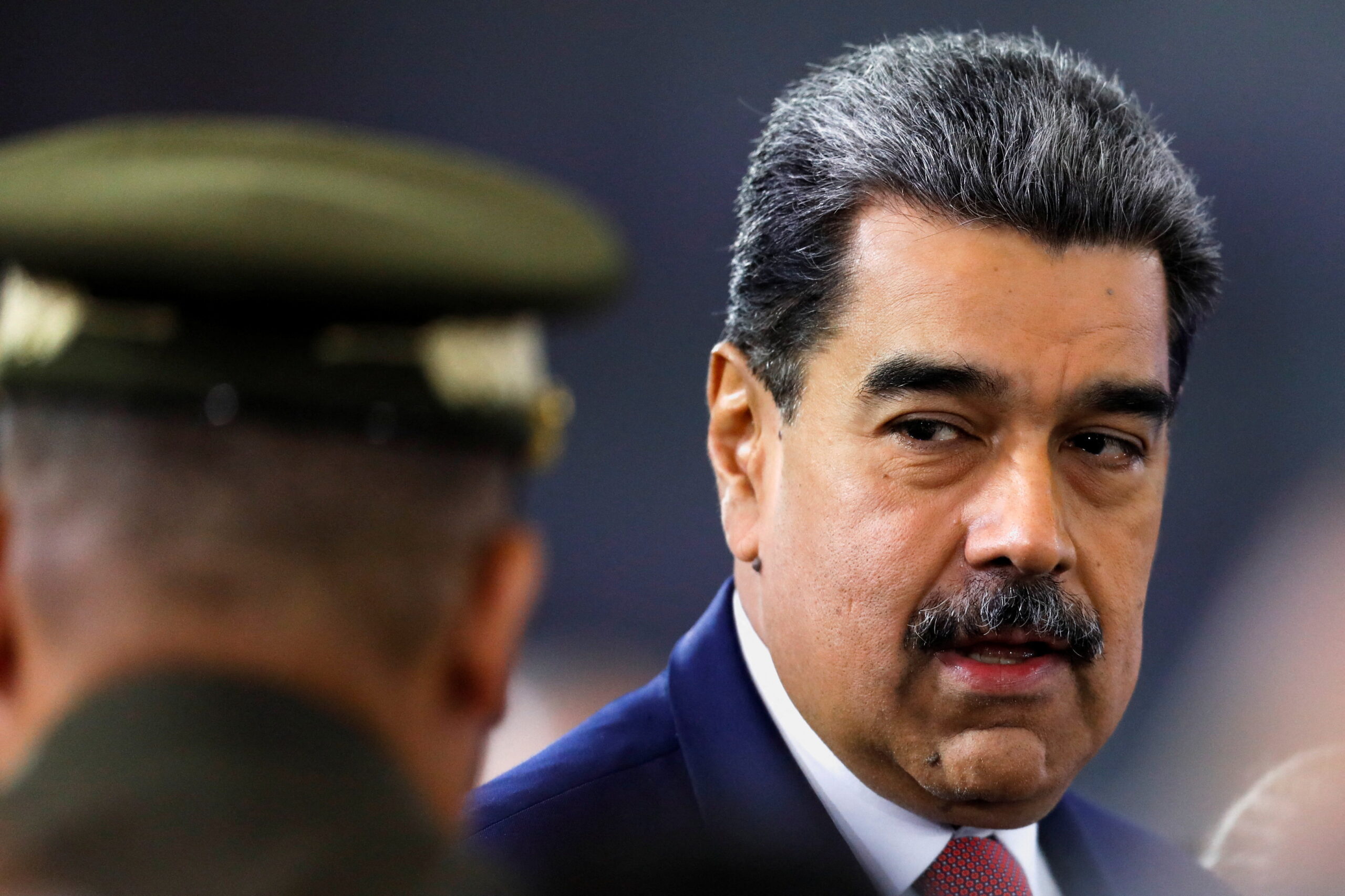
Later today, Venezuelan president Nicolás Maduro and his wife Cilia Flores will face federal drugs and weapons charges in a New York courtroom. That’s a sentence no-one imagined they’d be writing just two days ago. But in the early hours of Saturday, US special forces bombed the country’s north, entered the capital Caracas, and besieged the safe house where Maduro was staying before abducting the couple back to the world’s most powerful rogue state.
The operation took just two hours and 20 minutes; more than enough time, it turns out, to confetti the ragged remains of the rules-based international order. But initial diagnosis of regime change increasingly appears misplaced. Instead, key personnel within the Maduro government, minus its head, appear to be falling neatly into Trumpian line – for now.
Panto season is, of course, long over. But could it be that puppetry is about to make a comeback?
The most striking feature of the US military’s Venezuela operation wasn’t the 150 bombers, fighter jets and surveillance planes deployed to capture Maduro and his wife; nor the rapid targeting of the country’s air defence systems that quickly knocked them out; and nor the terrifying slickness with which the US’s top special operations Delta force extracted the presidential couple from their location.
It was how little prepared for – and perhaps how unresistant to – US intervention the Venezuelan military and political elite appears to have been.
That’s especially notable given how clear US president Donald Trump’s administration has been about its intentions to depose Maduro. From August last year, the US military built up a substantial presence in the Caribbean, allegedly to combat drug-trafficking. That soon turned into targeted murder, with at least 36 airstrikes on alleged drug vessels following – killing 115 people.
The US military also blockaded Venezuelan waters, using special forces to seize an oil tanker in early December, then another weeks later. Just days before Operation Absolute Resolve would see Maduro abducted and at least 80 people killed (32 of them Cuban military or ministerial personnel) in the process, it was revealed that the CIA had carried out a drone strike inside Venezuela, targeting a port on its coast.
Everyone could see the writing was on the wall – not least of all Maduro, who in November called on the country’s air forces to prepare to defend Venezuela. Perhaps that call was heeded; but perhaps those around the former president also intuited a different message, one made explicit by Trump in a post-operation press conference on Saturday: “All of the Venezuelan military and politicians should understand that what happened to Maduro can happen to them”.
While many of the eight million Venezuelans who’ve lived in exile globally since Maduro’s rise to power celebrated the possibility of a return to democracy on Saturday, by Sunday the Trump administration had made its more limited aims pretty clear.
The US would, Trump said on Saturday night and reaffirmed this morning, “run” Venezuela until a “safe, proper and judicious transition” could be guaranteed. In the meantime, he told reporters, (corporate) America First is the name of the game.
“We’re going to have our very large United States oil companies, the biggest anywhere in the world, go in,” he said, “spend billions of dollars, fix the badly broken infrastructure, the oil infrastructure, and start making money for the country.”
No need to wonder which country he meant.
Trump’s vice-president JD Vance went even further, describing Venezuela’s oil – the largest reserve of crude in the world – as “stolen” and demanding it be “returned to the United States”.
That aim appears to involve working with rather than against the longstanding Venezuelan political elite. The country now has a new acting president, Delcy Rodríguez, backed both by Trump and Venezuela’s constitution, and sworn in by the country’s supreme court in the hours following the US attack on the country.
But Rodríguez, Maduro’s vice-president as well as the country’s oil minister, appeared initially defiant on Saturday night, correctly labelling the illegal operation by US forces an “atrocity” and stating: “There is only one president in Venezuela, and his name is Nicolás Maduro”.
Responding to those comments on Sunday, Trump told The Atlantic: “If she doesn’t do what’s right, she is going to pay a very big price, probably bigger than Maduro.” His secretary of state Marco Rubio took a more measured line, saying: “There’s a lot of different reasons why people go on TV and say certain things in these countries, especially 15 hours or 12 hours after the person who used to be in charge of the regime is now in handcuffs.”
According to the New York Times, Rodríguez was long ago picked as a pliant replacement for Maduro, one whose management of Venezuela’s oil industry impressed those close to Trump. Meanwhile, the Sunday Times reported sources close to Rodríguez claiming that the US had offered her several deals to replace Maduro ahead of the attack. They say she refused them.
Adding to the sense that it’s regime control, rather than regime change, that Washington is after was Trump’s rebuff of suggestions that María Corina Machado, a Nobel Peace Prize winner and leader of Venezuela’s opposition, might lead the country. “She doesn’t have the support within or the respect within the country,” Trump said. “She’s a very nice woman, but she doesn’t have the respect.”
Peace prize aside, the Nobel Laureate seemed quite happy to urge on potentially violent regime change on Saturday, immediately calling for Venezuela’s military to ditch Maduro (on Sunday, the army gave its support to Rodríguez). She does seem to have been left out of the loop, though. “Minutes after the attack on Caracas began,” the Sunday Times reported, “a representative for Machado sent a text to a Sunday Times journalist asking them whether they had any information on what was happening”.
If puppetry is, as it seems, the US’s new pastime, then sidelining Machado makes sense. If it’s control you want, it’s easier won from a fragile remnant of the old regime whose survival depends on your patronage than from a newcomer with big ideas, international support and a democratic mandate.
Of course, regime control is just as risky – and potentially just as deadly – as regime change. What begins as fracas may quickly become massacre. While Rodríguez has now called on the US to “collaborate” with Venezuela towards “shared development within the framework of international law”, that’s unlikely to be a sentiment shared by all parts of the country’s establishment. And the framing of Maduro’s rule as a simple dictatorship by many in the media has no doubt obscured the more complex, and potentially dangerous, domestic political cross-currents in Venezuela that could now be unleashed.
It goes without saying that the US’s Venezuelan adventure runs counter to international law. It’s also hardly worth saying, given the west has spent the last two years quiet-quitting the charade of international legal or humanitarian obligations.
The lack of condemnation from British and European leaders to the photos of a sitting head of state blindfolded, handcuffed and in the captivity of a US president who unilaterally bypassed the last remaining checks-and-balances on his power to pursue imperialist control tells you all you need to know about who butters their bread. Many will also now be calculating the benefits of Trump’s militarism to their own strategic and economic aims, not least of all when it comes to Russia.
And speaking of: for other strong-man powers, Trump’s endorsement of might-is-right is a golden ticket for those looking to extend regional control of their own. But you only have to look to Washington to see how emboldening Saturday’s operation has been.
Cuba, threatened Rubio on Sunday, could be next. “Sounds good to me,” is how Trump described a future military operation in Colombia last night. “We do need Greenland,” the president told the Atlantic on Sunday. “Absolutely. We need it for defence.”
We can’t yet know much about what 2026 has in store for us. But just five days in, we can say one thing with certainty: this year is not messing.
Steven Methven is the editor of Novara Live, Novara Media’s nightly news and politics YouTube show.


