Trump’s Venezuela Spectacle Shows US Empire Is in Decline
Performative brute force is all it’s got left.
by Coll McCail
6 January 2026
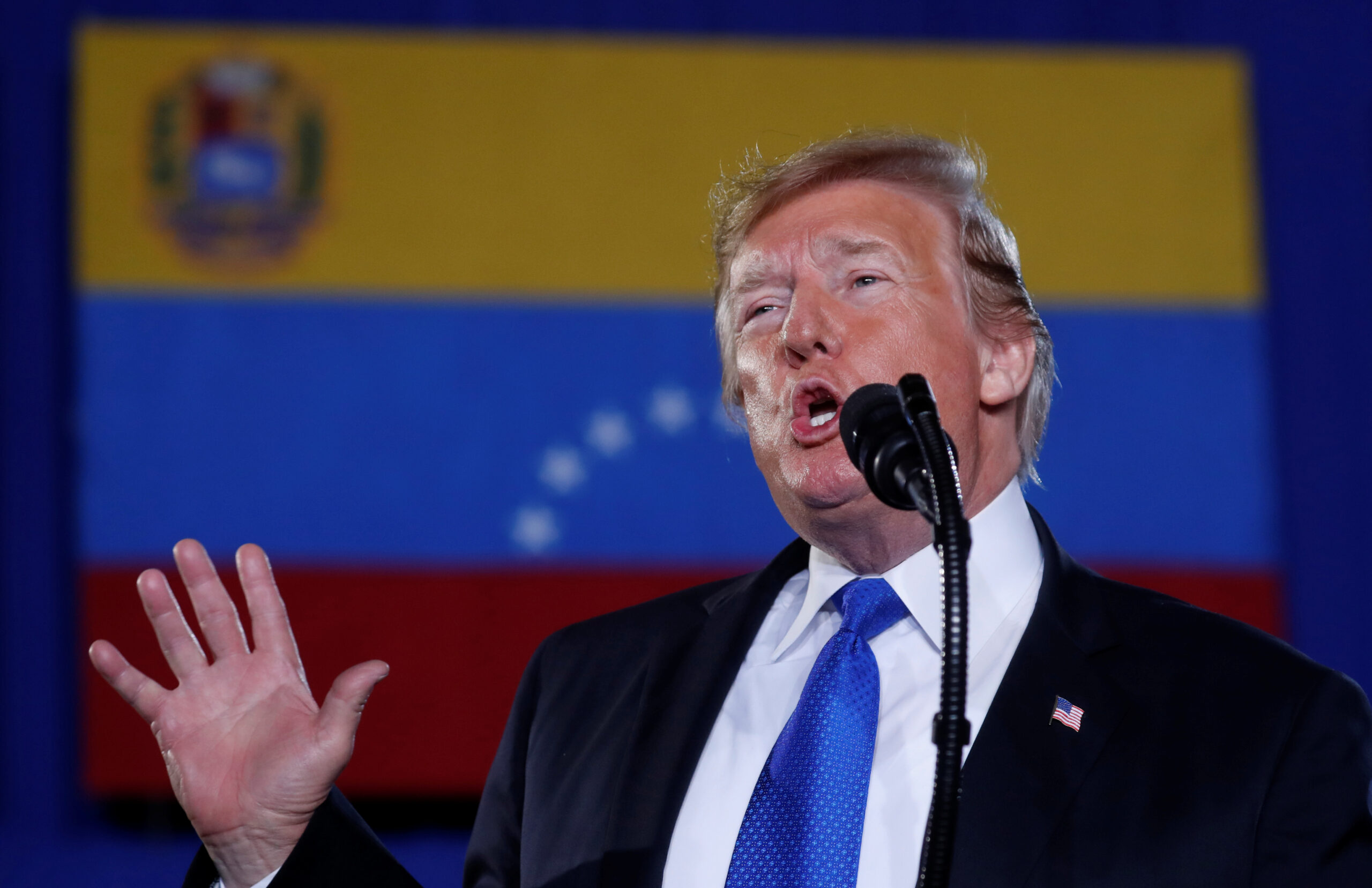
On 3 January, US special forces bombed Caracas. Missiles fired from helicopters left entire neighbourhoods without power, destroyed vital infrastructure and terrorised the Venezuelan people. Delta Force operatives kidnapped Nicolás Maduro, bundling the president into a helicopter, out of his country and onto an aeroplane that would take him to New York City to stand trial as a “narco-terrorist”.
The US security establishment is no stranger to Latin America – or, for that matter, to Caracas, having first attempted to covertly topple the fledgling Bolivarian revolution in April 2002. The events and aftermath of 3 January, however, were different. They were ordered and overseen by officials who would rather parade their impunity than keep their hands clean. In rhetoric and motivation, this intervention recalled less the quiet US-sponsored coup d’états of the naughties than it did the colonial land grabs of the early 20th century.
The prelude to invasion was characterised by weeks of gunboat diplomacy. Venezuela was placed under siege by what Donald Trump called “the largest armada ever assembled in the history of South America”. This naval blockade, enforced by the world’s biggest aircraft carrier, served to exacerbate the corrosive impact of economic sanctions, which even then-secretary of state Mike Pompeo acknowledged had triggered a “humanitarian crisis” in Venezuela in 2019. Oil tankers were seized and their cargo confiscated. Dozens of fishermen were killed by US airstrikes in the Caribbean Sea. Washington even secured temporary use of airports in Trinidad – the southern tip of which is located just 11 kilometres from the Venezuelan mainland – should it require them to begin a bombing campaign.
Each step in this military build-up, like the invasion itself, was put on show for all to see. Not even the extrajudicial execution of dozens of Venezuelan fishermen was concealed from public view. Instead, through a myriad of memes, press conferences and AI slop, the White House offered the world a front-row seat to watch what Trump labelled “one of the most precise attacks on sovereignty”. The administration barely bothered to dress its kidnapping in the language of “freedom” or “democracy”. Such liberal platitudes had, after all, already been buried beneath the rubble of Gaza’s schools, hospitals and universities. Trump preferred a more direct approach: US oil companies, he announced, will take “out a tremendous amount of wealth out of the ground” in Venezuela. The share price of Chevron, Halliburton and Exxon soared accordingly.
The point is this: the mask of empire did not slip; it was willfully discarded. As Washington transformed imperial violence into content creation for a digital age, shamelessness became a viral strategy. Why? Because, in America’s efforts to assert regional dominance and stave off the spectre of decline, performative brute force is imperative. Through intimidation and extortion, the Trump corollary to the Monroe doctrine – or the “Donroe doctrine”, as he calls it – seeks to impress upon the peoples of the western hemisphere that the days of preponderant US power are ahead, not behind, and that America can be made great again. The governments of Claudia Sheinbaum, Miguel Díaz-Canel and Gustavo Petro, Trump hopes, might be subdued by the flagrance and violence with which his administration flouts international and domestic law.
But Latin America will not be brought to heel by shock and awe. Ultimately, the spectacle of lawlessness to which the people of Venezuela have been subject belies a fundamental truth: Washington’s power is waning. “This is our hemisphere,” declared the US state department as Maduro’s show trial began in New York City. America’s foreign policy establishment no longer aspires to unipolarity. Its horizons have narrowed after the US proved unable to contain the rise of China. Even the pursuit of long-term hemispheric dominance may yet prove beyond the capabilities of a society gripped by permanent internal crisis. For now, the US empire makes do by flexing its increasingly atrophied muscles, brandishing its absence of restraint in a desperate attempt to discipline its southern neighbours. The wreckage in Caracas attests to the violence of this process.
Progressive forces should not be intimidated. To kowtow, prevaricate or stay silent in the face of America’s criminal aggression is only to clear the way for a world where might is right. Rather, let us take up the message of Mexico’s President Sheinbaum, who responded to Trump’s threats against Mexican democracy by straightforwardly rejecting interventionism. “Only the peoples can build their own future, decide their road forward, exercise sovereignty over their natural resources, and freely define their form of government,” she said on Monday morning.
These are the principles which led the Community of Latin American and Caribbean States (Celac) to declare the region as a “zone of peace” in 2014. This collective commitment to resolving conflicts through dialogue rather than force, to respect sovereignty and non-intervention, and to construct an alternative regional order based on cooperation rather than domination is the aspiration to which Washington most objects – not least because it represented a united front against the “Donroe doctrine”.
This example, like the Hague Group, provides a model for willing states to band together against US power. Showing solidarity with such initiatives, those of us whose governments would sooner bend the knee to Trump must agitate at home for a sovereign, democratic foreign policy. Only then might the peoples of the world be shielded from the death throes of a collapsing empire.
Coll McCail is a freelance writer based in Glasgow. He is a member of the Progressive International’s Secretariat.


