NHS Trust Spent Millions on Controversial ‘Spy Camera’ Tech Despite Damning Internal Report
Transparency was lacking ‘from the start’.
by Harriet Williamson
15 January 2026
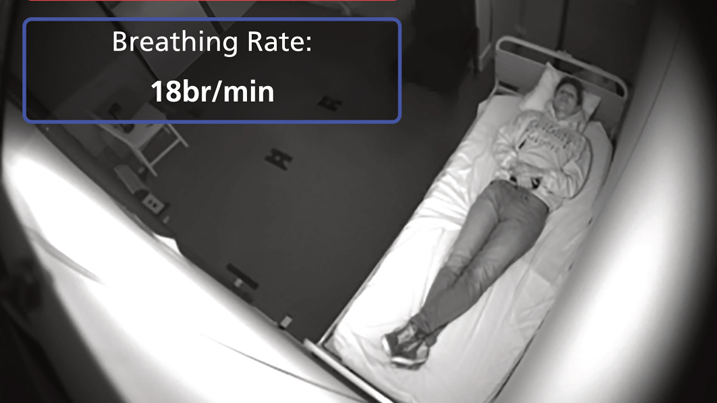
An NHS trust spent over £2.4m on a controversial surveillance system that films vulnerable inpatients 24/7, despite a damning internal report finding major issues with the technology and the company that owns it, Novara Media can reveal.
The technology, Oxevision, has been linked to at least four inpatient deaths in the UK, and “grave concerns” around the use of these ‘spy cameras’ were a key feature of the Lampard Inquiry into deaths within mental health services.
Oxevision is an infrared camera that records patients in their bedrooms 24/7, and has been widely rolled out on NHS psychiatric wards. It records unblurred, identifiable live video of patients that can be accessed by staff via handheld and wall monitors at any time and clipped at staff discretion. Oxevision allows staff to remotely monitor a patient’s pulse rate and breathing without needing to physically enter the room.
Oxevison is owned by LIO (formerly Oxehealth), a private company spun out of Oxford University’s department of biomedical engineering and fast-tracked into public healthcare via the NHS Innovation Accelerator.
LIO says its product provides “enhanced risk management with fewer safety incidents”. However, campaigners, mental health advocacy groups and former patients say the surveillance tech constitutes a clear and dangerous breach of human rights and can be particularly harmful to those experiencing psychosis, paranoia or OCD symptoms.
Ellie, who chose not to give her last name, told Novara Media that Oxevision “increased my distress” while under the care of Tees, Esk and Wear Valleys NHS Foundation Trust’s mental health inpatient services.
“I hid from the camera in the ensuite bathroom and slept next to a toilet,” she said. “Wards already strip you of privacy. The camera made that worse, not better.
“It was deeply humiliating. It increased my sense of powerlessness. It caused conflict with staff and left me feeling terribly unsafe.”
Novara Media can reveal that Oxford Health NHS Foundation Trust (OHFT) identified significant problems with Oxevision’s functioning and the conduct of its parent company in the early stages of evaluating the tech. Despite this, OHFT paid over £2.4m for Oxevision between November 2021 and September 2024 (the point at which its publicly available financial accounts stop), and chose to roll out the technology more widely across the trust.
Defective cameras, security issues and “heated exchanges” between the trust and the company, along with LIO’s lack of transparency “from the start” and concerning levels of the private company’s “control and influence” over the project, were all cited in an OHFT report first submitted in February 2023 by the clinical team tasked with implementing and evaluating Oxevision.
The report, released to campaign group Stop Oxevision under an FOI request and shared exclusively with Novara Media, revealed that Oxehealth switched on cameras on one ward ahead of the project start date before patients were informed or asked for consent. It stated that this “caused immeasurable difficulties for ward staff and loss of credibility in the eyes of patients”.
The report also noted that whether the cameras were switched on or not didn’t align with whether a patient had consented “in most cases”, and some patients weren’t aware of the cameras at all.
The absence of patient consent to – or sometimes even awareness of – being filmed 24/7 in their bedrooms has repeatedly been highlighted by campaigners as a major concern around Oxevision – a technology that is now embedded in NHS trusts.
Numerous testimonials from staff and former patients reveal that inpatients are not told the truth about what the technology does, or incorrectly told it is ‘trust policy’ that they have to be filmed in their bedrooms by Oxevision.
Ellie told Novara Media that not only did she not consent to the use of Oxevision as part of her care, she “actively protested it” – but was told she had “no choice”.
“What made it worse was that staff treated me with disdain and showed no care about how distressed the camera made me,” she said. “They treated me as though I was being unreasonably difficult rather than responding to how it was affecting me.”
In the Lampard Inquiry into deaths in mental health services under Essex Partnership University NHS Foundation Trust (EPUT), EPUT admitted that staff relied on assuming patients’ “implicit consent” to being filmed by a camera in their bedrooms and conceded that it “should have done better” to ensure and record consent. EPUT also said “there is the possibility” that Oxevision is being misused, not just at EPUT, but at all trusts using it.
Oxevision allows live video footage of a patient in their bedroom to be accessed by staff at any time. Staff can press a button to view 15 seconds of live feed and although the limit has been cited by Oxehealth as a protective factor for patient privacy, there is nothing to stop staff repeatedly pressing the button to view live footage or from capturing the footage on their own devices for malicious purposes.
The OHFT report also highlighted that Oxevision’s parent company insisted on controlling the evaluations the trust carried out regarding the technology. It read: “The Early Insight report is highly prized and valued by the company as it forms the bedrock of their sales and marketing drive. They therefore guard and defend this area fiercely.”
The report also stated that the company was asking “leading” questions about their technology on survey forms, “presumably to improve survey scores”. It added: “Successful business relationships are built on trust, and this was not evident in the company’s responses and approach.”
This, coupled with a lack of independent research conducted into the value and efficacy of Oxevision, raises serious questions about its performance and acceptability.
A 2024 review of the evidence base behind surveillance technologies in mental health inpatient settings found there is “insufficient evidence” that this tech is achieving its promised aims – including cost savings and safety improvements. The review flagged that most studies were low quality and many were affected by conflicts of interest.
The business case for using Oxevision appears equally unclear in the OHFT report, which reveals a conflict between the trust and the company over whether to explicitly say that the surveillance tech is being used to replace staff.
Oxevision is not licensed to replace staff, but the trust still notes in its report that this is what they’re using the technology for, estimating that between 2021 and 2024, it should save £709k on staffing with Oxevision.
The report also stated that LIO claimed to have “authored the trust business case”, causing “clear risks of a conflict of interest and governance concerns”.
A spokesperson for OHFT told Novara Media: “Oxford Health has been working with LIO (previously Oxevision) for a number of years now, it is available to all patients on our mental health wards. The decision to employ the system was entirely to enhance patient recovery, experience and safety.”
Despite OHFT’s own report saying that the business case for Oxevision was approved on the basis of “potential savings from reducing staffing”, responding to a request for comment from Novara Media, a spokesperson added that “[Oxevision] has not replaced any other care delivered and so has not provided any cost savings,” and insisted that “the system is only employed where patients give explicit informed consent”.
A Stop Oxevision spokesperson called the contents of the OHFT report and the trust’s subsequent roll-out of Oxevision “unfortunately unsurprising”.
Stop Oxevision told Novara Media: “As Oxford Health’s own documents fail to demonstrate any clear benefit of the technology, the infringement it poses on patients’ right to privacy does not appear proportionate. It raises serious questions about the objectivity of the decision-making by Oxford Health.
“We have submitted a formal complaint to Oxford Health and call on them to commission an external review of the use of Oxevision and their decision-making surrounding its installation.”
Nine months after the trust’s evaluation report was submitted, its chief medical officer Karl Marlowe told a board of directors meeting that Oxevision was being rolled out across all the trust’s general adult wards. Marlowe was minuted as saying that “despite the ethical questions/discussions that had taken place with the 17 trusts already using it, the decision had been taken that it was better to have an accurate observation than not”.
Marlowe also said the resolution of the Oxevision video camera was “exceptionally low so there were no issues with privacy being breached”.
This has been found to be untrue. In fact, a clinical study into Oxevision’s use had its ethical approval retracted by the health research authority because the Oxevision footage was not anonymous even when blurred, and patients whose footage was used did not consent to its collection – or even know that their most vulnerable moments were being gathered for use in an academic study about self-harm.
The study, conducted by London South Bank University in partnership with Oxevision’s parent company, was deemed unethical and halted after a complaint from Stop Oxevision.
In the Lampard Inquiry, LIO also acknowledged for the first time that cameras in patients’ bedrooms recording 24/7 could possibly “constitute a very significant invasion of privacy”.
Stop Oxevision spokesperson Hat Porter called the technology a “superficial quick fix for wider systemic issues” in the group’s evidence to the inquiry, and said many patients’ experiences of it were “intrusive, undignified, dehumanising and traumatising”.
Porter added that it “instilled a constant sense of surveillance” and there was no way for patients to know when staff might be looking at the video feed of their room.
Oxevision is currently being used in around half of all NHS mental health trusts in England providing inpatient care, according to its manufacturer.
The National Survivor and User Network (NSUN) and Stop Oxevision are calling on all trusts, including OHFT, to end their use of Oxevision with immediate effect due to concerns that it is not compatible with safe, lawful and patient-centred care.
Lampard is the first public inquiry in the UK ever to specifically look into the deaths of mental health patients, focusing on the deaths of 2,000 people under the care of NHS mental health services in Essex between 2000 and 2023.
LIO is planning to roll out a whole-hospital “patient monitoring platform” for mental health units this year.
LIO chief executive Todd Haedrich described the new product as a “fully integrated, whole-hospital solution – purpose-built for the complex realities of inpatient mental health – with powerful new capabilities that help providers deliver consistently high standards of compassionate, patient-centred care”.
A LIO spokesperson told Novara Media: “Oxehealth is committed to ensuring every mental health inpatient receives the safest possible care. We have partnered with Oxford Health for several years to successfully help their clinical teams enhance safety while providing therapeutic, personalised care to their patients. To support healthcare providers, national guidelines have been established by the Care Quality Commission (CQC) to guide the implementation and effective use of our platform.”
A spokesperson for Tees, Esk and Wear Valleys NHS Foundation Trust, said: “LIO (formerly Oxehealth) supports patient safety on our wards. We work with our patients to help them understand how and why it is used, while listening to and acting on any concerns.
“Consent is an important part of how we use LIO and we continue to evaluate and monitor the benefits of the system alongside people with lived experience.”
Harriet Williamson is a commissioning editor and reporter for Novara Media.