Melania Is Far-Right Propaganda. Thankfully, Nobody’s Buying It
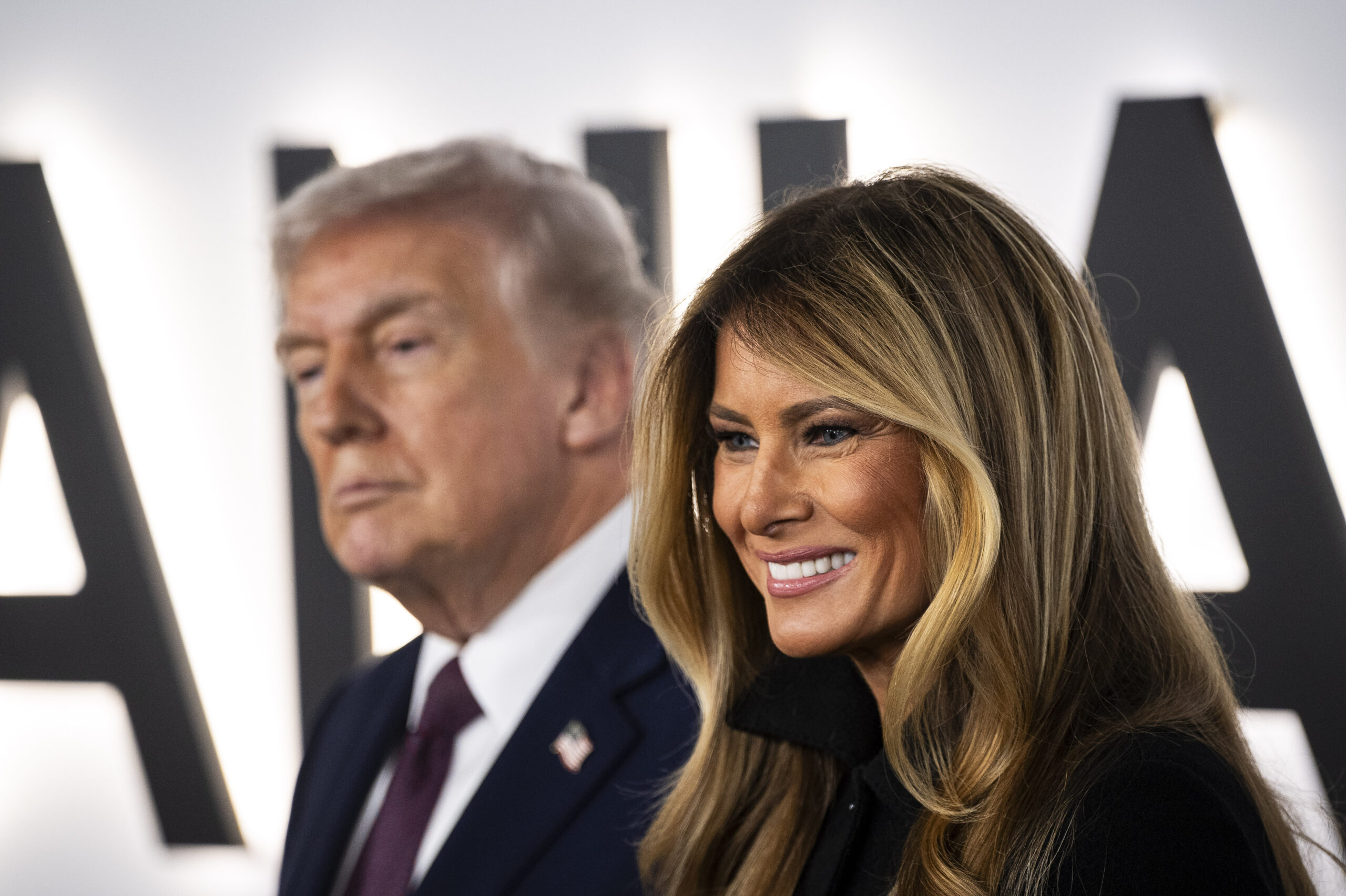
It’s easy to stick the boot into Melania – everyone is. It’s also cathartic and fun, so let’s go. The feature-length documentary, released in the UK on Friday, follows Donald Trump’s third wife as she waits to become first lady for the second time. Widely derided as a “docu-bribe”, Jeff Bezos reportedly bought the rights for $40m (£29m) and proceeded to spend almost as much ($35m, or £25m) on marketing the film, all while laying off 16,000 Amazon workers and hundreds of Washington Post employees. While the film’s US ticket sales have been solid for a documentary (though still pretty poor given its stratospheric marketing budget), sales in the UK have been described, understatedly, as “soft”, with reports of Craigslist adverts offering $50 (£36) to people to sit through it.
I was the third person to book for its first screening at Vue’s flagship cinema in central London, doing so only because no press tickets were being issued. This was obviously supposed to stop Melania getting the negative publicity its makers know it deserves, but it just made me more resentful of watching a documentary about a would-be dictator’s wife funded by a billionaire and directed by an alleged rapist (Brett Ratner denies the allegations).
Things got off to a bad start. The 12.05pm screening I originally booked into was cancelled because “we haven’t received the content yet” (it was being delivered by Amazon, so maybe the driver knocked, got no answer, left it outside and someone nicked it). I walked off, laughing, and someone stopped me, asking if I “was a journalist as well”: Vue had turned away six people, seemingly all critics. They told me the 3.10pm was off, but another journalist messaged me to say Vue had received the film after all, so I snuck in halfway through. I expected a room full of journalists gleefully ripping the piss out of it, but the barren audience just looked bored; I went to the 4.30pm with two other people, both of whom somehow managed to sit through the whole miserable charade.
Look, I love film. I love the golden age of Hollywood and the New Hollywood of the 1960s. I love German Expressionism, Soviet montage, the French Nouvelle Vague and Romanian New Wave. I love prolonged experimental works where a camera pans around a landscape for three hours. The last film I watched was a 30-minute video of a man sat in front of a TV, and it was brilliant. Melania, however, makes Michael Owen’s 2007 promotional video for the Dubai Tourist Board look like Around the World with Orson Welles. It made me want to dig up Thomas Edison and the Lumière brothers, reanimate them and force them to kill each other again.
The film isn’t so bad it’s good, or even funny. Ratner is an experienced director, so it’s competently made, technically – no Señor Spielbergo-style laughs here. Melania has zero self-awareness, obviously, but the only time I yelled “fuck off” was when she talked about being an immigrant, saying, “No matter where we come from, we are bound by the same humanity.” This is one of a surprisingly large number of liberal-sounding platitudes uttered in Melania, in which she surrounds herself with Black and brown people and fellow migrants; Ratner displays her image alongside portraits of Democrat icons Eleanor Roosevelt and Jacqueline Kennedy. Obviously, such woke-washing feels especially crazy-making amidst ICE executions in Minneapolis and concentration camps in El Salvador. There is no reflection on what it means to hold power – just vapid, AI-sounding nonsense such as: “Being part of a historic moment like this reminds you of what an honour it is to stand before all those people”, when she gets to the inauguration after what feels like 20 years rather than days.
Family is important to Melania. We hear a bit about her 19-year-old son Baron being “a very confident young man”, but nothing from Baron himself. We see her arm-in-arm with Donald and hear her saying, “People tried to murder him, slander him, incarcerate him, and here he is” (that this is happening because her husband tried to orchestrate a far-right coup doesn’t warrant a mention.) However, he tells her about the election result over the phone, asking, “Did you watch it?” only to be told that she had other work to do. They go to a funeral as President Carter died “unexpectedly”, aged 100) the footage is overlaid with Melania talking exclusively about her mother’s death a year earlier. In so doing, she somehow manages to make her loss something to resent, rather than a moment of empathy.
Melania wants us to know she cares about wider tragedies: she watches the “unimaginable” California fires and tries not to smirk as she meets the Israeli wife of a man held by Hamas. She has political interests, talking to Brigitte Macron about “cyber-bullying” and Queen Rania of Jordan about “a coalition of world leaders to help children” (which children? How?) Mostly, though, Melania worries about what to wear to the inauguration. One of the few moments of levity, meant to humanise its dead-eyed subject, is unintentionally revealing. Driving to Washington, Ratner asks Melania for her favourite “recording artist”. She names Michael Jackson, whom she “met with Donald once”. It’s clear this is a government by abusers, for abusers, and Melania is launching a make-work programme for people who’ve been “cancelled” for the humble crime of sexually assaulting women, or of being part of an elite paedophile ring.
As propaganda, Melania is ham-fisted. It’s not charming, funny or clever, not even engaging. It doesn’t do the typical far-right thing of trying to own the libs. It’s not clear who it’s for or what it will achieve. It doesn’t matter: the main thing it signifies is that this time, the Trumps will be even more shameless in exploiting their position for personal gain, and won’t be held to account for anything – all the people who tried to rein them in during their first term are gone, replaced by sycophants and fascist true believers. Melania reportedly got $28m (£20m) of Bezos’ $40m, and it’s already clear the film won’t come close to breaking even, but Bezos won’t care – flattering these egomaniacs’ egos gives him influence over US policy, worth far more than the pocket change he put into this dreary documentary. Outside a few red states and Melania’s native Slovenia, ticket sales have been better than the most catastrophic predictions, although still not great (and we can’t know who is buying them), and it’s worth remembering that people in Germany didn’t flock to Nazi propaganda film Triumph of the Will either. With barely anything besides One Battle After Another or South Park engaging with the incipient fascism, the Americans will carry on watching apolitical Hollywood films, and likely so will everyone else.
Trump is trying to impose himself on the arts – starting with the recently renamed and even more recently shuttered Trump-Kennedy Centre – aware that creative people largely hate him and see him as the embodiment of everything they oppose in politics and culture. But Trump is American politics and culture: he is European colonialism and white suprematism, patriotic country music and corporate pop, WWE wrestling and reality TV, a cameo appearance in Home Alone 2 and Sex in the City. Felix Biederman of Chapo Trap House once said running against Trump is like running against television, but really, it’s like running against the entirety of the US entertainment industry, on which the country’s global soft power was built. From the start, US feature film has been intertwined with far-right politics – the first popular motion picture, DW Griffith’s The Birth of a Nation, chronicled the civil war from a Confederate perspective so successfully that it revived the Ku Klux Klan.
Despite its abhorrent politics, The Birth of a Nation is incredibly well-made. Resisting its politics is hard work, given the skilled editing and storytelling Griffith uses to position viewers alongside its white protagonists. Melania is, thankfully, no more than competently made; the same goes for ‘The Story of America’ video series that Trump has commissioned to celebrate the 250th anniversary of American independence this 4 July. The widespread ridicule of Melania means the Trump administration might be less inclined to hire another alleged sex offender to churn out some nationalistic horror. There’s no need: Requiem for a Dream and Black Swan director Darren Aronofsky, who one might have hoped would know better, has just made 1776, a day-by-day account of the American Revolution. It sounds like utter dogshit, made by the type of blithe liberal who thinks the logical conclusion of American settler colonialism and global imperialism could have been anything other than its present situation. I draw the line at reviewing it.
Juliet Jacques is a writer, filmmaker, broadcaster and academic.