Trump Isn’t Destroying the International Order. He’s Just Turning It on the West
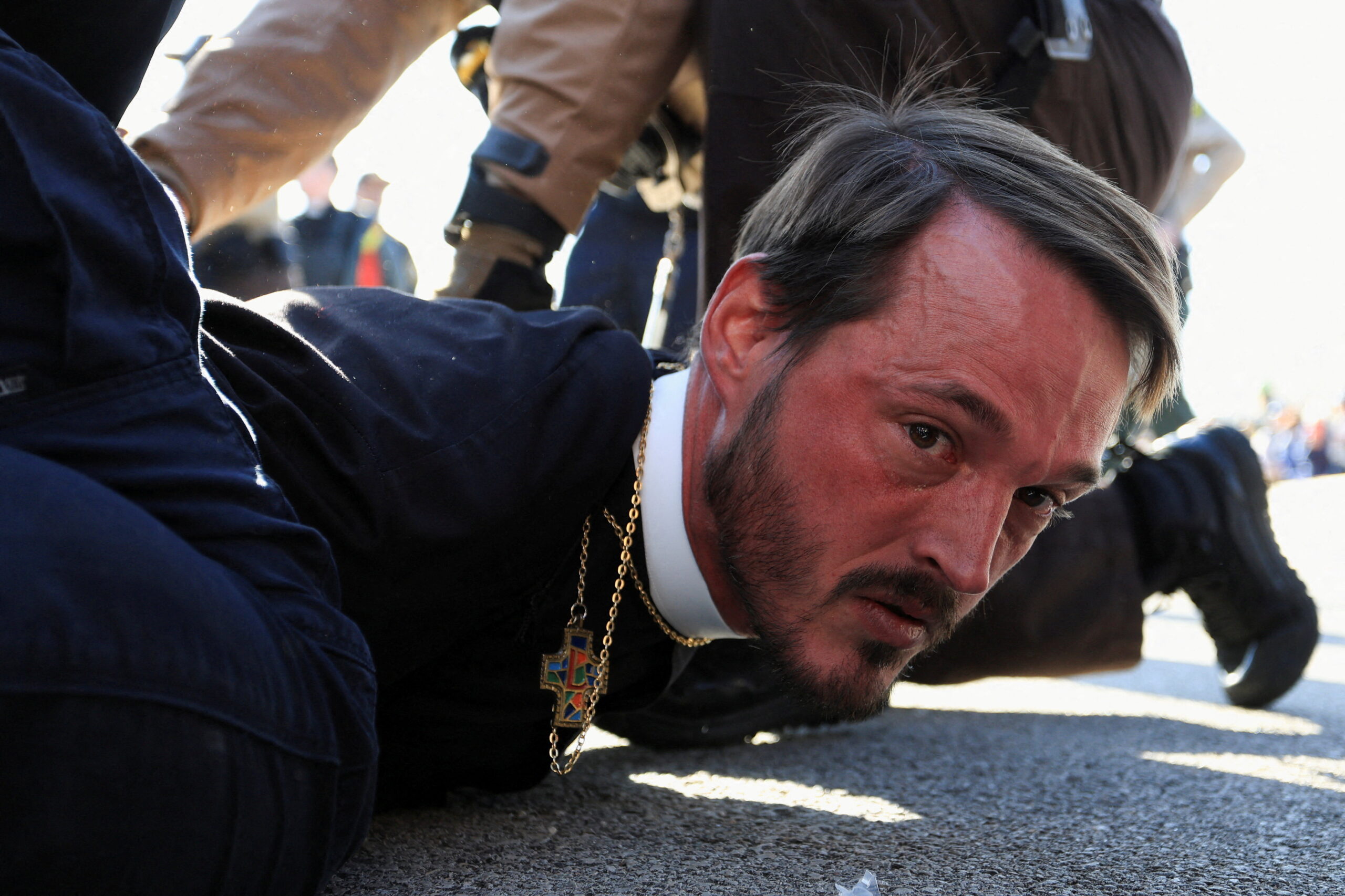
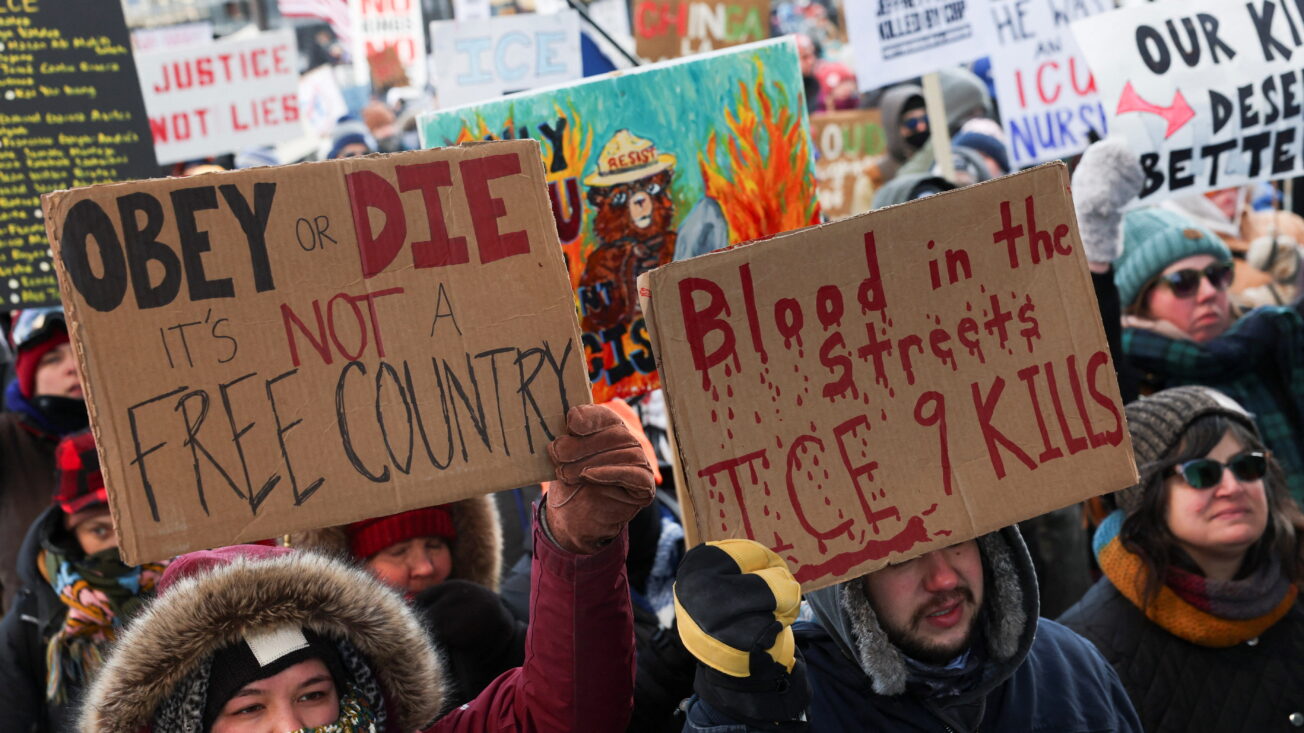
Just one year into Donald Trump’s second presidency, and commentators from across the western world are falling over themselves to pen tearful obituaries to the liberal international order, as if we weren’t also two years into a genocide that order has gleefully enabled. Following Trump’s imposition of scattergun protectionist tariffs, nakedly imperialistic intervention in South America and now empowerment of lawless immigration enforcement, maybe even to a European fellow Nato member, the chances of the international community surviving another three years seemed slim – until one heroic politician gave him a stern talking-to.
When, last month, Canadian prime minister and former Bank of England governor Mark Carney took the stage at Glastonbury for tax avoiders, otherwise known as Davos, and delivered a rousing speech taking aim at Trump and the right-wing populism he represents, it seemed like the liberal international order had finally found its champion. In the face of mounting rivalry between China and the US, Carney called for the spectating western liberal democracies to “act together, because if we’re not at the table, we are on the menu”. Switching seamlessly from French to English, Carney has been characterised as the “anti-Trump”. The former bank chief is sophisticated where Trump, a former reality TV show host, is bombastic; he is stable where Trump is volatile. However, this framing of Carney as a defender of liberal internationalism relies on a particular historical myth: that the liberal international order was one of civility and mutual respect, where rules and the respect for them governed international relations.
Liberals often point to the postwar decades as evidence that the rules-based order once worked. This period is remembered as the era of the Keynesian welfare state: progressive taxation, expanding welfare states and transnational institutions of governance produced rising living standards across the north Atlantic. However, this nostalgic picture of the 20th century collapses under scrutiny. For countries across Africa, Asia and Latin America, the postwar rules-based order justified violence, extraction and intervention for them, so civilisation, development and stability could be enshrined elsewhere. “The west saw itself as a spiritual adventure,” wrote Martiniquan psychoanalyst turned postcolonial revolutionary Frantz Fanon. “It is in the name of the spirit … that she has justified her crimes and legitimised the slavery in which she holds four-fifths of humanity.”
The mythology of the international order masked the cruelty of its lived experience in many parts of the globe. From Fanon to Walter Rodney, Kwame Nkrumah to Michael Manley, leaders across the global south have demonstrated how international legal norms systematically reproduce economic dependency and justify intervention in countries that are ostensibly sovereign. For most of the 20th century, if you were based in somewhere like the Caribbean or in the Horn of Africa, the offer of international institutions to “liberalise” your country was one of the most violent threats you could imagine receiving. Seen in this light, the liberal international order was never simply a peace project. It was a global management system designed to stabilise capitalism and geopolitical power while displacing the costs of that stability onto racialised and colonised populations. From structural adjustment programs to humanitarian interventions, the grand narratives of liberal international law repeatedly functioned as a moral alibi for horrific levels of economic and military violence.
To be fair to Carney, he has recognised the hypocritical way in which the liberal international order has operated over the past few decades. “We knew the story of the international rules-based order was partially false,” he admitted at Davos, “that international law applied with varying rigour depending on the identity of the accused or the victim.” Unilateral military intervention, asymmetrical trade rules, setting lawless state agents on peaceful protesters – all of this may be new to westerners, but for many in the global south, it’s business as usual. What liberals experience as collapse is, for others, the loosening of a system that has consistently privileged western life, capital, and security over all others. The far right may attack liberal institutions crudely and opportunistically, but it does not invent the violence of the system it disrupts – it merely exposes it.
So, in these turbulent times, is the answer to follow Carney in search of a new non-aligned liberal internationalism where middle powers in Europe and North America act as guardians of a smaller, more manageable version of the international community? And what about those countries in the global south? Should they join the abandoned west in mourning a liberal internationalism that, for them, only ever delivered misery?
If there is to be a future internationalism worth defending, it cannot begin from the anxieties of institutions or the fears of elites but must begin from the perspective of those most routinely exposed to abandonment, those on the frontlines of global economic, political and climate crises.
How do we build an internationalism that draws from the dreams of what was once positively known as third-worldism, rather than from a liberal internationalism built on dispossession and exclusion? Rather than free-marketism, multilateralism and economic growth being the foundations of the international arena, debt relief, reparative redistribution, ecological responsibility and political self-determination would be the building blocks of a world that does not reproduce catastrophe as normality. Of late, hope in the potential of international community has come not from the West but from flickers of south-south solidarity. See South Africa filing a case against Israel at the international court of justice, alleging that Israel’s actions in Gaza violate the 1948 genocide convention; or the Bridgetown initiative led by Mia Mottley of Barbados, which seeks to to reform the World Bank and International Monetary Fund to make them more responsive to the needs of developing nations facing climate and debt crises. To look beyond Carney’s much-celebrated call for the un-Americanised west to embrace institutional self-defence would require those who want more from the future to engage in a radical reorientation of our political imagination. And the resources that could illuminate how we might imagine this future might actually come from the corners of the globe that were, for so long, sacrificed in the service of the spiritual adventure that was the west.
Kojo Koram is a professor of law at Loughborough University and author of the forthcoming book The Next Fix: The Winners and Losers in the Future of Drugs.