Israel Is Struggling to Divide Lebanon
Anti-Zionism is surprisingly unifying.
by Julian Sayarer
24 March 2026
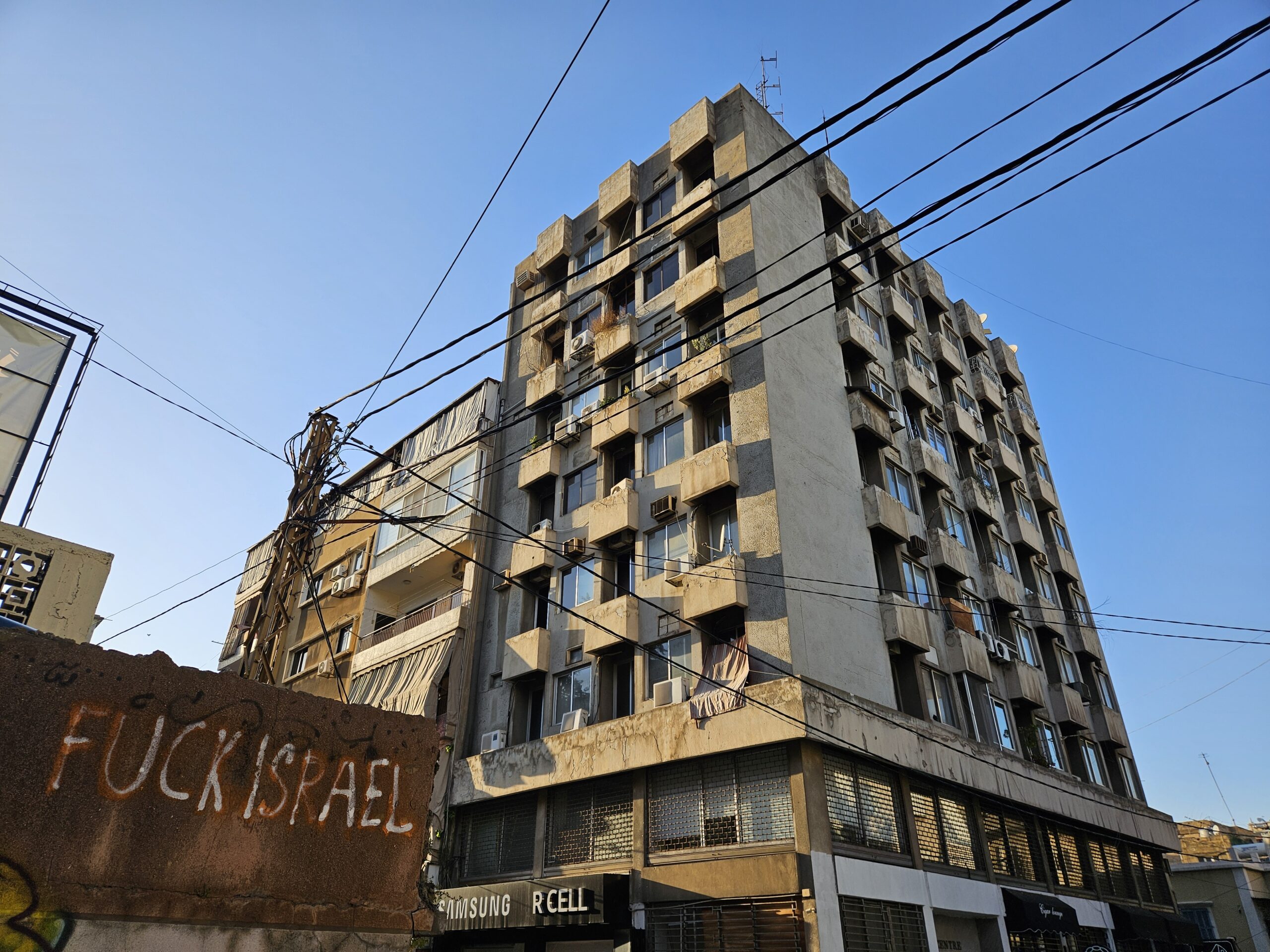
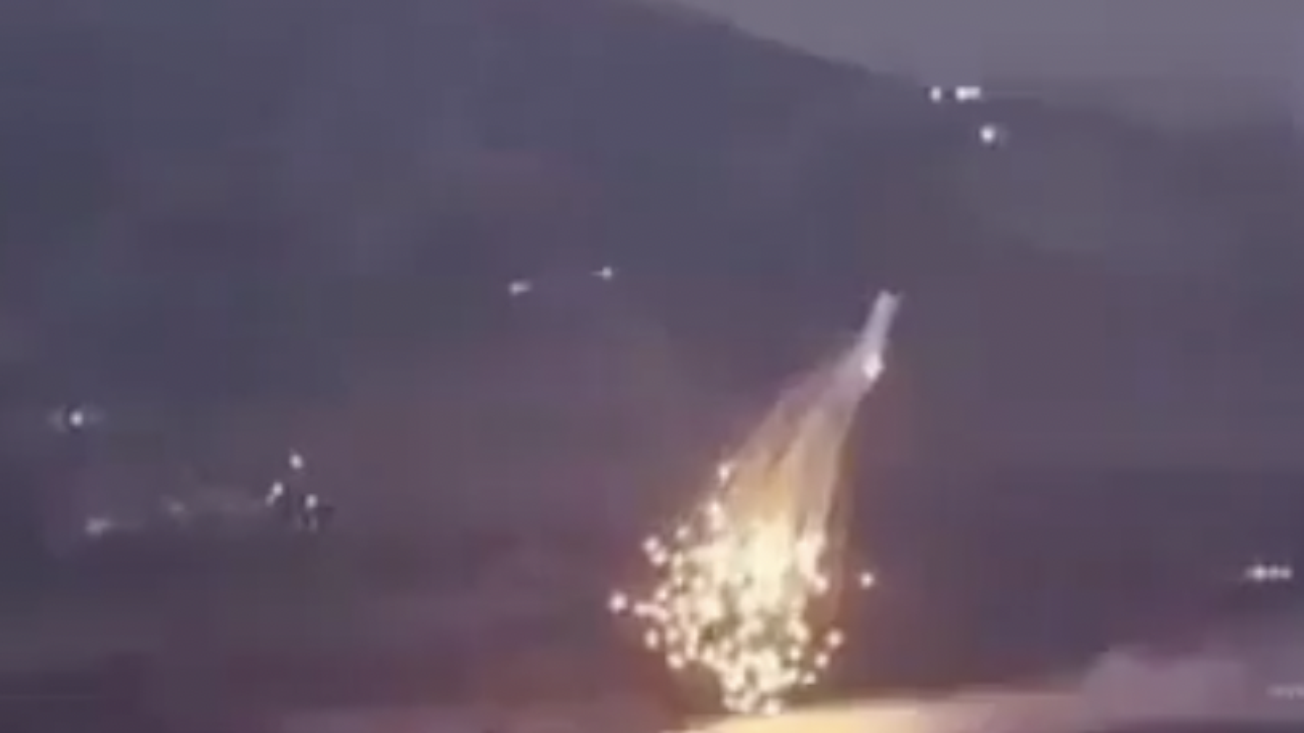
The skies over Beirut are marked with the daily humming of drones. On days when the weather worsens there is some reprieve for the city of 2.5 million, almost half the population of Lebanon, because diminished aerial visibility impedes this preferred method of Israel Defense Forces (IDF) combat.
The permanent buzzing is integral to Israel’s strategy. Sometimes, even when bombs aren’t dropped, at night the drones remain low and loud overhead. “Every night my son is scared,” said Ali, a delivery man outside a cafe where we sit each morning. “He holds on to me so tight.”
The predominantly Christian neighbourhood of Achrafieh, where we talk, is comparatively safe. The Israeli intention, colonial to its core, is to produce enough division within Lebanon that the Lebanese state and its army – the former famously corrupt and the latter US-aligned – will take the fight to both Hezbollah and the wider Muslim community on its behalf, with a history of far-right and Christian extremist groups that can be drawn upon to help. Amid such sectarian strife, encouraged by increasing Israeli bombings outside of predominantly Shia areas, Lebanon would become more easily occupied for the project of Israeli settlement.
A nearby billboard shows a cross and a crescent, marking this year’s coinciding Lent and Ramadan – testament to Lebanon’s natural cosmopolitanism that coexists well without external instigation. Hezbollah – a proscribed organisation in the UK which successfully forced the withdrawal of Israeli troops from southern Lebanon in 2000 – is neither popular across Lebanon’s political spectrum nor so broadly unpopular as Anglosphere media represents, but after years of broadcast genocide by the Israeli military against Palestinian Arabs, Lebanese Arabs need no convincing that Israelis are not their friends.
There is no significant constituency of Lebanese people eager to fight other Lebanese people on behalf of Zionism.
As is its habit, the IDF reserves its worst bombing for the Dahiya neighbourhood, and has killed hundreds of residents of this working-class, tightly-knit suburb of predominantly but not exclusively Shia Muslims. Dahiya itself is the namesake of the Dahiya Doctrine, an IDF method mandating total destruction in order to punish any locality that harbours resistance. Gadi Eisenkot, author of the infamous doctrine, had to bury his son in December 2023 after he was killed in an ambush by the Hamas military wing, Al-Qassam, as the Israeli army carried out its genocide in Gaza.
A few blocks over from the rubble of buildings, children play and people smoke shisha, while foam mattresses are supplied to ease the hardship of those now homeless. Mutual aid groups have sprung up across the country, and though the Israelis once seeded a vicious sectarianism during its civil war years, a fragile yet real Lebanese national identity of inclusivity has since formed.
Beirut restaurants have opened kitchens to provide meals for the displaced, now numbering one in five Lebanese. “This is how we will make it through this situation,” says Heba, a waitress. “Now is not a time to feel, it’s a time to act. This is the kind of project that makes you belong; it’s like everyone around you, literally everyone, is a single entity. This is solidarity.”
Outside the attention given to Beirut, such humanity carries higher risks. In the south, near the Israeli border, the largely Christian village of Rmeich was ordered by Israelis to evict their Muslim neighbours sheltering from bombings, or be bombed together.
Nour, from Saida, south of Beirut, tells me the Israelis, during the last week of Ramadan, bombed three times inside the Palestinian camp, once during iftar. “We are expected to move on and live as if nothing happened, we just talked about dinner,” Nour says. “We are not better than Gaza; we have nothing but fate right now, just praying.”
Hamze, my Palestinian-Lebanese friend from a bombed northern camp by the Syrian border, asks after Beirut. His reply is upbeat: “If you’re alive, bro, you’re ok.”
Faced with public spiritedness, Israelis are redoubling their violence. Starting with attacks on displaced people camped on the Beirut seafront, the first of which killed eight people, they have begun targeting the downtown area. White-collar professionals like doctors and academics – the sort of people Lebanon’s stiff classism dictates are supposed to be safe – have found they aren’t any longer.
The Israeli hope is that the Lebanese people do not blame Israel for bombing them, but instead blame Hezbollah for resuming self-defence after incessant ceasefire violations in Lebanese villages that Israelis say are necessary for security – villages some Israeli groups also covet on the basis that they were promised to Jews in the Torah.
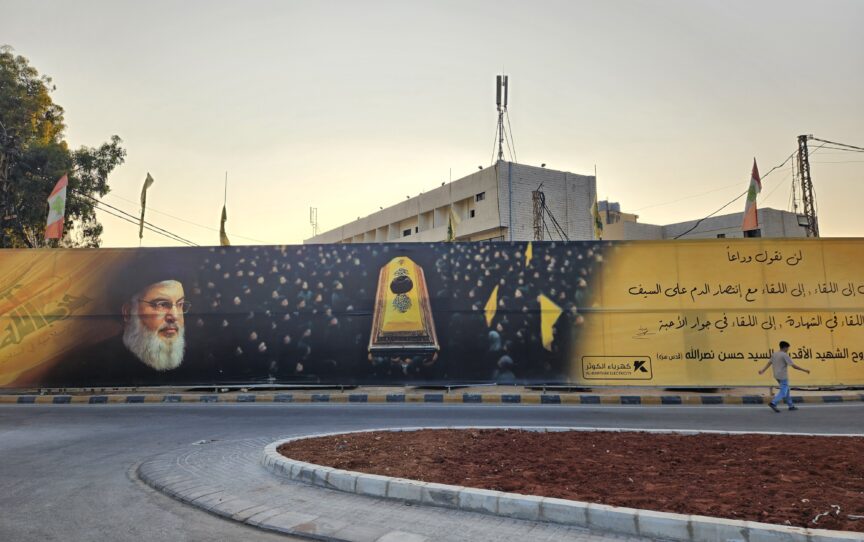
Nevertheless, a spirit of resistance endures. While the Israelis mistakenly presumed that Hezbollah’s honouring a ceasefire meant it must have been destroyed, the contrary seems true. Defensive fire towards northern Israeli settlements has resumed, meaning the IDF’s bombing and ground invasion has carried costs. Ahron Bregman, a British-Israeli historian at King’s College London, who was recently in Tel Aviv for research and caught in the war, corroborates this view.
“This region poses military challenges due to its terrain,” Bregman explains. “Hezbollah inflicted many casualties when Israel deployed there between 1985 and 2000, and Israeli actions now play straight into Hezbollah’s hands.
“Its guerrillas are more familiar with the terrain and will launch attacks against the invaders, and Hezbollah now has an excuse not to disarm. It can say that while the Lebanese army is unable to confront the Israelis, Hezbollah can and should retain its weapons.”
Since October 2023, Israeli prime minister Benjamin Netanyahu, as well as the opposition with which he competes for a political spectrum of abject narrowness, have all championed Israeli reorientation around war under a brand of “super Sparta”, but society is straining under the psychological and economic fallout of its multifrontal extreme violence. Bregman’s reflections on the mood as Iran responded to US-Israeli attacks leave little hope of correction.
“I spent long hours with Israelis in shelters and was struck by their strong support for the government,” said Bregman. “This surprised me because people of Tel Aviv tend to be liberal, leftwing, and staunch opponents of Netanyahu. Yet, they support the war. It seems as though they have been brainwashed.”
While Israeli bombing has now displaced the southern population of Lebanon, prompting a nationwide housing crisis, the mountains of the south still constitute a fortress for Hezbollah. Its fighters have claimed the destruction of numerous Merkava tanks, and the IDF’s advance is floundering. The communities that sustain the struggle, as well as Lebanese youth – less sectarian than their parents’ generation, more instinctive in their support for Palestine – are unbowed before both Zionists and threats of a corrupt Lebanese state that might consider collaborating with them.
“If nobody truly cares about [Palestinians’] freedom, it doesn’t mean neither should we,” says Dayane, a young woman from a village in south Lebanon. “The Israelis are irredeemable and so is Zionism, and nobody can impose them on us. I know that us rising against this horror is inherently good for humanity.
“At some point, everyone has to look themselves in the eye and ask what is the purpose of being alive if they are to be so passive and so careless in the face of such horrible things being done?”
Dayane continues: “We are fighting it, despite the difference in capabilities, and because as a community we refuse to do nothing, or watch as 2.2 million people in Gaza are killed, and act like it is a circus, or a movie. For all this, despite the pain, yes, I am optimistic.”
Julian Sayarer is a travel writer and author of Fifty Miles Wide: Cycling Through Israel and Palestine.