Bolivia Shut Down by National Strike Demanding President Resigns
A capitalist leader took over from socialists six months ago. It's not going well.
by Tom Midlane
15 May 2026
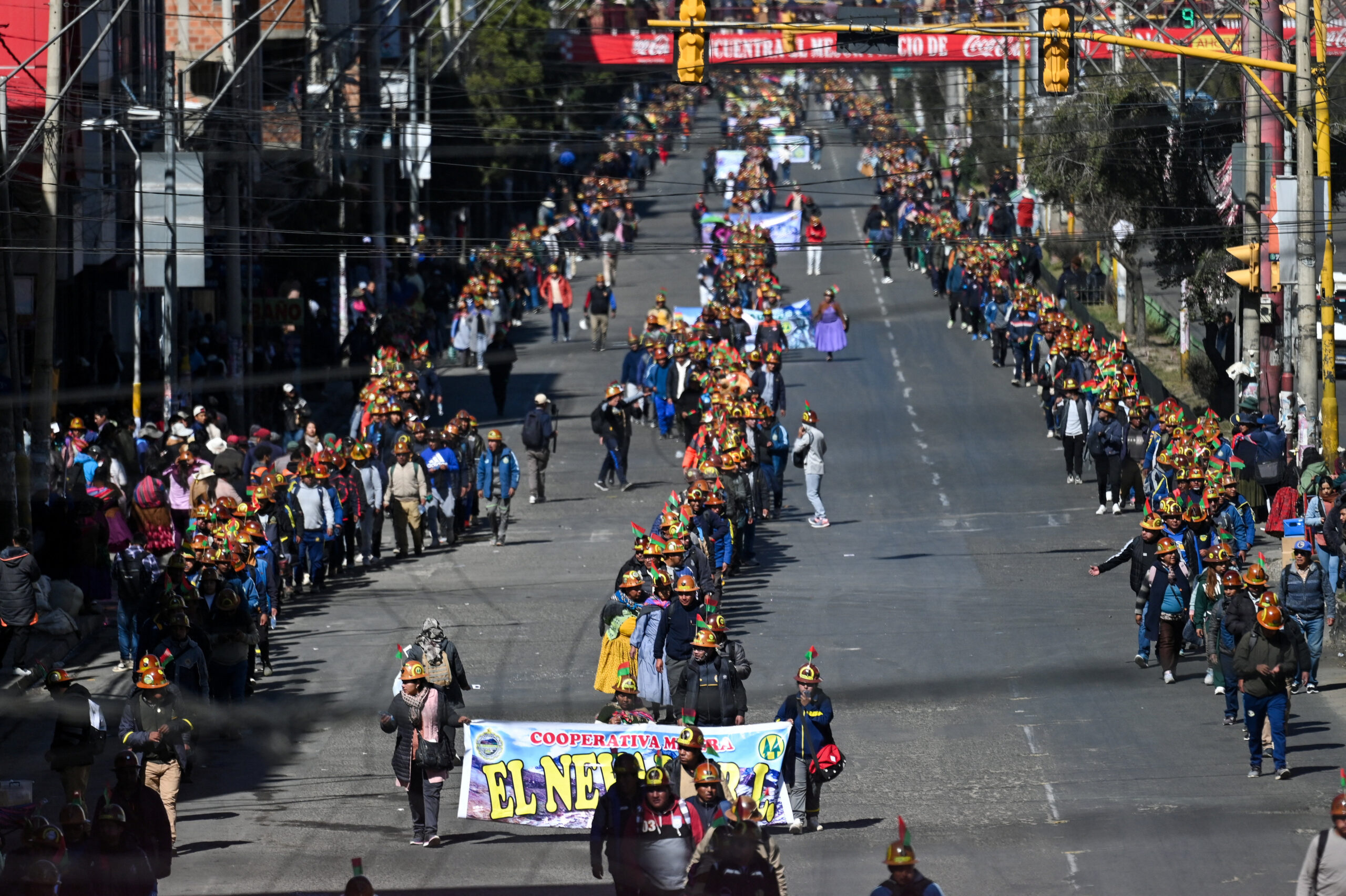
Widespread roadblocks and protests have brought Bolivia’s major cities to a standstill this week as the country continues its indefinite national strike against stagnating wages, austerity and privatisation.
Footage posted on social media shows demonstrators marching down highways, with empty cars and tents littering the side of the road.
Clashes erupted in La Paz on Thursday when police fired tear gas at miners who had set off small sticks of dynamite and were attempting to breach the presidential palace.
The strike, called on Tuesday by Bolivia’s largest labour union federation, has seen teachers, farmers and indigenous representatives calling for the resignation of rightwing president Rodrigo Paz Pereira.
For more than two decades, Bolivia was ruled by Movement Toward Socialism (Mas), initially under the country’s first indigenous president Evo Morales. Mas significantly reduced poverty, protecting indigenous rights and nationalising the country’s natural gas profits.
But in recent years, an economic crisis in the country and power struggles within the party destroyed Mas’s popularity.
Paz came to power in November 2025 promising “capitalism for all”, but his neoliberal reforms have rapidly tipped the South American country into mass protests.
Soaring inflation, low wages and the end of decades-long fuel subsidies have hit living costs, while there has also been widespread opposition to the government’s package of economic reforms.
Now, protesters are calling for the resignation of the new government unless a 20% wage increase is approved and austerity measures are ended.
One of the most contested parts of Paz’s agenda is the new Law 1720, which aims to ‘modernise’ Bolivia’s agrarian sector by allowing farmers to merge their smallholdings into medium-sized businesses.
Many fear the law merely paves the way for a takeover of indigenous territories by corporate agribusiness.
Peasant union leader Oscar Cardozo told a public meeting: “Our life is collective, not individual. The land must be respected; it’s not for sale.”
Tom Midlane is a freelance journalist.