King’s College London Made a Pro-Palestine Student Write an Essay As Punishment – Then Reported Her to Prevent for It
‘A method of intimidation.’
by Harriet Williamson
26 November 2026
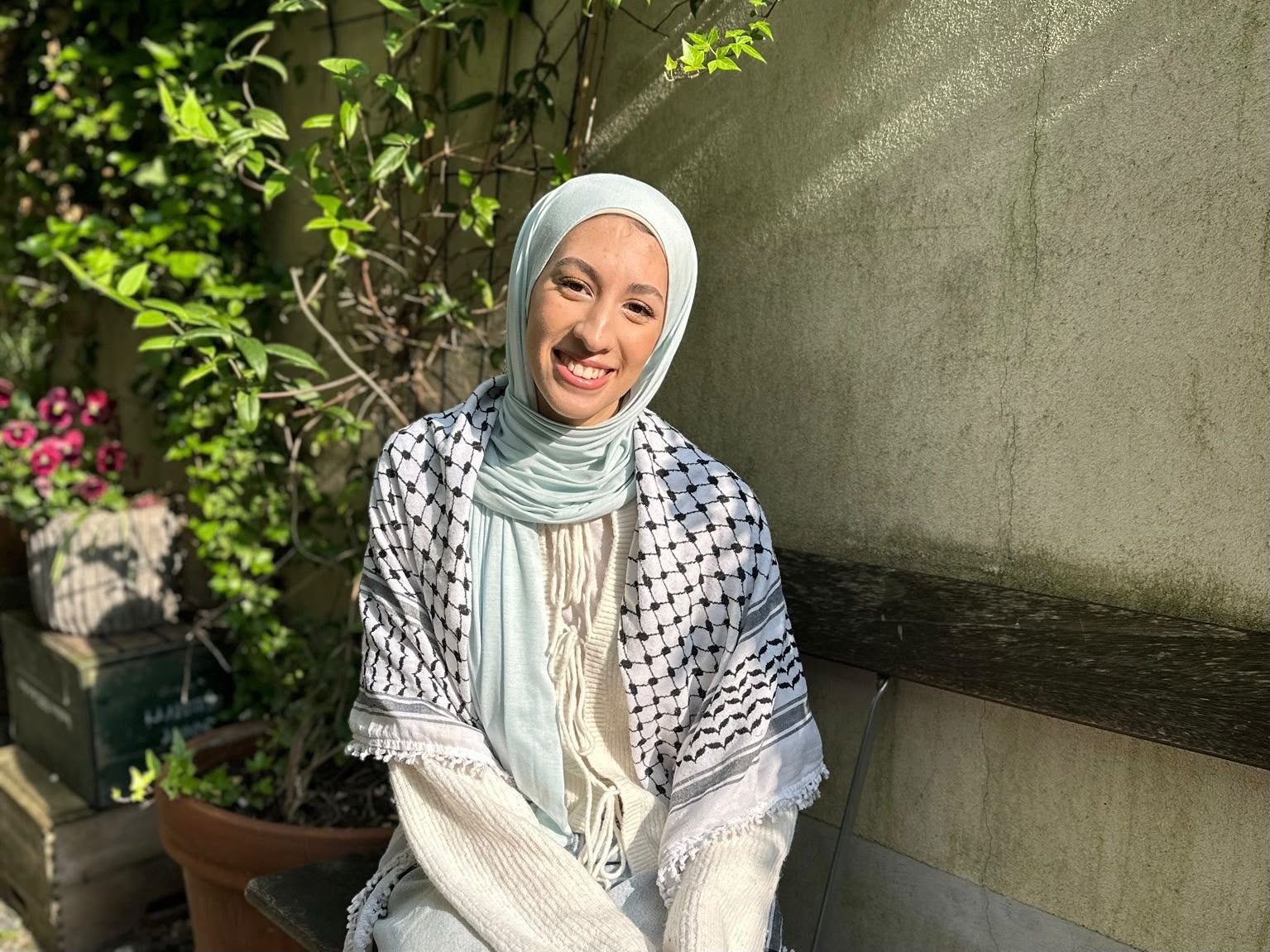
A top UK university reported a student to the government’s counterterrorism programme over a “reflective essay” it forced her to write after suspending her for charges related to pro-Palestine activism, Novara Media can reveal.
Niamh Grant, a 22-year-old Social Sciences student at King’s College London (KCL), was informed by a student welfare adviser in emails seen by Novara Media that the university had referred her to Prevent for the essay.
The “reflective essay” was set as a condition for Grant returning to her studies at the prestigious Russell Group university following a suspension in May 2025 over pro-Palestine protests as part of the 2024 student solidarity encampment movement – in which Grant was a leader in negotiations with KCL.
The university required Grant to reflect on the “health and safety issues” caused when she entered a kitchen area of the university and was part of a group that created an obstruction which “led to the physical injury of staff” at a protest in 2024 – something she denies. It also invited her to reflect on a protest policy which was no longer in effect after it received criticism from civil rights organisations Liberty and Amnesty International.
In the essay, Grant wrote of her horror at the suffering of Palestinians, saying: “From the Palestinian people, one message resounds: to end the genocide. It is not enough to simply acknowledge Palestinian suffering, not enough to sympathise, and not enough to feel guilt. This belief must induce an imperative.”
Turning to KCL, she wrote: “I believe that to be a student is to care about the morality of my institution, and it is because I care about the responsibility given to me as King’s student that I care about my university’s investments in the Israeli arms trade.”
KCL did not consider this essay satisfactory, with the head of student conduct and appeals telling Grant: “I cannot consider this essay provides the necessary assurance that you will not cause any further health and safety concerns, that you appreciate how your actions impacted other members of the King’s community and that you understand the importance of the university’s policies and procedures as related to protest and behaviour.”
Grant then submitted a second reflective essay, where she suggested the university should have “a bit of humility… before it begins to lecture other people and groups about violence, crimes and the obstruction of other people’s lives”.
Grant drew comparisons with the student struggle against investments in South Africa’s apartheid regime, criticising the university for “disciplin[ing] their own students before citing them as ‘courageous’ years later when it is convenient”.
She also wrote that she drew inspiration from Imam Hussein, a historic figure in Islam who sacrificed his life in standing up against oppression. Grant compared her smaller sacrifice of the interruption of her studies to the greater sacrifice of Hussein, also known as Husayn ibn Ali, the grandson of the Prophet Muhammad who was killed in the 7th century.
In her essay, Grant wrote that Hussain and his family had left an example of “how we should sacrifice for the cause of fighting injustice and establishing justice on Earth”.
From correspondence seen by Novara Media, the reference to Hussein appears to be the basis of the university’s Prevent referral.
Grant told Novara Media that the Prevent referral was “incredibly Islamophobic” and a “method of intimidation”. She believes a Christian student who wrote that they took inspiration from the sacrifice of Jesus Christ would not have been flagged to the government’s counter-terror scheme.
Grant said she “made an effort to explain what it means to have my degree taken away from me” and said her words were “deliberately decontextualised” to “create a justification for the Prevent referral”.
“This isn’t something that exists in a vacuum,” she added. “It’s something that universities and schools have in their arsenal to weaponise against visibly Muslim students.”
Prevent is part of the UK government’s counter-terrorism strategy and places a legal duty on “specified authorities”, including schools and universities, to have a “due regard to the need to prevent individuals from being drawn into terrorism”.
Dr Layla Aitlhadj, director and senior caseworker at Prevent Watch, told Novara Media that to have a reflective essay referred to Prevent is “horrifying” because it tells students that they can’t reflect, be themselves or speak in terms that feel comfortable for them.
Aitlhadj said: “To be told that your ‘reflective piece’ doesn’t quite meet the level of reflection that is state sanctioned really just reinforces the fact that Prevent is hugely at odds with freedom of thought, expression, consciousness and belief, particularly within a university setting, where you should being encouraged to critically compare ideas.”
Aitlhadj called Prevent a “political tool rather than one of security” that’s consistently weaponised to “sanction and silence people with regards to pro-Palestine solidarity”, and said: “Schools, colleges and universities know they can use the threat of counterterrorism where there isn’t anything unlawful happening, because they need people to silence themselves.”
Grant has yet to return to her course. Alongside the Prevent referral, she has also now been reported to KCL’s misconduct committee over allegations that she failed to adequately comply with the essay penalty and for “acting in an intimidating and hostile manner” by criticising university staff in her essay over links to the 2003 invasion of Iraq. Grant is of Iraqi mixed heritage.
A spokesperson for KCL said: “We want everyone at King’s to feel safe, and will always uphold our students’ rights to lawful freedom of expression including the right to lawful protest. Like all universities, King’s is required by law to have Prevent policies and procedures in place to safeguard students who may be at risk of harm. These are entirely separate to misconduct processes, applied after careful assessment of what is best for the individual student and their circumstances, and always balanced with our commitment to lawful freedom of expression. A student’s identity or religious beliefs would never be grounds for a referral to Prevent.
“In this instance, the student’s behaviour and contents of their reflective exercise suggested that there was a risk of harm that met the statutory threshold for a referral to the Prevent programme. This was subject to extensive governance, including by a Freedom of Expression advisory group who independently assessed the reflective essay with no identifying details about the student or her specific beliefs, and determined that a referral to Prevent was an appropriate safeguarding action.”
The 2024 KCL Palestine solidarity encampment led to a partial victory, with the university agreeing to no longer invest in companies engaged in the production or distribution of controversial weapons.
In September, KCL reinstated Usama Ghanem, another student suspended over pro-Palestine activism on campus. Novara Media revealed that the university had used a private security firm run by former military intelligence officials to monitor the campaign calling for Ghanem’s reinstatement.
A July investigation by Al Jazeera and Liberty Investigates found that KCL had disciplined more students engaged in pro-Palestine protest activity between October 2023 and November 2025 than most other British universities.
According to KCL’s University and College Union (UCU), the university’s investments in companies named by the UN as involved in illegal West Bank settlements increased in value between 2024 and 2025, while its investment in military spytech company Palantir almost quadrupled in the same period.
A London school trust formally apologised and agreed to pay compensation to four primary school children last week, after they were threatened with Prevent referrals after wearing Palestine badges.
Harriet Williamson is a commissioning editor and reporter for Novara Media.