Why Do Governments Hate Juries? Because They Have Consciences
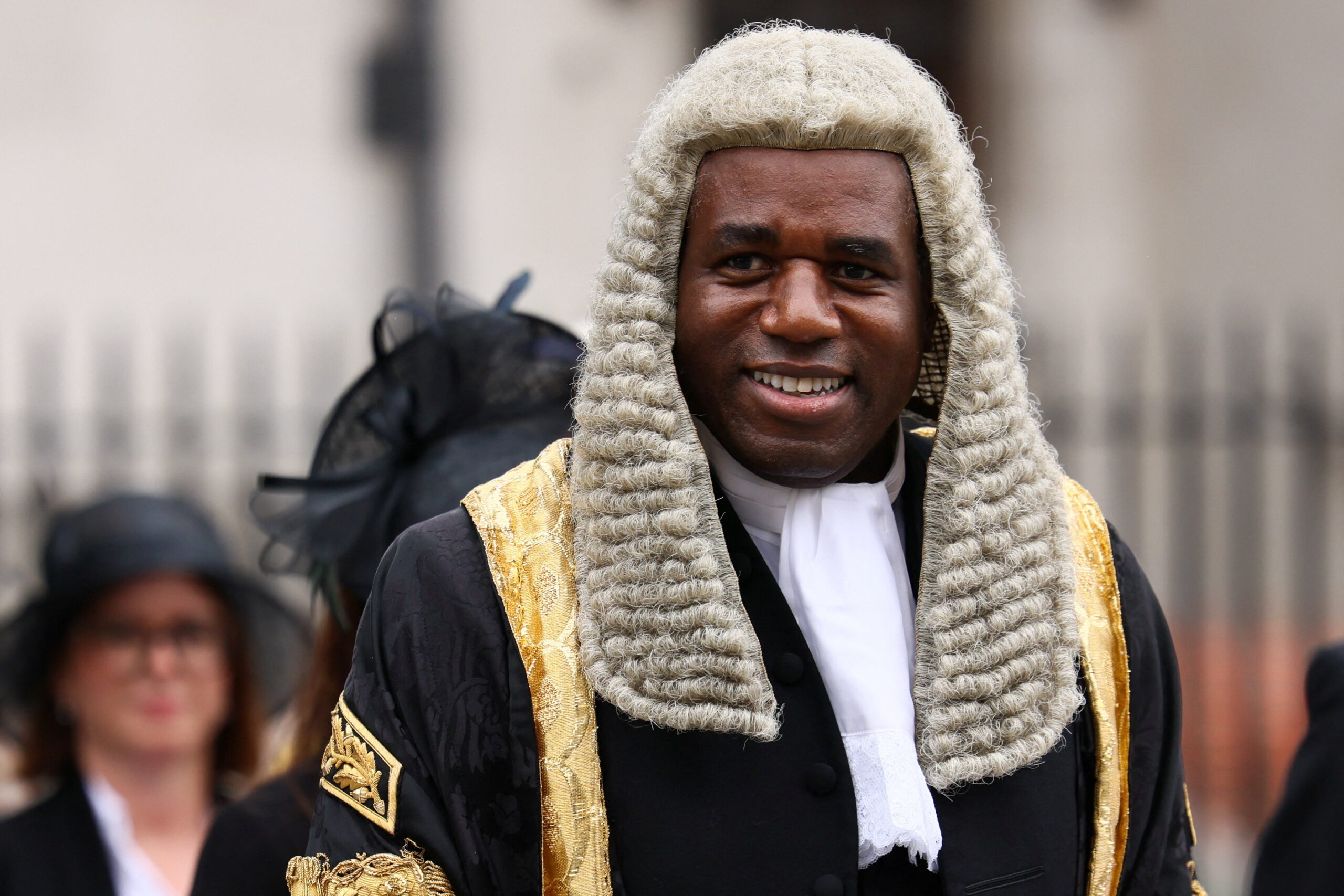
Earlier this month, justice secretary David Lammy – himself a former lawyer – announced that he planned to scrap jury trials for crimes likely to carry a sentence of less than three years; around a quarter of trials in total. I was at the Old Bailey when I found out – not as a journalist but as a juror.
There is not much I can say about the trial, but what I can say is that the defendants were three young black men; that all four barristers and the judge were white people over the age of 50; and that the jurors were by far the most representative group in the courtroom, a mixture of ages, races, genders and backgrounds.
I went into jury service reluctant to be part of a system I knew from my reporting on the prison and justice system was broken. I resented the idea of being conscripted into legal logic that I knew would not necessarily align with my own ethical code – what if I was made to convict someone of a crime that, even if they had committed it, I didn’t think they should be imprisoned for? My experience gave me faith in the ability of juries to act fairly where the police and prison system do not.
With Lammy’s changes to the court system looming, though facing mounting opposition on several fronts, I wanted a legal perspective on my anecdotal experience of how essential juries are. Nick Bano is a housing barrister by trade and the author of Against Landlords: How to Solve the Housing Crisis, and a former criminal defence lawyer. I sent him my questions about what Lammy’s proposed slashing of jury trials means, both within and beyond the courts.
Rivkah Brown: It struck me that the case I sat on might have gone differently if, like the judge and all of the barristers involved, the jurors were entirely white and over the age of 50. How do juries affect the outcome of trials, in your experience?
Nick Bano: David Lammy knows the answer to this better than anyone. In his 2017 independent review of the criminal justice system, Lammy – then a backbench opposition MP – showed that jury trials were the only part of the whole system that did not exacerbate racial inequality. “Successive studies have shown,” Lammy wrote, “that juries deliver equitable results, regardless of the ethnic makeup of the jury, or of the defendant.” He now seems to believe that anti-racism is a luxury Britain can no longer afford.
The makeup of juries has been a contentious issue – in the UK and many other jurisdictions – for centuries. In many ways, it’s the whole point. The jury is the counterweight to the appalling lack of diversity in the rest of the justice system, and this is clear from the measurable outcomes.
RB: Are there any notable cases from history that you think would have gone differently were it not for the jury? In other words, where a judge would’ve found – or indicated that they did find – differently from the jury.
NB: The most famous examples are the historical precedents like “Bushel’s case”, the 1670 case that found jurors can’t be punished for returning verdicts judges disagree with. Far more interesting are those moments in history where juries – as a reflection of society – were out of step with the law altogether.
In 1624, for example, parliament passed a punitive law that attempted to discourage extramarital sex by creating a capital offence for women who concealed the death of babies born out of wedlock. Juries simply refused to convict. Sometimes aided by lawyers, even sympathetic judges, conscientious jurors saved the lives of hundreds of bereaved women, and the law had become all but unenforceable by the time it was repealed in 1803.
Similarly, the early modern period saw a good deal of what was called “pious perjury”. Despite the sincere religious fervour of the time, many jurors saw it as their moral duty to break their sworn oath and reach a factually untrue verdict to save someone from the gallows. It was a hanging offence, for example, to steal more than 40 shillings’ worth of property, and jurors would often reach absurd findings that very expensive goods had been worth only 39 shillings.
A key moment in the history of jury trials was the Coldbath Fields riot in 1833, following a public meeting organised by the National Union of the Working Classes in Clerkenwell, central London. During a heavy-handed police suppression of what became a demonstration, Constable Culley of the Metropolitan Police was stabbed to death by the crowd. A coroner’s jury – a jury of members of the public who oversee an inquest, rather than a trial – reached a verdict of “justifiable homicide” (the jury’s rather pompous, self-assured and provocative petition to Parliament is a joy to read: they described the later quashing of their verdict as “a slur […] cast upon them in their character of jurymen acting under the solemn obligation of an oath” and criticised the “tendency to bring into discredit the Trial by Jury” ). To this day, actions against the police are one of the very few non-criminal types of cases in which juries are still used.
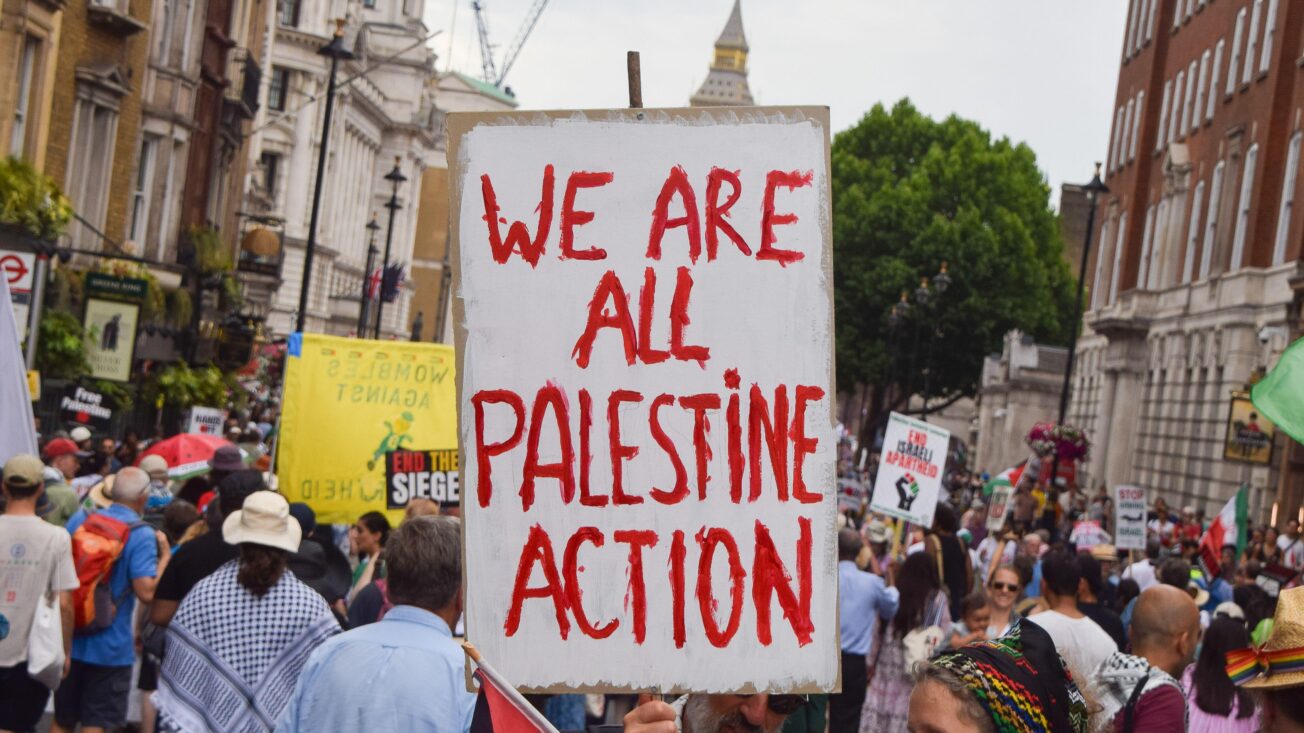
RB: The recent proliferation of political activist trials – Just Stop Oil, Palestine Action, Insulate Britain and so on – appears to have put judges and juries at odds. Would you say it’s fair to say that, in attempting to remove defences from defendants (in some cases, all of those available), judges have sought to disempower juries?
NB: Some judges have certainly developed this reputation, particularly in protest trials. This is not a new phenomenon: Bushel’s case, and many other outrages of earlier centuries demonstrate the frequent tensions between judges and juries. Modern examples include the Mangrove Nine trial, in which Darcus Howe and Altheia Jones-LeCointe (representing themselves) tried unsuccessfully to argue for an all-black jury. The defendants eventually got the trial judge to acknowledge – for the first time – the racism at work in the police. Race Today covered many similarly outrageous criminal prosecutions during the late 20th century; there is a very good anthology of their articles from the time.
RB: Jurors are permitted to acquit defendants according to their conscience, even if they think that the evidence would lead to a guilty verdict. Yet pointing this out got Trudi Warner arrested, the trigger for the Defend Our Juries campaign. I noted that in the trial I was a juror for, the judge didn’t once mention this to the jurors. Why do you think judges and the police are so resistant to members of the public knowing that there is this third option?
NB: Acquitting based on one’s conscience is very much a secret third thing, certainly in the eyes of the law. Neither lawyers nor judges are allowed to actively tell a jury that they could or should acquit a person who has no legal defence. It is not, strictly speaking, a legal concept but rather a matter of personal morality. Indeed, it’s precisely because juries have the freedom to opt for a non-legal resolution (and judges can’t) that it would be so dangerous to dispense with juries.
These sorts of acquittals are perhaps less likely to arise in ordinary criminal cases. If it can be shown beyond reasonable doubt that someone committed domestic abuse, for example, or went to fight for the IDF. But in circumstances where the law itself is obviously wrong – as it is when it comes to political protest – it is a precious and important tool.
RB: I noticed that my fellow jurors and I were itching to be relieved of our jury duty once our mandated 10 days were up and the trial had finished. It does amaze me that there are jurors who can take several weeks, even months, out of their lives to serve on long-running cases. Surely it makes sense to remove juries from these lengthy trials?
NB: These trials can be cumbersome. The degradation of employment rights under neoliberalism has also had a serious impact: a four-month trial would probably have been far more attractive to the securely-employed worker of earlier decades, whose wages would keep rolling in, than it is for the freelancers and email-deluged workers of today.
But anyone who is wrongly accused of a complex fraud would probably disagree that we should dispense with juries in their cases. The focus ought to be on how we can accommodate jurors and enable them to sit on longer trials, rather than excluding them from the process entirely. The system needs to ensure that no one loses out financially by sitting on a jury and that jurors have proper time and space away from work. The government also has a long history of implying – wrongly – that ordinary people are too stupid to hear complex cases, but in reality it just wants to cut costs, and to attack the principle of trial by jury.
RB: What realistic alternatives, in your opinion, does David Lammy and the Ministry of Justice have for reducing the backlog of cases (around 77,000 cases in March this year, and projected to reach 100,000 by 2028)?
NB: We’re perfectly capable of having an efficient system that retains juries. Jury trials themselves make up only a fraction of the overall criminal court process, and can’t really be blamed for the backlog. It’s simply a question of resourcing the system properly: we need more court sitting days, and adequate funding for the various organisations and practitioners that make up the criminal justice system.
RB: What does the move to scrap some jury trials say about this government? Are they particularly historic, or in keeping with previous attempts to alter the role of juries? There are, of course, already plenty of legal cases which don’t require juries.
NB: Lammy is the latest in a long line of politicians who have attacked the jury system. In a way, it is easy to see why: during a jury trial, the state momentarily gives up control, and ordinary people have real power. People like Lammy never respond well to this.
In 1996, a senior judge observed that something would have to be done about “perverse decisions” after three peace activists who damaged a fighter jet (much like the Palestine Actionists whose action triggered proscription) were acquitted, days after another jury found cricketer Imran Khan innocent in a racially charged libel case. Since then, various government-commissioned independent reviews have repeatedly recommended restricting jury trials, and serious restrictions were in fact put in place in Northern Ireland in the 1970s. The government today does seem very nervous about the fact that juries are routinely acquitting protestors, and this may well be part of their motive in undermining and restricting jury trials.
What makes Lammy so extreme is that, unlike previous governments, it looks like he is actually going to roll out this policy, the most dangerous act so far of a highly autocratic government. By the standards of previous centuries, he would be guilty of tyranny: as a senior judge pointed out in 2017, lawyers have historically seen juries as an essential guarantee of freedom because “the people will not execute tyrannical laws against themselves”. Juries are a badly-needed check on state power, sitting in judgment of the law itself. It is exactly at times like these – with the rise of far-right street violence, last-ditch attempts to pressure the government to avert climate collapse, and an increasingly unaccountable and overbearing state – when the good sense of juries is most necessary.
Nick Bano is a housing rights lawyer and the author of Against Landlords: How to solve the housing crisis.
Rivkah Brown is a Novara Media commissioning editor and reporter.