The Traitors Is Fake Scotland at Its Worst
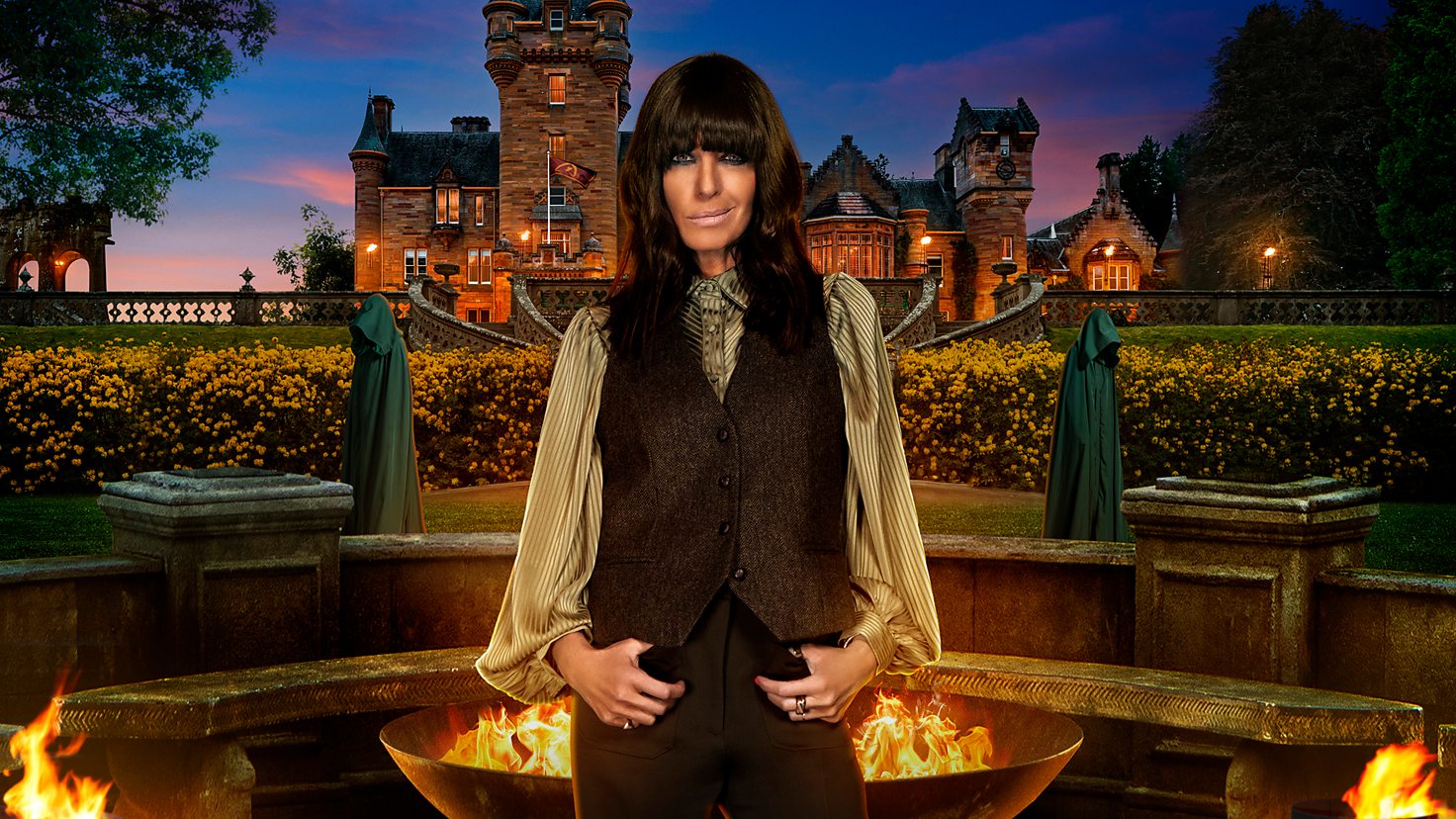
The Traitors has become the handrail for much of British society as we stagger, bleary-eyed, into each new year. The finale of the celebrity version in November was the most-watched show in the UK in 2025, and this January, more than 10% of us are spending our evenings snuggled together in front of the fourth series.
This makes The Traitors, among many other things, the most significant cultural depiction of Scotland – in particular the Scottish Highlands – of this decade. But the story it tells viewers about the Highlands is familiar and fundamentally damaging, and was first inked onto the British imagination 170 years ago.
Take the building the show is set in, Ardross Castle. It isn’t a castle in any historic sense – its massive ground-floor windows are the obvious tell. It’s a simulacrum of a castle, built in the 1880s by the Scottish politician and merchant Sir Alexander Matheson, a partner in his family bank Jardine Matheson, which had recently made its fortune by financing the flow of opium through Hong Kong into China.
The grounds immediately around the Ardross estate, in which many of The Traitor and Faithful’s challenges take place, are an enormous garden, a product of vast earthworks and thousands of hours of labour, funded with the same stolen imperial wealth. This version of countryside created by Victorian colonialists as they genocided the world is still wired into our synapses as authentic, when in fact it’s a fetishisation of an invented rurality which glorifies beating back nature and people, and replacing them with manufactured displays of wealth.
The most prominent trees in the garden at Ardross appear to be North American firs and Lawson cypress: species brought back from the American West during the 19th century, as white settlers pushed westwards, genociding indigenous populations and returning with, among much else, botanical samples. Once symbols of prestige, they are now an environmental problem: non-native trees generally host many fewer other species than those which co-evolved here.
Beyond the “castle” grounds, we see regular drone shots of heather moor, which isn’t the wilderness it is framed as, but a landscape cleared of its people, forests and wildlife; overgrazed by sheep and deer, and regularly burned for grouse shooting; interspersed with Sitka spruce plantations, a non-native monoculture that dries out soil, releases carbon from peat bogs and invades native woodland.
The space surrounding The Traitors isn’t “nature”. It’s the destruction zone of vast processes of extractive capitalism, which didn’t emerge gradually in the Highlands, as it did in rural England, but was imposed, relatively rapidly, and surprisingly recently.
Monarch of the glen.
In his seminal work ‘On Civil Society’, the 18th-century Scottish philosopher Adam Ferguson described how, during his youth on the Highland boundary in Perthshire (near where I grew up 260 years later), he had seen “civil society” which was more collectivist, virtuous and public spirited – being replaced by “commercial society”, a society in which the profit motive had eroded that community ideal. Ferguson – sometimes described as the grandfather of sociology – had witnessed the arrival, and imposition, of an economic system which was born in England, the Scottish lowlands and the European low-countries into the Highlands. His observations went on to influence Karl Marx, who developed his idea of the “commercial society” as “capitalism” (while ditching some of Ferguson’s racism).
The process Ferguson described produced extraordinary ruptures in Highland society. Over a few generations, historic community rights were lost, while clan chiefs became landlords, producing resentments and resistance which found a focus in the Jacobite uprising’s attempt to restore the Stuart family to the British throne (even though they’d been terrible monarchs, and it was James VI of Scotland/James I of England who had started this process). Those landlords then cleared thousands of people living in collectively farmed townships from the land and replaced them with more profitable sheep farming.
These events collapsed the population, erased Gaelic culture and devastated the environment, as the sheep for which people were cleared munched on saplings and mowed the wild upland bush into heather lawns. Wolves were exterminated at the start of this process, leading to a boom in the deer population, which overgrazed the hills. In the Anglo-British imagination, though, the Highlands remained an unpleasant, scary ‘wild’ that needed taming, well into the 19th century. After it had been cleared, their elites reimagined the landscape as a playground for the imperially fattened super-rich.
In 1851, the English painter and sculptor Sir Edwin Landseer painted a magnificent picture of a large stag surrounded by purple Scottish mountains, known as ‘Monarch of the Glen’, one of a triptych intended to be hung in parliament. The painting became enormously popular, and was reproduced thousands of times, selling the idea that the newly cleared Scottish Highlands were a beautiful place to which people might visit, rather than a terrifying, wild (which is to say, not yet fully incorporated into capitalism) place.
It’s important to note here that Landseer was close to Queen Victoria and her husband, Prince Albert. He regularly painted them, their pets and their children, and is also responsible for the lions at the base of Nelson’s column, making him an important propagandist for Britishness at the height of empire.
In 1852, Prince Albert compounded the understanding of the Highlands propagated by ‘Monarch of the Glen’ when he bought an estate in Aberdeenshire for Victoria, and had Balmoral Castle (also not a real castle) built on it, in the same Scottish Baronial style Ardross typifies.
At the same time, the recently developed breech-loading shotgun was becoming available, and new train lines were being built into the Highlands. Grouse shooting, deer stalking and salmon fishing started to become popular among the new mega-wealthy class being produced in Britain by the industrial revolution and the empire. As these people copied Victoria and Albert, and imbibed Landseer’s propaganda, the newly cleared Highlands became their kitsch theme park, in a process sometimes known as “Balmoralisation”. The result was more environmental devastation.
Red grouse are naturally a forest-edge species that eats the shoots of new heather. Historically, they weren’t particularly abundant, so to maintain them at artificial levels for sport, by promoting the growth of heather shoots, vast portions of the Scottish Highlands were – and still are – burned, leaving hillsides with patterns of square scars at various stages of recovery, losing nutrients year-by-year until what would once have been thick forest is left just with a thin comb-over of grass, its soil ruined as landowners desperately try to squeeze one more grouse season from it. In The Traitors’ panning shots, intended to excite us with the idea of vast, empty spaces, are in reality vast, emptied spaces.
The Hogwarts effect.
This scorched and silenced version of the Highlands entered the British imagination as an important part of the nation, propagandised by the Victorians in endless reproductions of Landseer’s work, and similar paintings and etchings, on walls, biscuit tins and crockery, a fetishisation of lifeless, emptied landscapes, or of stags we are supposed to both see as magnificent, and to want to shoot to show our domination. This imagined landscape produced among the English an idea of Scotland as both British and safe and also exciting and wild. It’s no coincidence that two of the world’s five biggest film franchises – Harry Potter and James Bond – are adventure stories about heroes who went to Scottish boarding schools. Nor is it a coincidence that 2025’s most popular British TV show plays into almost the same image: the opening scenes of the current series of The Traitors include shots of the Glenfinnan viaduct in the northwestern Highlands made famous by the Harry Potter films.
Perhaps more perniciously, this version of Scottishness has – like many elements of Britishness – once more become about servicing the growing global super-rich. Highland estates are increasingly being bought up by the super-rich (one Danish billionaire is now believed to own 1% of Scottish land). Various companies have set up offering tours of Highland whisky distilleries or famous scenic spots by helicopter or private jet. The luxury yacht industry is booming, as are Donald Trump’s golf courses, Scottish castle weddings and the traditional stalking, shooting and fishing trips. Where the City of London and its network of offshore tax havens provide financial services to the mega-rich, and the North of Ireland is their preferred jurisdiction for suing pesky journalists, the Highlands is their adventure playground.
Of course, contestants in The Traitors don’t generally come from that upper class, and there’s nothing inherently wrong with a Highland holiday. People from all classes enjoy Scotland’s hills, many staying in cottages, campervans or tents rather than Victorian pastiche castles. The right to roam – which allows people onto most Scottish land and waters on foot, bicycle and for camping – allows for a level of access to the land that people in many countries would dream of. Most visitors aren’t shooting grouse, but walking, cycling, kayaking or climbing. So why does The Traitors play into this harmful reimagining of the Highlands in the image of the super wealthy?
It would be perfectly possible to film a show like The Traitors in the Highlands and embed it not in the 2020s revival of Victorian empire kitsch, but in actual Highland culture. Its imagery and challenges could draw on local mythology, reference the history of the Gaelic language, and include more time in the wonderful remnants of the Caledonian rainforest that remain. The show could feel genuinely rooted in a place, rather than somewhere abstractly ‘remote’. But perhaps The Traitors’ elitism is inevitable.
Reality TV emerged in the 1990s, at the peak of neoliberalism, and a few years after the National Lottery came on the scene, promising that “it could be you”. Just as the lottery was a piece of propaganda to facilitate the rise of a new super-rich class, so reality TV helped create a sense that “anyone can get famous” at a time when, in reality, access to jobs in the cultural sector was being restricted to those already from the ruling class. In this context, The Traitors offers the luxury Highland adventure holiday invented by the Victorians to a lucky few participants every year, offering a potential for fame and recognition in a world where people increasingly feel unheard and unseen. The version of the Highlands it encourages us to yearn for is one that’s cleared of its people, culture and wildlife. It’s the ‘Monarch of the Glen’ of our age. Like the painting, it’s a skilful piece of art, one it’s hard to take your eyes off. Like the painting, it embeds a collective understanding of Scotland’s Highlands that’s deeply damaging.
Ultimately, the Highlands need to be rewilded and repopulated, which means we need to stop fetishising it as empty space, and instead celebrate the life that’s there. In the meantime, pass the popcorn – I’m as much a sucker for the show as anyone.
Adam Ramsay is a Scottish journalist. He is currently working on his forthcoming book Abolish Westminster and has a Substack of the same name.