The Media Let Mandelson Get Away With It for Decades
Seeing Keir Starmer and his cronies claim they were somehow deceived about Peter Mandelson’s association with Jeffrey Epstein has been utterly contemptible. Who could have possibly imagined that a man pictured blowing out candles with the world’s most notorious sex criminal might have something to answer for? Yet watching journalists excoriate the government because no-one can still pretend they hadn’t known the extent of Mandelson’s corruption and depravity – having welcomed his return to the heart of Labour politics – has been just as revolting.
For years, no journalist could tweet about Mandelson without dozens of people replying with images of him with Epstein, or reminding them he stayed in Epstein’s flat while the New York financier was in prison. All – if they were acknowledged at all – were dismissed as weirdos with a fixation on the distant past. So were the few reporters, including Novara Media’s, who dared raise the issue with Mandelson himself. When the Financial Times did last year, Mandelson had the gall to reply: “I’m not going to go into this. It’s an FT obsession and frankly you can all fuck off. OK?” Should that not have suggested to journalists that the paper was onto something?
That FT headline referenced Mandelson’s nickname, the “Prince of Darkness”. This in itself is a reminder that everyone in the media has known about Mandelson’s shadiness for years – it was the butt of jokes on Mark Thomas’ Channel 4 series as early as 1998, after Mandelson first resigned from government amidst a scandal over an undeclared loan of £373,000 he had been given by the Labour MP and former New Statesman editor Geoffrey Robinson to buy a house in Notting Hill. Mandelson soon returned to Tony Blair’s cabinet, but resigned as Northern Ireland secretary in 2001 after it was revealed he’d tried to pull strings to get citizenship for Indian-born billionaire Srichand Hinduja, a major donor to Mandelson’s Millennium Dome scheme. This earned him another media nickname, not ‘Peter Scandalson’ as you might have hoped, but one that’s often given to certain politicians: ‘Teflon’, used by Simon Heffer in a Telegraph article about how Mandelson “keeps bouncing back” after Starmer made Mandelson his US ambassador in 2024. The media only use this term, meaning “nothing sticks to them” for politicians they like and do not want to permanently destroy, revoking their protection if, like Mandelson, the revelations are too appalling to rehabilitate or, like Boris Johnson – whom Epstein and Steve Bannon may have helped to put into Number 10 – they make the corrupt relationship between government and media too obvious.
Lewis Goodall has been one of the few journalists to consider his profession’s failure to raise the Epstein allegations with Mandelson. Goodall argues that “institutions, especially the press, retroactively discover outrage once the costs of outrage have fallen”. This is true – as is Goodall’s acknowledgement that Starmer was only able to appoint Mandelson because the media did not ask about Epstein, focusing instead on the apparent threat posed by China. (He does not, however, ask if the focus was put on China to drown out any discussion of the Epstein scandal, nor raise the question that Mandelson was given the job precisely because of his links to Donald Trump via Epstein.) Goodall frames the problem as one of access-based journalism: he said he didn’t raise the matter with Mandelson in 2024 because he thought Mandelson would refuse to engage or walk out, or threaten legal action. Intriguingly, Goodall said another reason was that the “certainty” of Mandelson’s ambassadorial appointment “made the allegations seem more outlandish” and that they were “low on the agenda”.
Goodall asked: “Does this reveal a rotten journalistic system?” and answered: “I don’t think so.” I disagree, and so do many others. In a blogpost entitled Conspiracy of Silence, media critic Tom Mills studied the numbers of mentions of Mandelson in the UK national press that also mentioned Epstein following the announcement of the ambassadorial appointment. Mills argued that the scarcity was because Mandelson was “a key player” in an “insular and incestuous world of UK politics and media” in which “an elite network of political journalists, politicians and political strategists … decide what is or isn’t a political story. Everyone knows this, but … no-one with any influence in that world ever says it.”
That network scrambled to preserve its status after the financial crisis of 2008, and especially after Jeremy Corbyn became Labour leader on an anti-austerity platform, with a mandate to take the party away from the pro-business, pro-war positions of the Blair era. It became expedient for the media not to talk about Mandelson’s corruption, and instead to recast him (and spin doctor Alastair Campbell) as tireless fighters against what was framed as a hard left coup. In a softball interview, Mandelson told the Guardian that he worked to “undermine” Corbyn “every single day”, but his sabotage – and that of numerous party staffers – could not prevent Corbyn securing 40% of the vote in an election in which the political and media class almost universally predicted disaster.
Mandelson and his protégé Morgan McSweeney stepped up their wrecking efforts, choosing Starmer as their frontman for a New Labour restoration. McSweeney and Mandelson plotted to blow up Corbyn’s electoral coalition by magnifying Brexit as a wedge issue, with Starmer constantly undermining the party line with the backing of the suspiciously well-funded People’s Vote campaign, and cooking up an antisemitism scandal from a few Facebook posts. As with the Epstein scandal, the obvious question of why the public should respect the result of a second referendum result but not the first, was never raised; the paucity of evidence for the antisemitism accusations, and bad faith manipulation of what little they had was not up for discussion. This intensified in the run-up to the 2019 election, with the idiotic Change UK split and numerous ex-MPs going to the press to attack the leadership and the membership – some who fronted well-resourced ‘anti-extremism’ campaigns received peerages from Johnson. All this meant we got the most rightwing government in British history, hard Brexit and then the crass irresponsibility that needlessly killed thousands during the Covid-19 pandemic, but so be it: Starmer would challenge for the leadership on a ‘unity’ platform and smash the left, Mandelson would get his job back, the MP-to-private-sector gravy train would be back on track, cosy relationships with property developers and other business interests could resume, and they could get all the free concert and football tickets they liked.
We know about these backdoor shenanigans partly because Mandelson and his acolytes couldn’t stop boasting about it, but more interestingly because journalist and Channel 4 News host Anushka Asthana details the secret meeting McSweeney facilitated with Starmer, several other Labour Together MPs and various journalists to secure the media’s cooperation with his plans. Asthana is the only reporter to have admitted being there. Which other journalists went? What were they asked to do? Why did they keep quiet about it – and about the pack of lies with which Starmer won the Labour leadership in 2020? And what else have they withheld from the public?
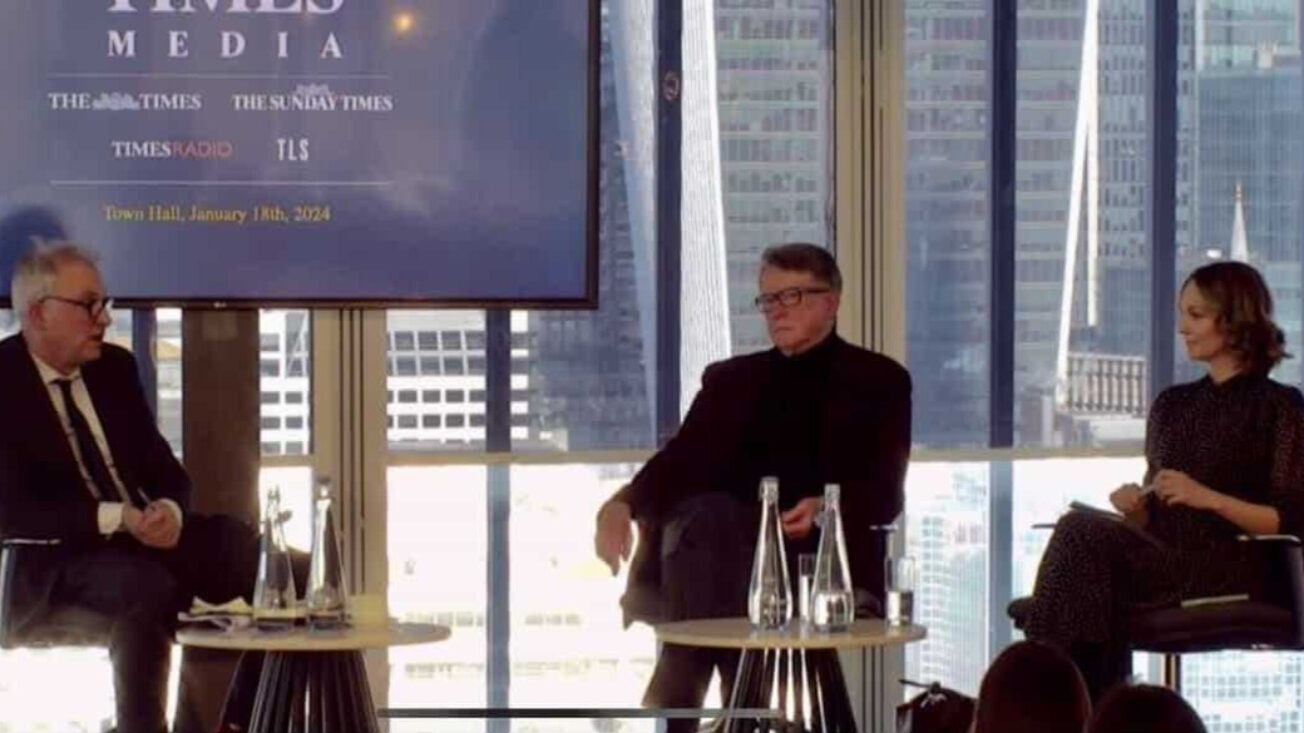
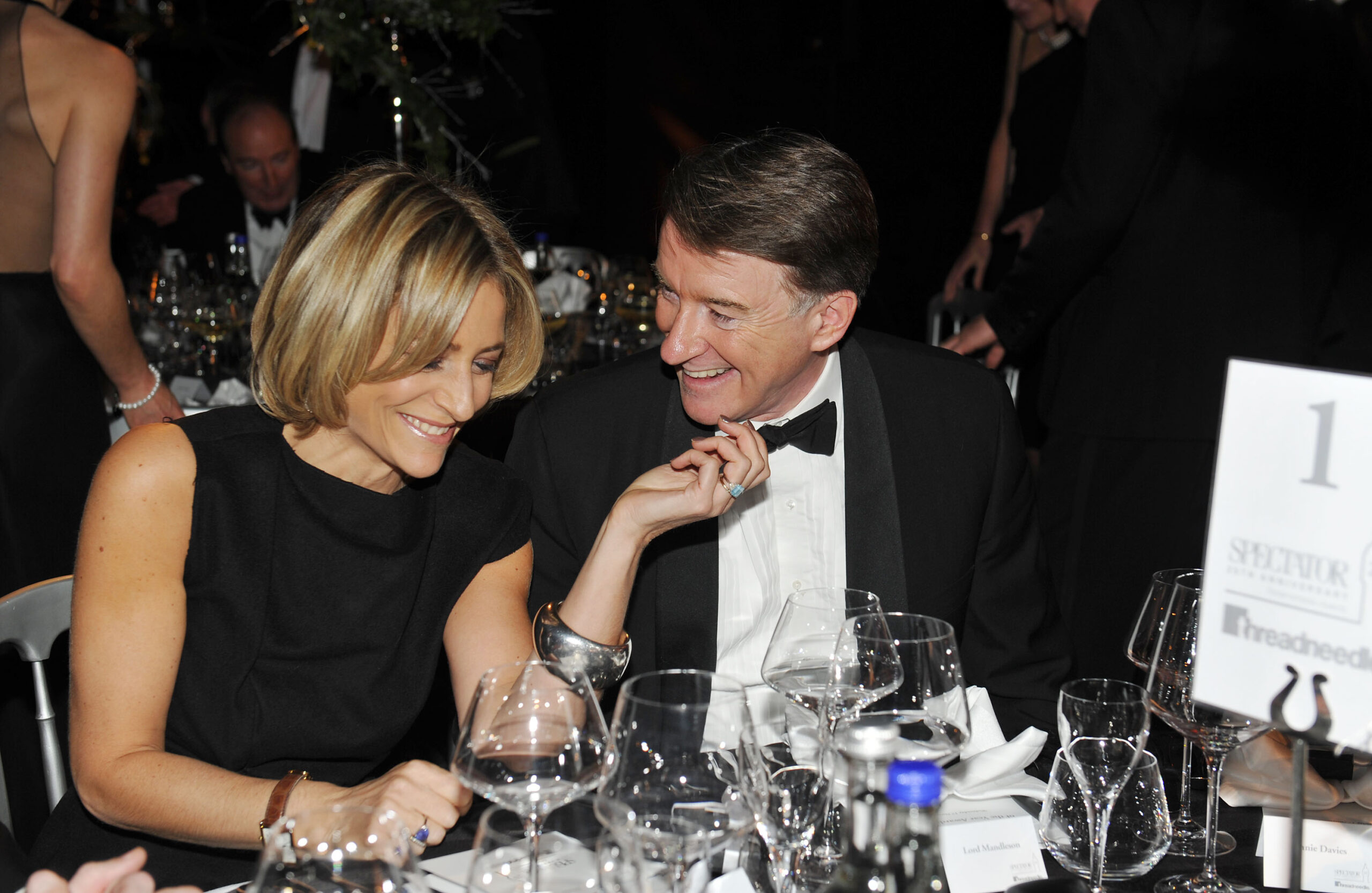
The Mandelson affair gets to the heart of everything wrong with British politics. He possibly had some power of veto over Labour’s candidates for the 2024 election, raising questions about who nixed leftwinger Jovan Owusu-Nepaul’s campaign in Clacton, which allowed Nigel Farage to become an MP. It also exposes everything that’s wrong with British media, without which Mandelson could not have repeatedly returned to frontline politics. Former Newsnight presenter and News Agents podcaster Emily Maitlis claimed to be appalled by the new revelations, but we’ve all seen the photo of her stroking Mandelson’s chin at a Spectator dinner. It’s not as if the Epstein circle was unknown to her – so far, we’ve had two films about her BBC interview with the former Prince Andrew – so why was she keeping a studied silence about Mandelson? The Times made Mandelson a host of its How to Win an Election podcast, to which Novara Media reported that its own staff objected, to no avail. Just last weekend, the Sunday Times magazine ran a puff-piece interview with Mandelson, with a footnote saying it had gone to print before the most recent round of revelations. Have its journalists been living in a cave for 30 years?
Recall that Starmer reportedly got the backing of Rupert Murdoch’s press after pledging not to conduct the promised second part of the Leveson Inquiry into the ethics and culture of the British media. The first part of the Leveson Inquiry took place in 2011-12, following revelations that journalists at the Murdoch-owned News of the World hacked a murdered schoolgirl’s phone. It looked in part at the close relationships between politicians, the press and the police: it rebuked David Cameron for being in close contact with News of the World editor Rebekah Brooks and appointing ex-editor Andy Coulson as his Director of Communications. Despite the revelation of this corrupt relationship, in which Cameron signed texts to Brooks with “lots of love”), his government did not collapse – largely because the recently deposed Labour governments of Blair and Gordon Brown were just as heavily implicated. Surprisingly, when Mandelson testified, he was allowed to deny the existence of any pact between Blair and Murdoch to secure News International support for New Labour’s 1997 election bid. He also criticised a Conservative adviser for texting information to a corporate lobbyist – something we now know he frequently did with Epstein.
The Leveson inquiry – sparked by the phone hacking scandal at the News of the World, and completed in 2012 – interested me at the time because it showed the establishment scrambling to contain a scandal that should have brought down the government and led to sweeping journalistic reform. Instead, a few minor figures were given short jail terms, and the press was told to strengthen its self-regulation. This was followed by relentless campaigns against two Labour leaders – Corbyn and Ed Miliband – who wanted to reopen the inquiry, and a decade-long hate campaign aimed at trans people, who had been represented at the first hearing and were organising against their long-term mistreatment by the media. The fallout was contained to the News of the World, just as the Jimmy Savile scandal, which broke the same year Leveson part one concluded, was confined to the BBC, deflecting attention from the former TV presenter’s friendships with Margaret Thatcher, Charles Windsor and others. Theresa May tried to launch an inquiry into historical sex offences in public bodies, including parliament, in 2014, but struggled to find a chair who had no conflicts of interest. The report finally came out in October 2022: its key recommendations have not yet been implemented.
The same efforts to contain the Mandelson fallout are well underway: McSweeney has gone, as has Starmer’s director of communications, Tim Allan, but Starmer is determined to stay in post and restore public trust in politics. He can’t. The Labour antisemitism scandal, which he exploited to cement his leadership, set anti-racist work back decades by allowing the far right to pretend the left are the real racists, and helped pave the way for the Gaza genocide. The anti-protest laws he brought in undermine his much-lauded credentials as a human rights lawyer, and the insistence amongst certain columnists that Starmer is a “decent” man rings hollow when you ask if Mandelson was given the US ambassador role precisely because he was part of the same elite ring as Epstein and Trump. And that’s a question you will have to ask, because it’s not been raised much elsewhere, in the same way as the most basic questions of the People’s Vote campaign were not raised anywhere except on leftwing blogs back in 2018.
The Mandelson scandal should not just be the end of McSweeney, even of Starmer. The craven complicity of lobby journalists, selected for their shared class interests with the political elite, made it all but impossible for reporters to interrogate Mandelson about his connections – aided by our strict libel laws and the threat of Slapps (strategic litigation against public participation – but ultimately, this is a failure of courage. The corrosion of the public sphere has prevented the last few decades of illegality and corruption from being properly laid out to the public, in a place where it might be widely read and understood, and has facilitated the destruction of any person or movement who might meaningfully act against it. After living through the above, I’m pessimistic about the prospect of change, but feel that if this scandal doesn’t bring down the whole rotten racket, maybe nothing will.
Juliet Jacques is a writer, filmmaker, broadcaster and academic.