Wealth Taxes Are Pointless While Tax Havens Exist
Smoke out the foxholes.
by Kojo Koram
13 March 2026
Ever tried to get in touch with your landlord, only to be redirected to some opaque company that never answers the phone? Or wanted to complain to a shop where you’ve bought something, only to find yourself lost in an endless hall of mirrors? You may have stumbled across an offshore tax haven, a secretive structure that impacts all of our lives, but which most of us know little about.
Over the past few years, wealth taxes have reentered public debate. Popular economists like Gary Stevenson, Grace Blakely and Faiza Shaheen, and now political leaders like Zack Polanski, argue that the UK must tax the richest more aggressively if it hopes to repair crumbling public services and address spiralling inequality. They’ve managed to persuade 68% of the public. But the wealth tax debate often misses a crucial problem. Wealth today does not simply sit inside national borders, waiting to be taxed. It moves; it hides. It reorganises itself through complex legal structures designed to evade the reach of states. Before we call for a wealth tax, we need to know how today’s super-rich seek to protect their hoard from taxation – and how we might close the loopholes. That’s exactly what we do on our new four-part podcast series Death in Westminster, now streaming on Novara Media.
Colonial plunder.
The modern offshore economy emerged in part as a backlash to post-war social democracy, the same that many leftists hark back to today when calling for wealth taxes. High tax rates and capital controls were ascendant in the UK during the 1950s and 1960s: the highest rate of income tax hovered around 97.5%, while the Bank of England restricted the supply of foreign currency to prevent the wealthy from moving their assets overseas. These measures allowed successive UK governments to fund the recently established welfare state. At the same time, Britons who had accumulated wealth in colonies during the age of empire were itching to leave their outposts. Decolonisation was spreading rapidly across the globe, and the former colonial expats feared having their money, or property, snapped up by the newly independent states.
Trapped between handing over huge portions of their colonial fortunes to the British welfare state and risking that wealth being seized by post-colonial governments, these returning Britons were desperate for another option. Fortunately for them, not all colonies took the path of independence. A sprinkling of small and previously insignificant imperial outposts, particularly in the Caribbean and the English Channel – including the British Virgin Islands, Guernsey and the Isle of Man – remained under British jurisdiction and reframed their relationship to the mother country in ways that would have profound consequences for the global economy.
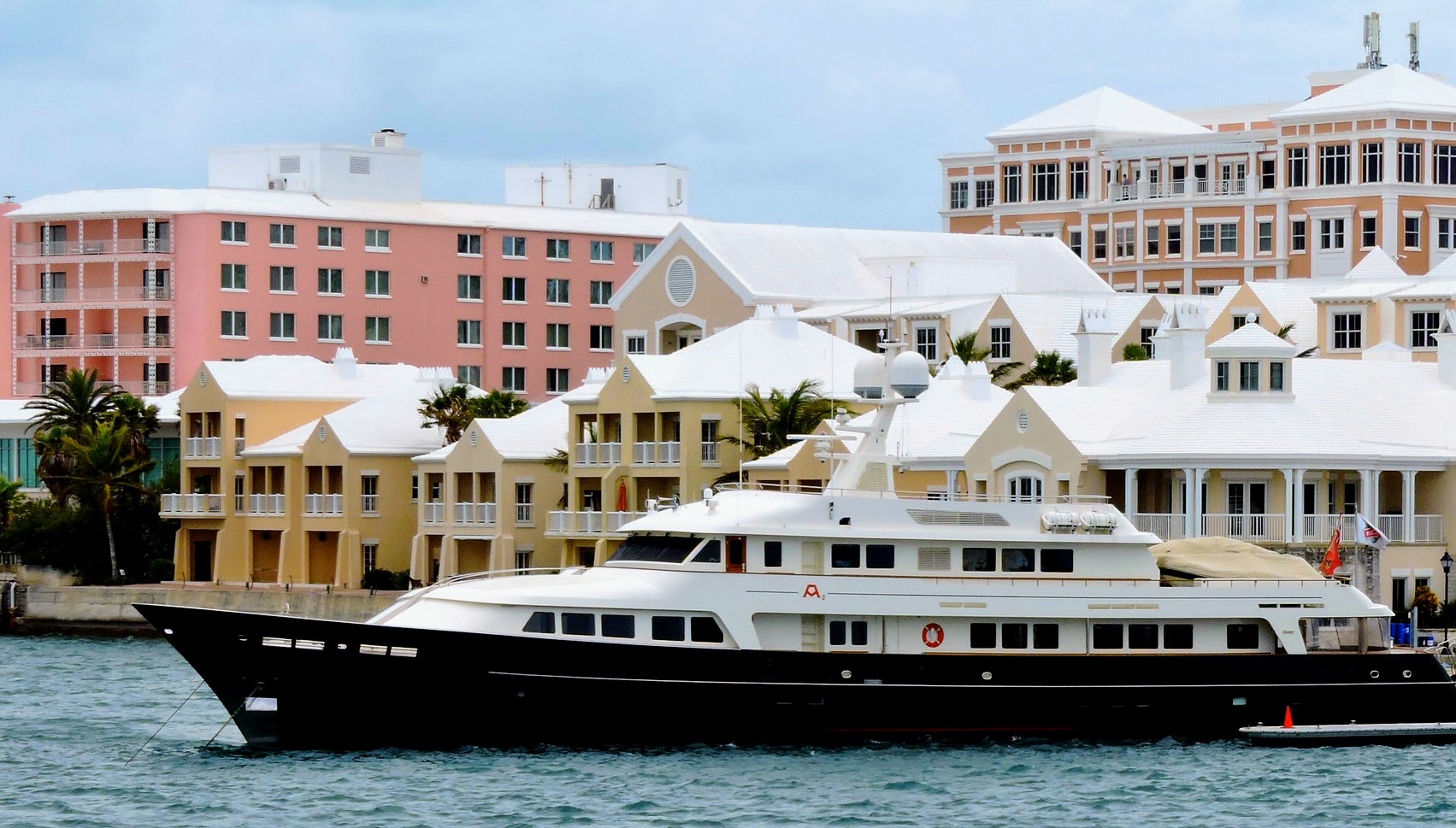
According to a 2019 report produced by the Tax Justice Network, the world’s three most corrosive offshore financial centres are all British overseas territories. The British Virgin Islands tops the list, closely followed by Bermuda and the Cayman Islands. The position of these tax havens – with one foot inside, and one outside the British state – makes them extremely attractive to global capital. By remaining under the patronage of British sovereignty – maintaining the king as their head of state, and the judicial council of the privy council as their highest court – these overseas territories are able to give investors the confidence that they are putting their money into a reliable jurisdiction with a long history of financial and legal expertise. Equally, by being self-governing entities largely autonomous of the British state in their day-to-day operations, these overseas territories can advertise that they are free of the democratic pressures and public scrutiny that a large, European state like the UK faces.
This strange constitutional arrangement has consequences far beyond distant tropical islands. It determines whether we can have a roof over our heads.
The rise of the ‘foreign’ investor.
There are more than 138,000 residential and commercial properties in England and Wales owned by offshore companies. In London alone, the value of these properties is around £55bn.
The share of the property market enjoyed by offshore corporations in England and Wales increased rapidly between 2005 and 2015. Almost all foreign corporate real estate investment originates from what we would recognise as tax havens – including from people who live in the UK, but just keep their money elsewhere. The EU Tax Observatory found that in 2022, around 15% of offshore property investments were made by residents of the UK, effectively making Britain its own largest “foreign” investor.
More and more, wealthy Britons are buying property through offshore-registered structures, rather than straightforward domestic ones, because they offer benefits such as confidentiality; the ability to obscure the true ownership of property; and potential tax advantages when the asset is eventually sold.
The cumulative effect is that bricks and mortar in our capital city have been transformed from shelter for human beings into shelter for cash, often acquired under dubious circumstances.
Offshoring is a global problem that accelerates spiralling wealth inequality across the world. It would not be solved simply by Britain taking a position against it. But that would be a powerful start, especially given the outsized role that Britain and its overseas territories play in the architecture of offshore finance. When its dependent territories are taken into account, Britain is arguably the single most important actor in the offshore system.
The only way to make a wealth tax effective would be to combine it with dismantling the offshore system that allows wealth to slip through states’ fingers. A more equal British economy would require changes to taxation, yes – but perhaps more importantly, a change in the geography through which wealth moves. In our new Novara Media four-part investigative podcast series, Death in Westminster, we look at how the offshore system facilitates the hoarding of housing by the wealthy, exacerbating a housing crisis that is felt most acutely by our poorest and most vulnerable communities. It is not a coincidence that Westminster has both the most homeless people and the most empty homes in the UK. The pressure from one eventually pushes down on the other. We need to put some of our best minds together to find out how to stop this deeply entrenched and secretive system.
Join Kojo Koram and Dalia Gebrial on 19 May at EartH Theatre in Hackney, where they’ll be discussing their new podcast Death in Westminster along with Green party MP Hannah Spencer, investigative journalist Peter Geoghegan, financial activist Stephanie Brobbey and former Labour MP Faiza Shaheen. Tickets are on sale now.
Kojo Koram is a professor of law at Loughborough University and author of the forthcoming book The Next Fix: The Winners and Losers in the Future of Drugs.