Zack Polanski’s name isn’t on the letter due to be sent today to Keir Starmer by the seven Green MPs and Lords, but his fingerprints are all over it.
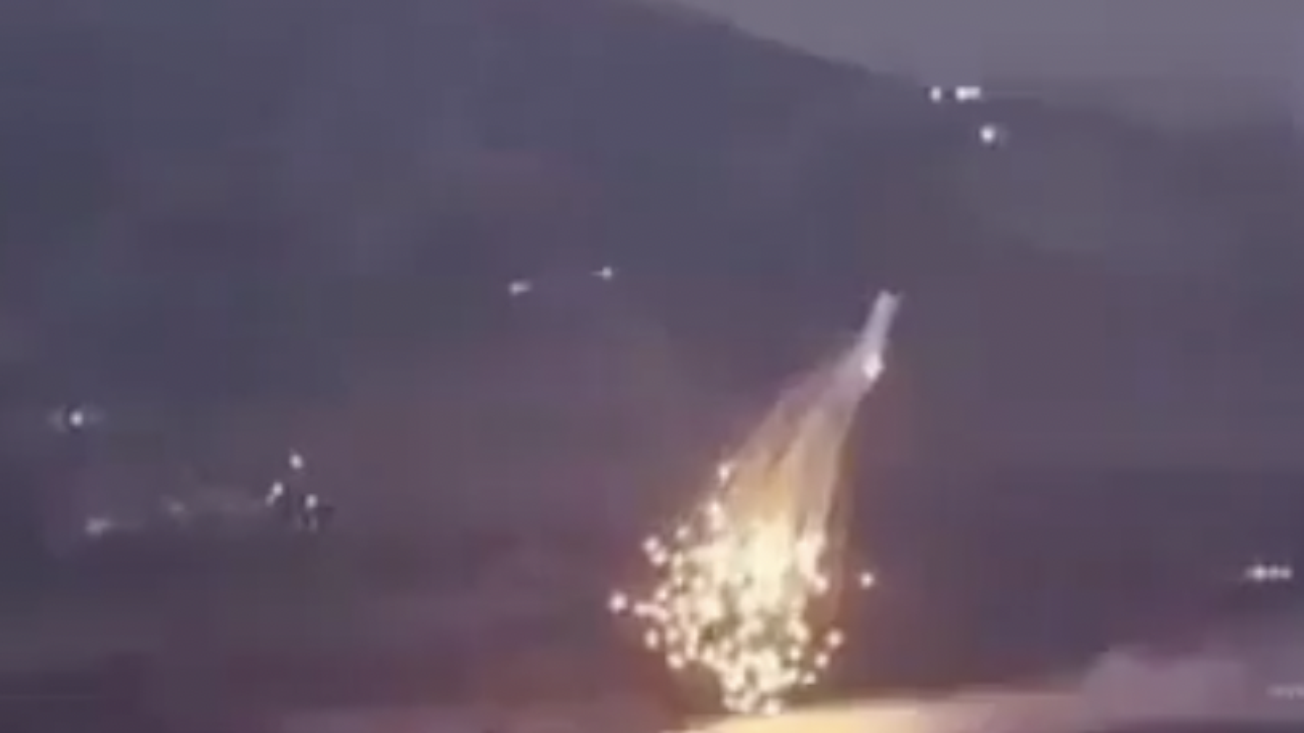
The letter was clearly penned by an eco-populist. It describes the Iran war as “illegal” and poses several uncomfortable questions about Britain’s involvement. How is Starmer ensuring our bomber planes are being used “defensively”? Does the Ministry of Defence even see the list of Iranian targets before the US pulverises them from British soil? Is Britain allowing the US to load barbaric cluster bombs – which we’ve legally committed not to use, but the US hasn’t – at our air bases? Could UK-made weapons have killed Iranian schoolgirls?
The letter ends by demanding that Starmer stop letting Trump use our military bases (which is becoming increasingly common knowledge, despite Britain denying involvement in the war); end arms sales to Israel; condemn Trump and Benjamin Netanyahu for violating international law; and sanction law-breaking officials.
On BBC Question Time last night, former Green leader Caroline Lucas took an uncharacteristically bullish, some might say Polanski-esque, tack: “This is not Grand Theft Auto, this is real people’s real lives.” Gone are the days of Green politicians politely suggesting that Labour modify its approach.
Despite 70% of Britons opposing the UK joining the war, only one major party agrees with them. The Greens have long been an anti-war party. Now, they’re the anti-war party.
The last few attempts to build national anti-war parties in Britain have, well, bombed. The Respect party, formed as an anti-Iraq coalition, slowly morphed into The George Galloway Show, losing steam partly due to its factionalism; its cofounder, George Monbiot, quit over its decision to field candidates against the Greens.
The Liberal Democrats famously opposed war in Iraq – they dined out for years on history’s vindication of Charles Kennedy – but on legalistic grounds. The Lib Dems believed military action should be taken against Saddam Hussein, but as a last resort, and only then with the backing of the UN and House of Commons. Nevertheless, the party scooped up lots of Muslim voters in 2005 as part of this “anti-war backlash”; then-foreign secretary Jack Straw saw his vote share drop by 12% over it.
Then there was Jeremy Corbyn. It was primarily Corbyn’s unswerving opposition to war – he has voted against every military action the UK government has proposed during his 42 years as an MP – that vexed the establishment, though that manifested mostly as faux-antiracism. Though Corbyn captured the leadership, he never truly captured Labour. As soon as Starmer took charge, the party resumed warmongering-as-usual, while Corbyn resumed his anti-war activism from the sidelines, arguably his most comfortable position.
Meanwhile, largely unnoticed, the Green party has maintained a consistently anti-war position – it’s just that now, people are paying attention.
Like most of its European siblings, the Green parties of England, Wales and Scotland grew out of the anti-war movement of the mid-20th century. The commentariat appears to have forgotten this. Polanski’s proposal that the UK leave Nato, despite raising several eyebrows, is old news. The Greens were outspoken Nato critics during the cold war, seeing the alliance as an accelerator of nuclear armament. Then in 2023, following Russia’s invasion of Ukraine, the party softened its anti-Nato stance, ditching its pledge to withdraw the UK from the alliance and affirming its “important role in ensuring … security”. If anything, Polanski’s Nato scepticism is more a return to form than an eco-populist provocation, though it does reflect how much bolder he’s felt able to be than the party’s recent leadership.
The Greens are no flower power pacifists, though: they want the government to arm Ukraine against Russia. Much like the Lib Dems and Iraq, Polanski sees arming Ukraine as a last, though still viable, resort: “Once you’ve exhausted every possible option, then you ask for the further military question,” he told HuffPost in February. Yet Polanski’s reluctant militarism in Ukraine derives not from a general pro-war stance but rather from his opposition to Russia’s imperialism, of a piece with his criticism of US imperialism and Israeli colonialism. In this way, Polanski is much closer to Corbyn’s Labour – now Your Party – than to the Lib Dems, despite having been one himself.
Yet Polanski will be much harder to undermine as an anti-war loony leftist than either Galloway or Corbyn. As I wrote recently, Gaza has transformed the political terrain on which Polanski stands. It’s exponentially harder to weaponise antisemitism now it’s been used to repel charges of genocide; exponentially easier to oppose war now that a generation has had unspeakable images burned into its retinas.
What’s more, Polanski has found a way of joining the dots between his critique of capitalism and his anti-war stance, between bombs and bills. This many-pronged opposition to the war – not just due to its effects on ordinary Iranians, but due to its direct impact on ordinary Britons – will make it difficult for Labour to push back. Having just emerged from one cost-of-living crisis, Britain could be plunging itself into another. Even the most hawkish frontbenchers are going to struggle to defend such masochism.
Rivkah Brown is a Novara Media commissioning editor and reporter.