Labour Just Hounded a Blind Amputee Out of Office
“Sit down and shut up.”
Rosa Gomez was used to being disrespected by her colleagues, but this was something different. The Labour mayor of Redbridge, Beverley Brewer, had slapped her down at a 60-person meeting of the full Redbridge council, the east London borough bordering Essex. What’s more, Brewer’s outburst had happened during a debate about disability benefits, a motion that Gomez, a blind upper limb amputee, had tabled herself. As the motion’s proposer, Gomez was entitled under the council’s rules to close the debate. Brewer wouldn’t let her.
The video of the council meeting was never uploaded to the council’s website, nor were Brewer’s remarks to Gomez included in the meeting minutes (Redbridge wouldn’t explain why to Novara Media). Nevertheless, several attendees who spoke to Novara Media recall them vividly. The other motion tabled that day was, ironically, “debate not hate”. The “abuse and intimidation of councillors undermines democracy, deters individuals from standing for election, and weakens public trust”, it declared. The motion passed 52-0.
Earlier this month, Gomez received an email notifying her that she was no longer the independent councillor for the Churchfields ward “by reason of non-attendance”. Under local government law, a councillor who fails to attend council meetings for six consecutive months, without prior approval, automatically forfeits their seat. Yet the council knew why Gomez hadn’t been attending meetings. It had knowingly removed her ability to do so.
Gomez needed a support worker – preferably two – in order to attend council meetings. The council had let her since she joined the council seven years ago. Then, in October, the council suddenly banned Gomez from bringing her support workers to council meetings. Without them, Gomez couldn’t participate in council meetings.
Several councillors – including for the Labour party – told Novara Media they believed Gomez, a former Labour councillor who defected in 2024, is the victim of political targeting, orchestrated by the local Labour party and enacted by its bureaucrats. “There’s elements in Redbridge Labour that don’t like Rosa,” said one Labour councillor, laughing nervously. “I’m putting it in a very diplomatic way there.”
Redbridge Conservative leader Paul Canal was less diplomatic. “It is breathtaking hypocrisy for a party that’s supposed to have the interests of the vulnerable and the minorities at its heart,” Canal said. “I’ve seen Labour close up and personal for 40 years in the East End, and it’s not a caring beast.”
Asked why it had removed Gomez from her council seat, a Redbridge Council spokesperson said the council was simply following the rules, and that since Gomez was no longer a councillor, “the associated allowance and access arrangements have been withdrawn”. Yet Redbridge cancelled Gomez’s access arrangement months before it removed her from office. In response to repeated questioning by Novara Media, the council refused to say why it had done so, or why, as in the case of other Redbridge councillors, it had not considered Gomez’s inability to access her workplace as sufficient reason to waive her absence.
Current and former Redbridge councillors say Gomez’s treatment exemplifies Labour’s cutthroat attitude to the left, a tendency they fear is becoming more pronounced as the party loses its grip on the council. Independent councillor and fellow Labour exile Shanell Johnson described the situation to Novara Media as “performative cruelty”, adding: “It’s a warning to others to stay in your lane.”
“It’s clearly political persecution, and it’s nasty stuff,” said Andy Walker, a former Labour councillor in Redbridge. “I have no idea why they’d want to go down this road.”
Red Rosa.
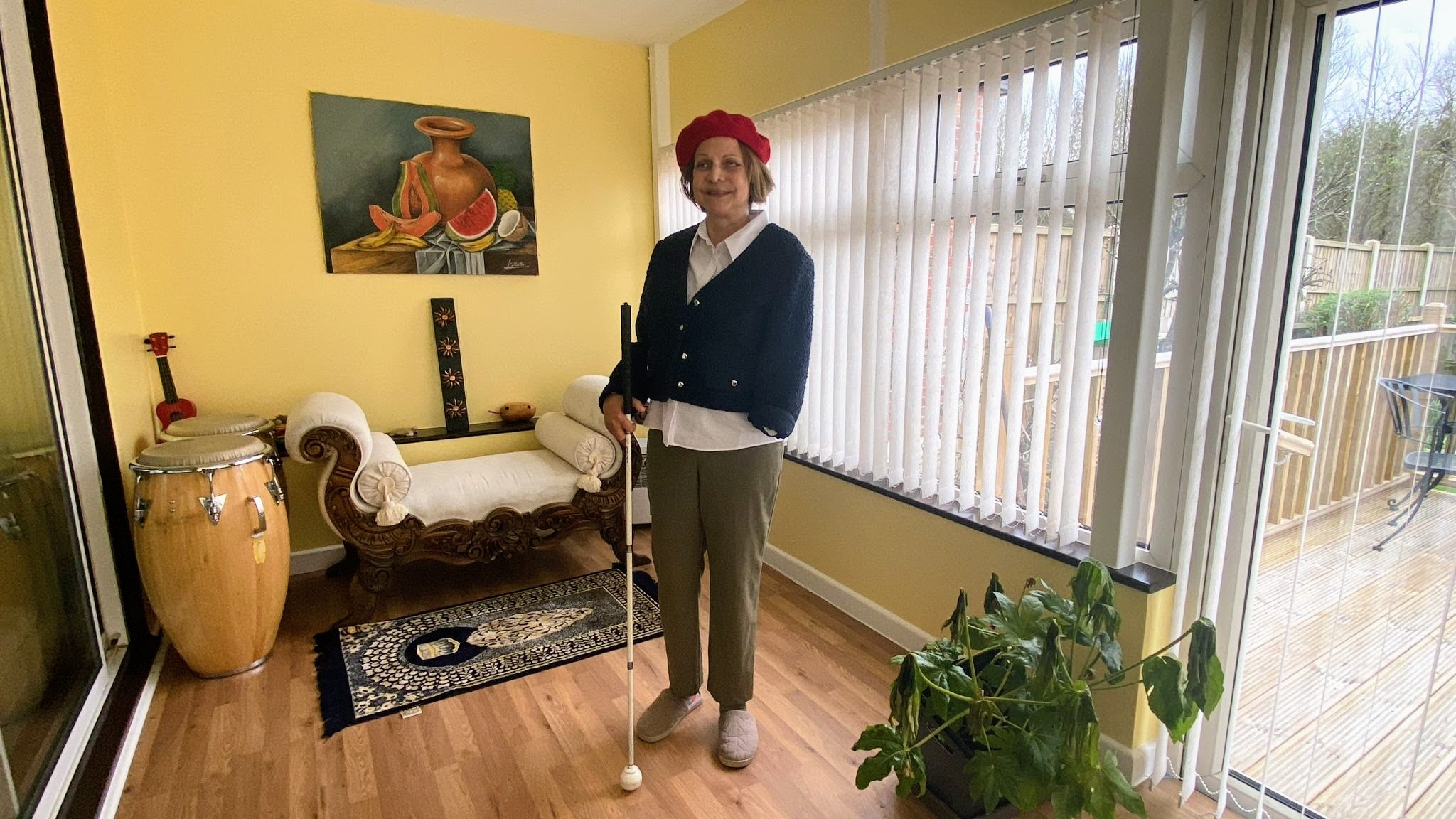
Gomez is not the sort of person you’d think would threaten Labour. A slight, softly-spoken woman with shoulder-length brown hair, Gomez uses a cane to get around, and has two assistants: a support worker to assist for a few hours a day with administrative tasks, such as reading and responding to emails, and a 24/7 carer, to help with things like washing and dressing.
“If you could see me, I’ve got gadgets all around me,” Gomez joked when I called her at home, when her support worker wasn’t present. I listened as she struggled to turn off the television that was blaring in the background. “Aha! I’ve switched it off with my elbow.”
Gomez followed her mother and sister to the UK in 1972, aged 15. She returned to Colombia for three years in 2008 for what proved a fateful stay. In 2010, six shots were fired at her car (she still doesn’t know why); she took four of them. When Gomez regained consciousness in hospital, she had lost her left forearm, the use of her right hand, and her sight.
Today Gomez speaks with a gravelly, thickly-accented voice: the intubation she received in hospital, as well as laser surgery to repair her vocal chords, damaged her airway; she carries emergency steroids at all times for when it closes, which it does a few times a year. It took five years of intensive psychotherapy, counselling and psychological treatment for Gomez to feel like herself again.
After returning to the UK the following year, Gomez worked at Stay Safe East, a charity for disabled abuse survivors. She quit partly because she was getting increasingly involved in her local Labour party, and the charity didn’t want her becoming a politician. In 2018, Gomez spotted an email encouraging Labour members – specifically women and disabled people – to stand as councillors in the upcoming local elections. Her heart leapt – then sank.
In 2018, Redbridge was strongly aligned with the Labour right: Jas Athwal, the Labour slumlord and sometime mentor to Wes Streeting, was its leader. Gomez, on the other hand, was a dyed-in-the-wool Corbynista. Her family’s first home in the UK was in Islington North; her local MP impressed her with his support for, and knowledge of, Latin American communities. Within months, she was door-knocking for Jeremy Corbyn, whom she describes as a “mentor”. Surely there was no way that, at the height of Corbyn’s “antisemitism crisis”, Redbridge was about to admit a Corbynite candidate? Miraculously, it was.
Gomez organised a meeting with local MP Wes Streeting and the constituency Labour party (CLP) chair Lloyd Duddridge, a former caseworker of Streeting’s and firmly on the Labour right. I’ve got the skills and the passion, she told them, I’m a lifelong Labour supporter, but I’m on the left. Can you work with me? “Absolutely, of course,” Gomez recalled Streeting’s reply. Duddridge “reluctantly” chimed in, and helped Gomez complete her candidate application.
“I very much doubt there’s anything on which Rosa Gomez and I agree – we are at different ends of the political spectrum – but I have huge amounts of respect for her, both as a woman and as a campaigner,” said Canal. “She’s profoundly disabled, and she still has the determination and courage to take part in political life, and I really admire that.”
The Labour party, however, soon regretted its mistake.
Gomez’s trajectory in the Labour party closely mirrored her mentor Corbyn’s. Sidelined for refusing to kiss the ring; chastised for associating with the left; suspended on spurious antisemitism charges; finally, becoming an independent. Labour hated Gomez, but the people loved her: last year, the Local Government Authority (LGA) nominated Gomez for councillor of the year; in January, she was invited to attend an LGA reception at Buckingham Palace (the invitation was withdrawn after an unexplained change to the guest list). The LGA declined to comment on Gomez’s treatment by Redbridge, saying it isn’t a council regulator and does not comment on individual councils or councillors (among the LGA’s listed goals is “to continually improve local government”).
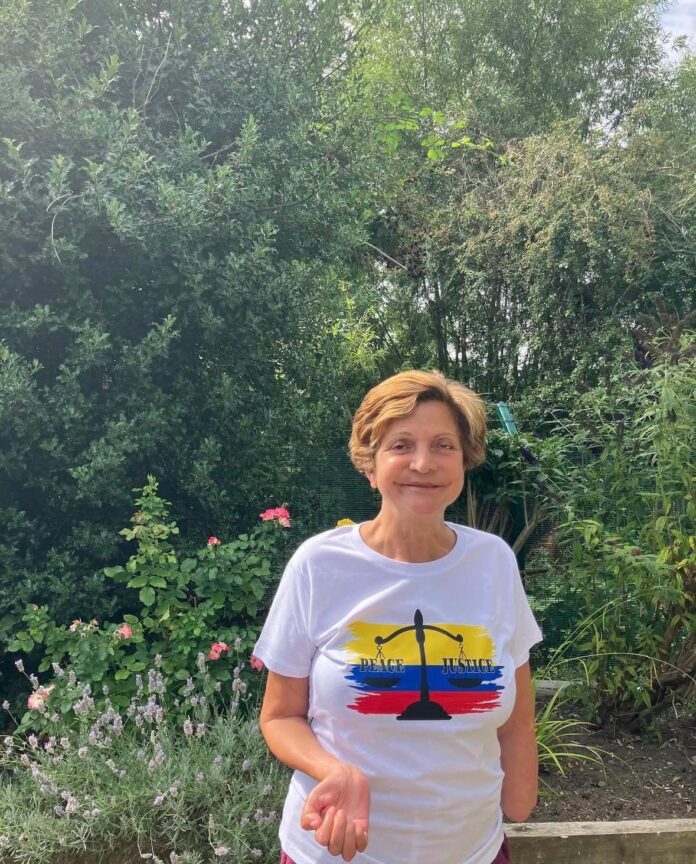
When Gomez defected from Labour in 2022, she joined a handful of so-called “Gaza independents”. Labour has for years enjoyed a supermajority in Redbridge, which most agree will either be slashed or lost altogether in the May local elections. Gomez, active in the local area despite her disability, has become a symbol of why the party is losing.
“I pose no threat to them, but clearly, I rattled them. They feel insecure,” Gomez told Novara Media.
“It’s like many groups,” said Canal. “You hate people who defect more than you hate the enemy, sometimes.”
Work isn’t working.
Gomez struggled to navigate the council as a disabled person long before she fell out of favour with Labour.
Shortly after she was elected in May 2018, Gomez requested a personal assistant to take her to the town hall and assist her on her computer. The council rejected her request, advising Gomez to use the pool of council admin assistants – untrained to support disabled workers – instead. Gomez had to take two months off while applying to the Department for Work and Pensions’ notoriously inaccessible Access to Work scheme.
The following year, Gomez found herself stranded outside the town hall after her council-organised transportation left without her after a meeting overran; a council officer was disciplined for driving her home. Unable to take minutes in meetings when her support worker wasn’t present, Gomez would request them from other attendees; emails seen by Novara Media show she was routinely ignored. There were frequently embarrassing scrambles for chairs to find Gomez’s support workers somewhere to sit in the council chamber. Gomez requested disability training for her colleagues, who she noticed would avoid her since they felt unable to engage with her, but no training was ever organised.
Two particular incidents are seared in Gomez’s mind. The first is a 2021 meeting of the Labour group. During the meeting, Councillor Judith Garfield emailed Gomez to say that an agenda item she had tabled would not be discussed. Gomez missed Garfield’s email – she can’t multitask during online meetings – was shut down by Garfield in front of everyone, and cried out of humiliation. Garfield did not respond to Novara Media’s request for comment.
The second was a Labour canvassing session for the 2022 local elections. Duddridge – then a candidate for the same ward where Gomez was a sitting councillor, and a close ally of Athwal and Streeting – had organised meeting points that were a 15-minute walk from the doors they were due to knock. When Gomez complained that the group was walking too fast for her, particularly given the strong winds that day, Gomez recalls Duddridge replying: “What do you want me to do, stop the wind as well?” Gomez went home. Duddridge declined Novara Media’s request for comment.
“I am a disabled woman,” Gomez wrote in her resignation statement from Labour in June 2024, “but reasonable adjustments were often not made to allow me to fully participate in council meetings.”
It was after her defection from Labour that Gomez began to strongly suspect her treatment was more than workaday ableism.
‘Hope this is clear.’
In August last year, Gomez received an email from Pervinder Sandhu, the council’s monitoring officer, the civil servant who ensures the council acts lawfully. Sandhu told Gomez she had been subject to a formal complaint from then-acting chief executive Steve Moore for sharing a confidential email about the departure of the council’s education officer, Colin Stewart, with three non-councillors. This, Sandhu said, was a potential breach of GDPR; a conduct investigation was required.
“Can you explain … why you forwarded the email to the accounts identified above? Who are the individuals?” Sandhu asked. Gomez responded, explaining what Sandhu already knew: the email recipients were her support workers. One had been working with Gomez for almost five years; Sandhu had met him on at least one previous occasion. Gomez added that in 2020, she had written to the council’s then-head of governance, Antoinette Davis, stating her need to share confidential information with her support workers. Davis agreed that, while Gomez was not to share her computer password with her assistants, she could share the contents of her work emails, as long as she “made [residents] aware that the content of their emails will be shared with your support workers”. This arrangement had been in place for five years, when Sandhu emailed. “She was playing ignorant,” said Gomez.
Under the Equality Act, Gomez pointed out, employers have a responsibility to make reasonable adjustments so that disabled people can conduct their work without serious disadvantage – support workers were one such adjustment to which the council had agreed. Sandhu hauled Gomez into a meeting regardless.
At the October meeting, Sandhu initially denied Gomez’s support assistant and carer entry. Only after Gomez refused to proceed did Sandhu admit her carer, and only then on the condition that they didn’t take minutes. In the meeting, Sandhu told Gomez that the complaint had been upheld; the council found that providing a work laptop and phone were sufficient reasonable adjustments for Gomez’s work, and that there was therefore no justification for her sharing casework with support workers. Sandhu also said it was “more likely than not” that Gomez was indirectly responsible for a leak to the press about the news of Stewart’s dismissal. Gomez was instructed to apologise; undergo confidentiality training; repeat the council’s data protection training; and declare not to share confidential information with anyone “includ[ing] your carers and support workers”. Gomez initially refused to apologise, then reluctantly agreed. She requested meeting minutes; Sandhu ignored her.
“Rosa is a public servant,” said Noor Begum, a fellow independent councillor in Redbridge, now a Your Party politician. “If they’re treating her this badly, what will they do to ordinary residents who have disabilities and can’t advocate for themselves?”
Things quickly deteriorated after that meeting. In emails with Gomez, Sandhu said that her carer and support worker could no longer sit with her in the council chamber, but would instead be seated in the public gallery. This changed an arrangement that had been in place for years, and would render the workers effectively useless to Gomez. “If my support workers are sitting in the gallery, they will not be able to do the things that they have been doing for the last seven and half years,” Gomez explained to Sandhu. In closed council meetings, Sandhu added, the support workers would not be allowed at all, Sandhu added. “Hope this is clear,” she signed off. Sandhu did not respond to Novara Media’s request for comment.
Canal intervened, asking Sandhu and the council’s chief executive, Claire Hamilton, why the council had removed her support workers, to no avail.
Why would council officers – who, as civil servants, are nominally apolitical, so in principle should have no axe to grind – treat Gomez in this way? Several sitting Redbridge councillors who spoke to Novara Media linked this explicitly to Labour’s chokehold over the council. As I’ve written previously, Labour rules Redbridge with an iron fist. Questions in council meetings have to be pre-agreed with the leadership; independents aren’t even allowed to ask them. The council has still not investigated its former leader, Athwal, over his alleged slumlordism.
For Johnson, Redbridge’s civil servants are acutely aware that they serve at Labour’s pleasure. “Who employed them? How did they get their jobs?” she asked Novara Media. A current Labour councillor echoed her sentiments: “Labour have been in there since 2014, with big majorities as well,” they said. “Are [civil servants] sufficiently objective or not?”
Gomez traces her problems back to Duddridge, whose spurious complaint of antisemitism led to her being dragged through a kangaroo court. “Our worry is that although the monitoring officer should be impartial as a solicitor, it seems that whatever Lloyd Duddridge says goes, which would be very, very worrying in a democracy,” Gomez told me.
In January, council official Ian Buckle wrote to Gomez confirming the new arrangement. Then, in a phone call, softened, saying that Gomez’s carer could be beside her in the chamber, though at a few metres away from her. By this point, the point was moot: two weeks after Buckle’s call, Gomez received an email saying she’d been disqualified as a councillor anyway.
Meanwhile, Duddridge was tweeting about how disappointing it was that Gomez wasn’t coming to council meetings. “I understand it’s harder for Rosa than anyone else to get to the Town Hall,” he wrote, attaching a screenshot of Gomez’s attendance record. “However an attendance record of 0% in the last six months is worrying. Voters deserve all their councillors being local vocal and visible and they are not getting that with the Independents.”
Tagging Redbridge council’s X account, Duddridge added: “Can we make sure that we are doing all we can to make it easier for Cllr Gomez to get to council meetings.” The tweet seemed strangely performative: as a cabinet member, Duddridge was almost certainly aware of Gomez’s inability to attend meetings, and had the ability to intervene to enable her to attend. Asked by Novara Media whether he was feigning ignorance in his tweet, Duddridge did not respond.
Gomez’s treatment has prompted alarm among disabled politicians and rights groups. Baroness Jane Campbell, a crossbench peer with spinal muscular dystrophy, noted that she herself is permitted to bring a personal assistant into the chamber. “I see no reason why Councillor Gomez is not afforded the same support,” Campbell wrote to Novara Media.
In a statement to Novara Media, Mikey Erhardt, Policy Lead at Disability Rights UK, said: “If it is found that this council has deliberately excluded a disabled person from participating in their elected position, it would be shameful but unfortunately not shocking to the 16 million Disabled people in the UK who face this kind of marginalisation on a daily basis.
“The idea that someone showing solidarity with the severe humanitarian crisis unfolding in Gaza and advocating for the protection of the rights and dignity of Disabled individuals in this time of emergency, is an excuse for such exclusionary behaviour is simply unacceptable. It speaks to the wider, rising tide of ableism we are seeing, entrenched in austerity policies at a state level.
“We were startled to see the council in this instance seem to make so little effort to implement the bare minimum reasonable adjustments. Being inclusive means not hiding behind the vagaries of codes of conduct, but instead finding a joint way forward that allows Disabled councillors to fully participate in local democracy. We hope they reconsider their position.”
Greener pastures.
In March, Gomez filed a pre-action grievance to the council, making clear her intention to take legal action over her treatment. The council, Gomez claimed, had failed to implement reasonable adjustments for her. “These failures prevented me from attending meetings safely and participating in Council business on an equal basis with other members,” she wrote.
Pursuing such action may be tricky, however. Since she was not an employee of the council – councillors receive an allowance of £12,500 per year, which increases if they take on additional responsibilities – Gomez can’t go to a conventional employment tribunal, but will instead have to pursue any legal action via a county court, which is legally complex and costly. Her union, Unison, has said it can’t assist her, since she wasn’t a salaried employee. “I’m caught in the middle,” she told Novara Media.
I asked Gomez whether her experience has put her off participating in public life. “Not at all, because it’s not public life that has done this to me; it’s a group of politicians and a particular council. If I could, I would do it all over again.” In May, she is standing as a Green councillor in her new home of Harrow, northwest London, and is actively on the hunt for a school where she might be a school governor. “I could just retire,” she laughed. “I’ve got my pension. I could just go and sit in cafes and drink tea in the afternoon – but no, I’ve got a lot to offer.”
Rivkah Brown is a Novara Media commissioning editor and reporter.