The Kurds Are Nobody’s Proxy
Neither Trump, Tel Aviv nor Tehran can manipulate them.
by Elif Sarican
8 April 2026
Fancy winning one of five £50 vouchers to spend in the Novara Media shop? Fill in our audience feedback survey before 11:59pm on Sunday 12 April to be in with a chance.
The Kurdish struggle for self-determination is one of the oldest continuous liberation movements in the Middle East. Kurdistan – the geopolitical region spanning Turkey, Syria, Iraq and Iran, united by an ethnic group of around 45 million – predates both the CIA and the state of Israel by generations. Yet since the United States and Israel launched their war on Iran, you would be forgiven for thinking that Kurdistan was invented in a Langley briefing room sometime in late 2025.
There is a myriad of strategies states across the region use to realise their regional ambitions. Israel has for years sought to develop close relations with minorities across the Middle East to gain leverage against Arab states, Turkey and Iran, and this latest war is no different. In early March, CNN reported that the CIA had been working for months to arm Kurdish forces along the Iran-Iraq border. Axios followed with details of a plan, formulated by Mossad and supported by the CIA, to use Kurdish fighters as a proxy ground force; to create a buffer zone in northern Iran; and to spur more internal rebellion in Iran to bring down the regime.
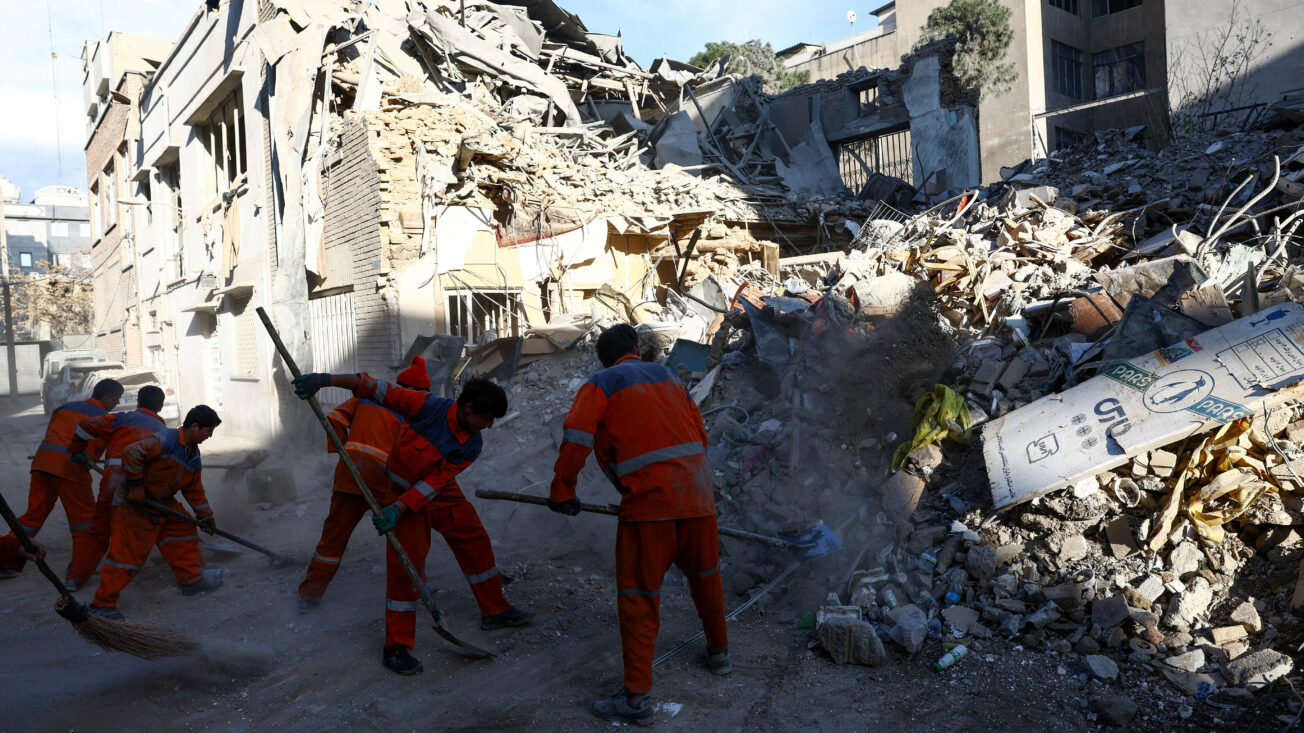
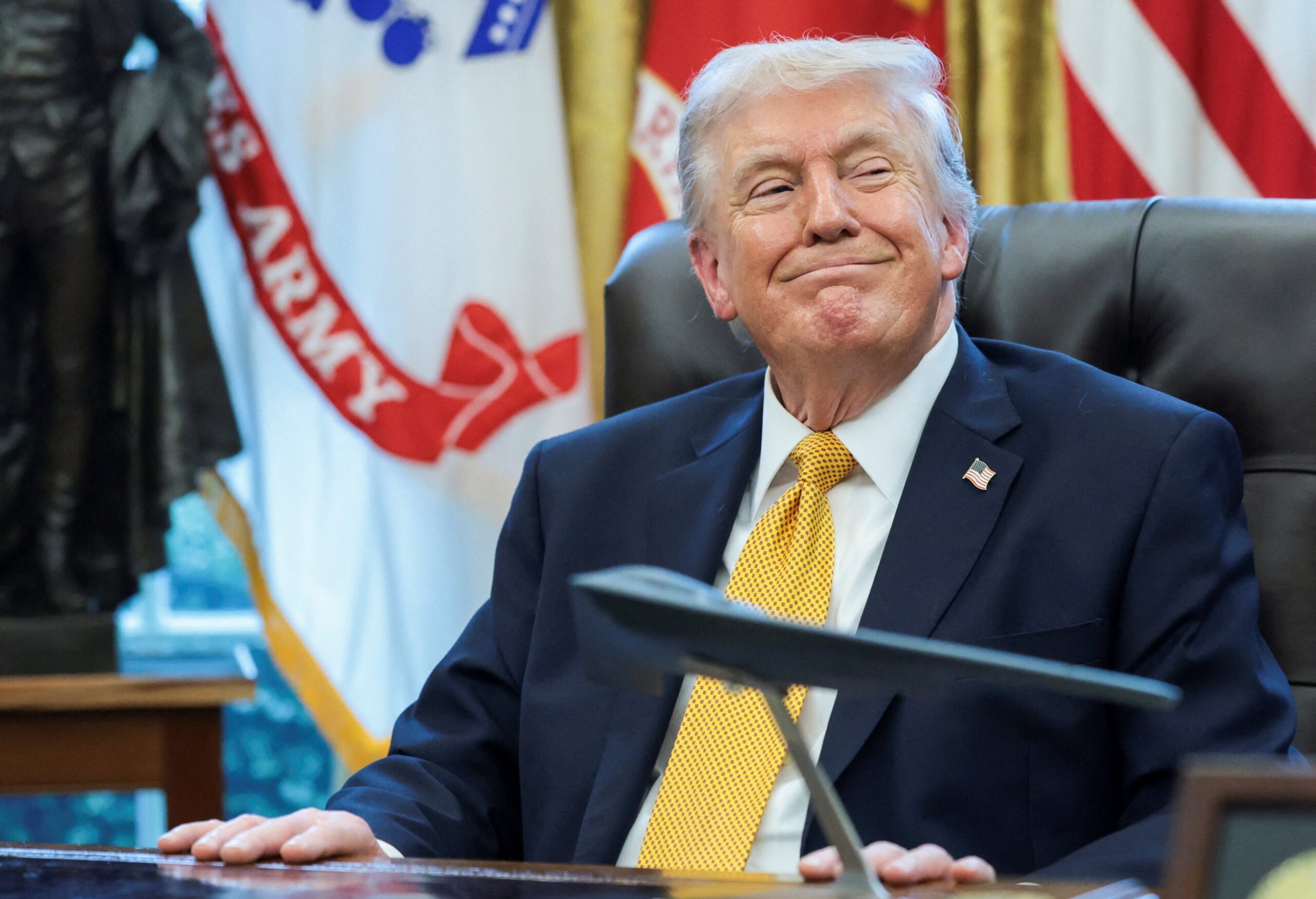
Yet the US-Israeli plan to bomb Iran and piggyback off Iran’s protest movements that erupted earlier this year clearly has not worked. Amidst his bombastic statements, Trump recently claimed that they sent “a lot of” guns to the Iranian anti-regime protestors, but alleged Kurdish intermediaries of taking. Iran has responded to US-Israeli attacks by targeting key economically critical areas of the region – including Kurdistan, despite it not being involved in the war. In Kurdistan, Iran has targeted civilian areas, including the capital of the Kurdistan Region of Iraq, through its Iraqi proxies, the Shia militia Hashd al-Shaabi (PMF).
But the failure reveals something deeper: neither the US-Israel bloc nor the Iranian regime care about Iran’s complex sociology. And Kurds are paying for that.
East Kurdistan, which spans northwest Iran, is the most securitised region of Iran. Kurdish communities there live under the most intense surveillance and policing of any population in Iran. This makes their areas prime targets twice over: for a regime determined to maintain control; and for a foreign military force seeking to weaken Iran’s security infrastructure. Kurdish areas have been disproportionately affected by both the regime’s crackdowns and by US-Israeli bombs. This fact alone necessitates a different approach – a third way – that refuses the false choice between imperialist bombardment and authoritarian repression.
There is, of course, an obvious problem with referring to a nation of 45 million people as “the Kurds”, as though they were a single actor with a single phone number. Many people in the West would have first encountered Kurdish political life during the territorial fight against Isis, when the Kurdish People’s Defence Units, the Women’s Protection Units, and later the Syrian Demoratic Forces developed a relationship with the US-led international coalition – though it is worth remembering that Kurdish forces in Rojava, the Kurdish-governed autonomous region in northeast Syria, were defending their lands from Isis long before the coalition took any interest in them.
Still, some may have been surprised that “the Kurds” would be a go-to proxy, given that the relationship in Syria, whatever interrogation it deserves, was not one of proxying. Others might find it surprising for the opposite reason: several of the largest Kurdish forces across the region are inherently and explicitly opposed to the ideological projects of both the United States and Israel. The most likely surface motivation was a straightforward recognition of the battle readiness and experience of Kurdish fighters, combined with Israel’s broader strategy of leveraging ethnic minorities to advance its regional interests. Together, these made “the Kurds” prime candidates. The CIA ‘leak’ was obviously not an accident but a weapon of public pressure in a charged moment. And the sell to Kurdish forces in the area would have been the oldest line in the book: the enemy of your enemy is your friend.
Despite that, the dozen Kurdish parties operating in East Kurdistan were saying something quite different: they would not fight anyone else’s wars. They are not soldiers for sale. They have their own interests in the current context – primarily the self-determination of their people and a democratic Iran. Of course, for US and Israeli interests to be realised, a democratic Iran is not a necessity, which means Kurdish aspirations were always going to be expendable. The question that dominated western commentary was whether the Kurds would “join” the war, as though Kurdish political existence begins and ends with the question of whose side they are on. To date, there has been no material upshot of the US-Israeli plan. The Kurdish forces have not denied engaging in talks, both with the US and Israel, and with the Iranian regime. Yet their priority appears to remain their own interests: self-determination and freedom.
The Kurdish nation is not homogeneous. Its parties and movements range from secular nationalists to Marxists to democratic confederalists (a political model developed by the Kurdish leader Abdullah Ocalan as an alternative to the conventional nation state, centred on local democracy, gender liberation and ecology). But they’re aligned on one thing: they will not be pawns in someone else’s war. In late February, five Iranian Kurdish political parties signed a long-awaited coalition framework. The Coalition of Political Forces of Iranian Kurdistan is the product of years of dialogue – and it mattered precisely because Kurdish political ranks in Iran have historically been fragmented, a fragmentation that state actors have long exploited to weaken Kurdish bargaining power and dilute their struggle.
The coalition was, in that sense, an act of self-defence against cooption: a unified political position is far harder for any external power to instrumentalise than a dozen competing ones. And the coalition has not been silent since the war began. In its first joint statement on 2 March, the alliance declared that “this war is not the war of the peoples of Iran”; called on Kurdish communities to remain vigilant and coordinated; urged Iranian armed forces stationed in Kurdish areas to separate themselves from the regime; and – critically – warned against acts of individual revenge, calling instead for restraint and the protection of public institutions. It was a statement that simultaneously distanced Kurdish society from the Islamic Republic’s war and seemingly intended to lay the groundwork for a democratic transition from below.
Some on the left will argue that the “material reality” makes a third way ineffective, and that those of us living in imperial cores must focus on opposing the complicity of our governments. While this is an understandable mobilisation principle, it ignores two things. First, it ignores the communities that live here, whose hearts beat with their homelands, and for whom this is not an abstract geopolitical or policy question but a matter of survival for their families and peoples. Second, it ignores that two things can be true at the same time: we can oppose the violence of western imperialism, while also refusing to legitimise a regime that massacred hundreds of its own people in January alone. There has never been a more urgent moment to establish a third way for the liberation of all the peoples of a region being redesigned once again.
Several things are true at once. The Kurds would not even be potential “proxies” against Iran had the Islamic Republic changed the way it treated them. This is not the war of the people of Iran. And this is a war being fought not only over territory, but over the future direction of the Middle East itself. The question is which vision will prevail: one shaped by US-Israeli influence, or one shaped by the Iranian regime and its allies. For many of the peoples on the ground – particularly those who have lived under both forms of domination – the aesthetics of these two visions may differ, but their substance is remarkably similar. Both offer continued unfreedom.
This may be uncomfortable for some to digest, particularly those who have organised their politics around a binary in which one side must be defended to oppose the other. But the truth is that a third way is not only necessary – it is already being organised, from the village assemblies called for in East Kurdistan to the Kurdish coalition’s insistence on democratic governance and cooperation with all oppressed nations within Iran. What is needed now is not dogmatic alignment with this or that power, but a commitment to principles: self-determination, democratic governance, and the liberation of all the peoples of the region. The question is not merely whose side we are on. The question is: what are we for?
Elif Sarican is a writer and contributing editor at The Amargi, a news outlet focused on the Middle East.