Palestine Action Ban Ruled Lawful by Court of Appeal
The government has won.
by Harriet Williamson
15 June 2026

The government has won its appeal to keep the ban on Palestine Action, while the direct action group’s co-founder Huda Ammori has vowed to “fight proscription all the way” to the Supreme Court and European Court of Human Rights to overturn “one of the most extreme attacks on free speech and the right to protest in modern British history”.
The court of appeal today overturned the high court’s February decision that the ban was unlawful on the grounds that it disproportionately interfered with free speech and assembly, and that then-home secretary Yvette Cooper had breached her own process during proscription.
The court of appeal’s decision means supporting the direct action group – which targets businesses complicit in Israel’s genocide in Gaza – will remain a crimnal offence punishable by up to 14 years in prison.
A panel of five judges – including Lady Chief Justice Baroness Carr, the head of the judiciary of England and Wales, master of the rolls Sir Geoffrey Vos, Justice Edis, Lord Justice Lewis and Lady Justice Whipple – ruled that the government’s decision to proscribe Palestine Action “struck a fair balance” and the home secretary is better placed than the courts to decide on balance of rights.
The Lady Chief Justice confirmed that the Bank Mellat balancing test had been applied to determine whether the ban disproportionately interfered with people’s article 10 right to free speech and article 11 right to free assembly under the European Convention on Human Rights.
In delivering her ruling, the Lady Chief Justice focused on the home secretary’s responsibility to “protect the public”, the “operational benefits of proscription” and the rights of “third parties” – including “lawful business” like Elbit Systems.
She did, however, recognise that the proscription is highly controversial and there is widespread support for both Palestine Action and the Palestinian cause, adding: “We accept that there are many people who may be subject to a chilling effect due to this decision.”
The Lady Chief Justice said Palestine Action is not a civil disobedience group engaging in peaceful protest like the suffragettes. She described Palestine Action as a “covert organisation that has revealed little about itself”, and said it “overtly proposes unlawful violence” to destroy the property of third parties.
Hundreds of protesters gathered outside the Royal Courts of Justice in London for today’s ruling, including the descendants of Holocaust survivors against genocide. Protesters, some dressed in medical scrubs, held signs that read: “I oppose genocide. I support Palestine Action.” There was a heavy presence of Metropolitan police officers.
In a statement, Ammori said: “We will fight this all the way. We will seek permission to appeal to the Supreme Court and, if need be, take this to the European Court of Human Rights. We are confident we will ultimately succeed because criminalising peaceful political protest in this way is a flagrant violation of our fundamental rights and freedoms in Britain, protected in the Human Rights Act, which enshrines the European Convention of Human Rights.
“We will not stop fighting to overturn one of the most extreme attacks on free speech and the right to protest in modern British history.”
Ammori called the proscription an “unprecedented abuse of power” that has “devastated the lives of thousands of people while silencing dissent over Israel’s slaughter of the Palestinian people during the genocide, when that dissent could not be more urgent”.
Palestine Action was proscribed under the Terrorism Act 2000 in July 2025, making it the first direct action group to be banned under UK terror legislation and categorised with the likes of Isis and Al Qaeda.
Ammori challenged the proscription via judicial review in a historic first. Amnesty International, Liberty and the United Nations special rapporteur on protecting human rights whilst countering terrorism, Ben Saul, all made formal interventions in the judicial review in support of the Ammori’s submission that the ban on Palestine Action is unlawful.
More than 3,400 people have been arrested for peacefully protesting the group’s proscription since it came into force – more than during the entire ‘war on terror’.
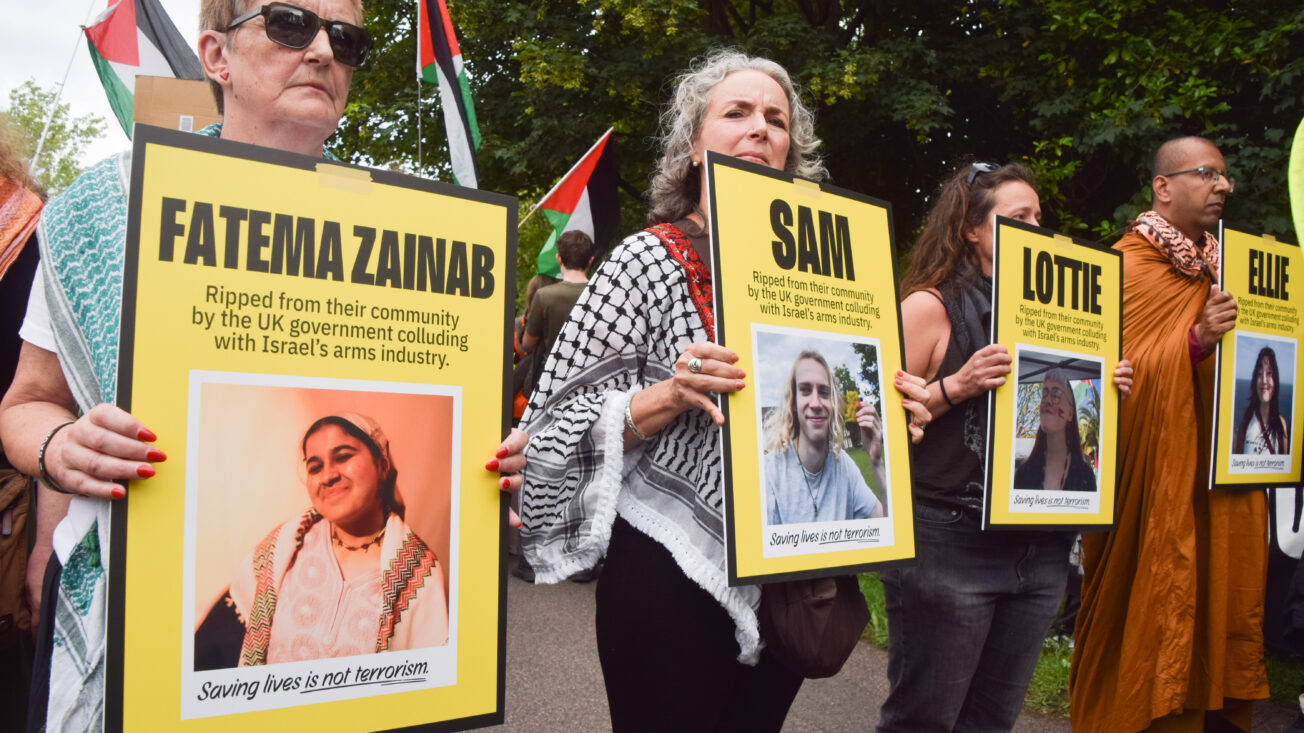
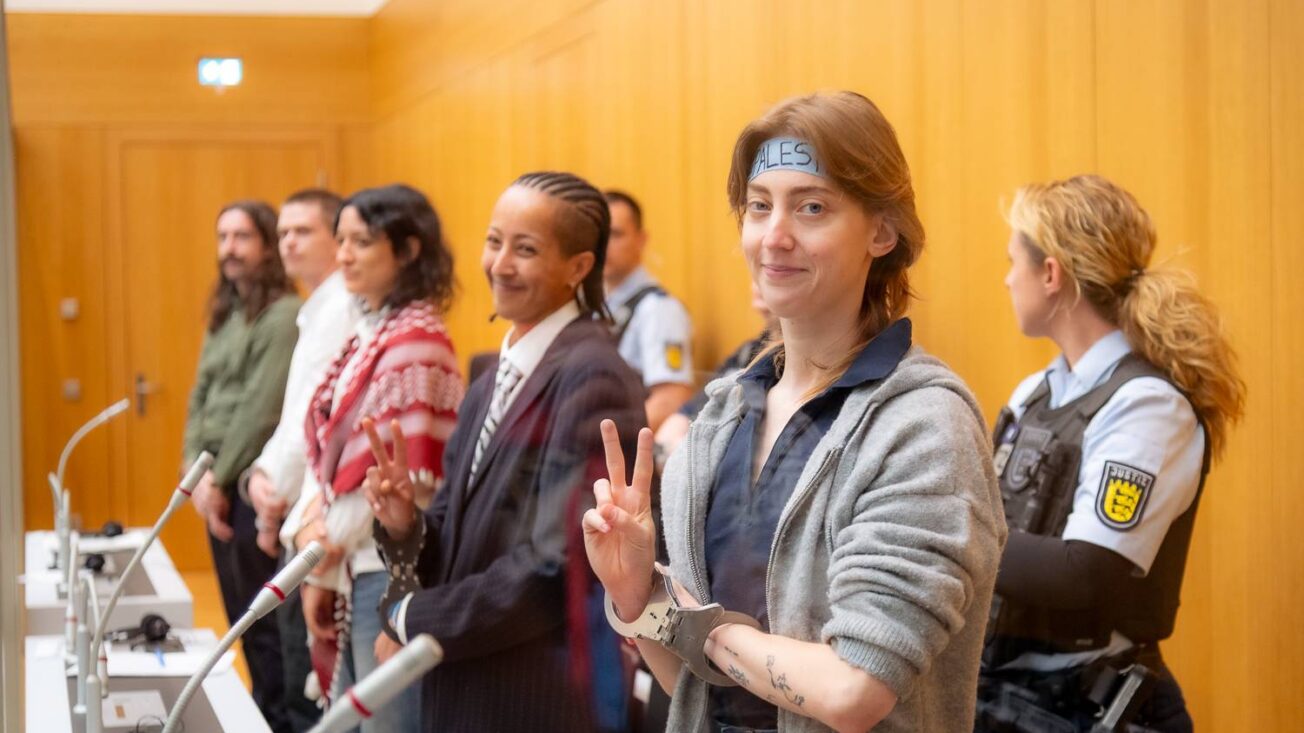
Last week, four Palestine Action activists convicted of criminal damage at a facility owned by Elbit Systems, Israel’s biggest weapons manufacturer, were sentenced as terrorists despite not being found guilty of a terrorism offence.
Charlotte Head, 30, Samuel Corner, 23, Leona Kamio, 30, and Fatema Zainab Rajwani, 21, damaged Israeli military assets, including drones, during Israel’s ongoing genocide in Gaza. For this, Justice Jeremy Johnson found that “the offence in each case has a terrorism connection”. Corner was also convicted of grievous bodily harm without intent.
This move was kept secret from the jury, and is the first time direct actionists have been sentenced as terrorists for non-violent criminal offences.
Harriet Williamson is a commissioning editor and reporter for Novara Media.