Climate Collapse Has Plunged UK Food Production Into Crisis
Farmers fear they won’t be able to plant crops next year.
by Harriet Williamson
25 August 2026
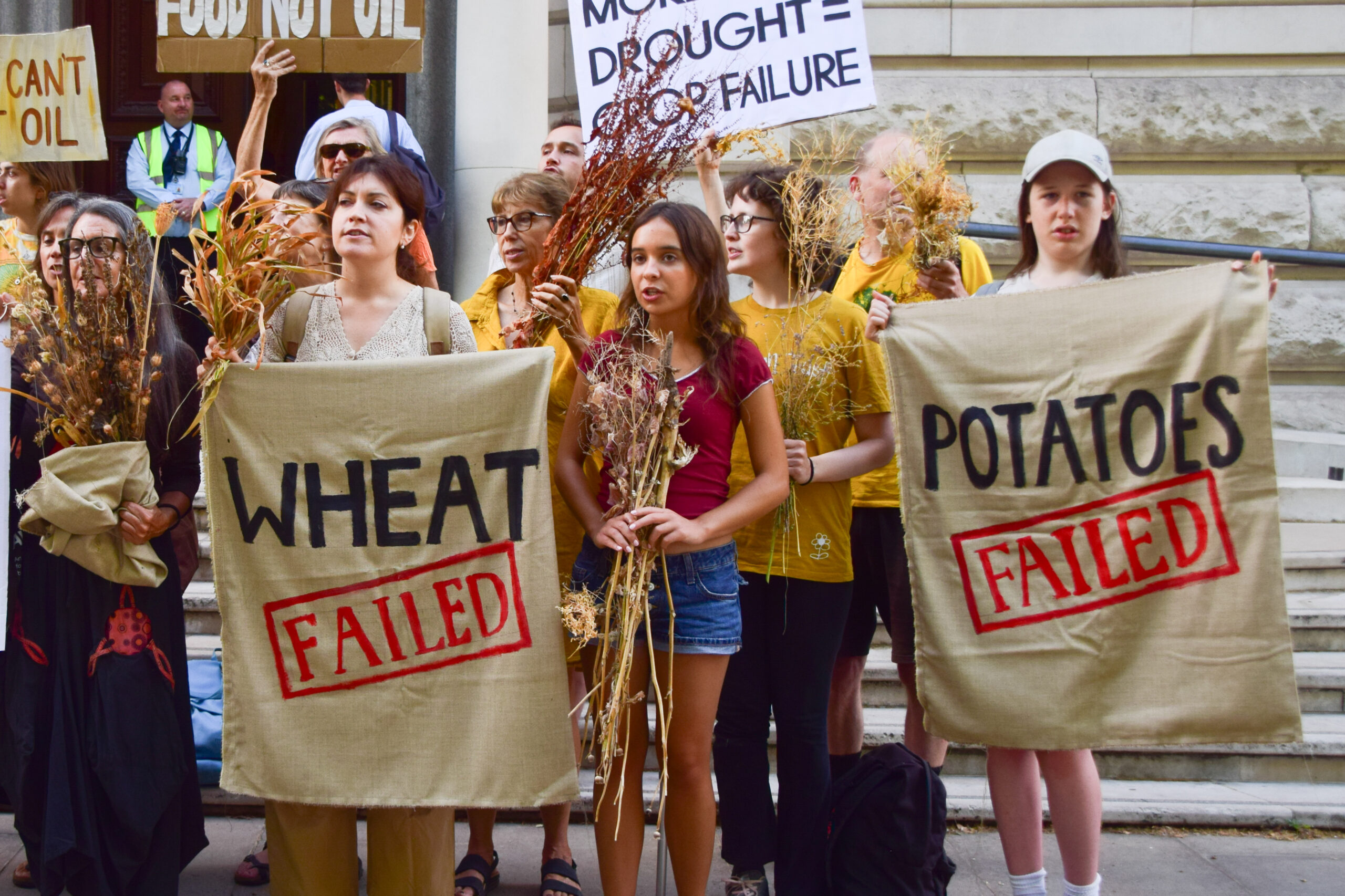
The UK faces a food production crisis after a summer of extreme heat and drought, farmers warn, with shortages of some foods predicted.
British farming is projected to see its worst harvest since 1984 alongside stunted grass growth, a spike in livestock deaths and field crops failing due to lack of water, with farming organisations saying they are at “crisis point”.
Britain has suffered months of extreme temperatures and “the worst drought in 50 years” because of the climate emergency.
Yields for barley, oats and oilseed rape – used in cereal, cooking oil, beer and feeding livestock – are expected to drop to just 18.5m tonnes, according to the Energy and Climate Intelligence Unit (ECIU), the lowest level since records began 42 years ago. A previous low of 19.8m tonnes was recorded in 2020..
Harvests for potatoes and carrots are also predicted to be smaller than usual due to heat and drought.
Late last month, drought was declared across all of Wales, with over 70% of England in drought by early August. This July was the driest for both nations since records began 190 years ago.
Some parts of the UK have endured four heatwaves in 2026 coupled with excessively dry conditions, which have resulted in receding rivers and left parks and areas of natural beauty parched, with dust-like soil and yellow grass.
The National Farmers Union (NFU) and a consortium of other agricultural groups are calling on the government to take immediate action and provide an interest-free loan linked to extreme weather losses so farmers have enough capital to produce next year’s food.
NFU president Tom Bradshaw said: “Rain has come too late for lost harvests and slashed yields, while livestock farmers are dealing with the worst bluetongue outbreak to reach our shores.
“Many are worried they will not have money in the bank to plant next year’s crops or replace livestock.”
Bluetongue is a viral disease that affects sheep and cattle, leading to internal bleeding, fever, birth defects and in the sickest animals, death. This year’s high temperatures have led to increased numbers of disease-spreading midges, with more than 600 confirmed UK cases.
Bradshaw has also called for farmers to be given tax breaks to build water storage systems on their land to prepare for the years ahead.
Earlier this month, he told BBC Radio 4: “Those other countries around the world that we currently rely on to produce our food and vegetables, their climates are changing as well,” he said. “It does feel like there is going to be some shortages of [food] products.”
Harriet Williamson is a commissioning editor and reporter for Novara Media.