Jeremy Corbyn Now Controls Your Party. Is That a Good Thing?
It’s settled: Your Party is a Jeremy Corbyn joint.
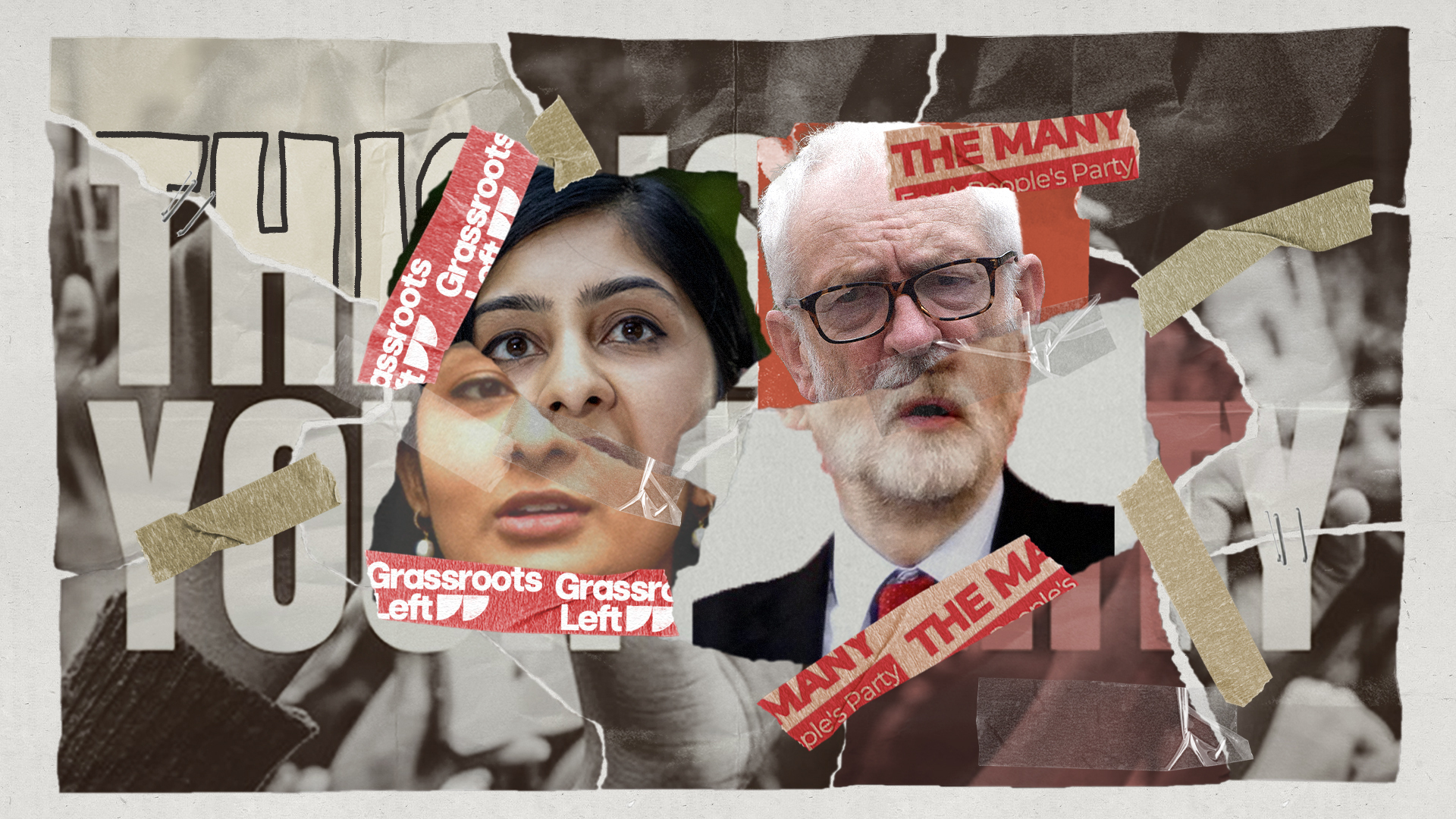
The central executive committee (CEC) elections, which have been rumbling in the background for several weeks now, are over, and it’s not looking particularly collective. Yes, Corbyn and Zarah Sultana will both sit on the CEC, but with vastly different amounts of power. Of the 24 members of the leadership group, Corbyn’s slate, The Many, has 14. Sultana’s Grassroots Left slate has seven. (Three independents were also elected.) With a near-supermajority on the CEC, Corbyn’s faction is going to be able to do more or less whatever it likes.
Corbyn’s team immediately embarked on a victory lap, likely attempting to stave off more Sultana gun-jumping (see: the party co-founding and membership portal launches). They declared that Corbyn had personally “won” the elections and prematurely stated he would be parliamentary leader of the party’s two MPs (only Corbyn and Sultana are formally registered with parliament as Your Party MPs, though independents Ayoub Khan and Shockat Adam stood on The Many’s CEC slate). Corbyn tweeted a statement, praising members’ vote “for a mass, socialist party that takes the fight to Starmer and Farage”. A couple of hours later, Sultana issued her own, saying Grassroots Left “didn’t secure the result we hoped for” but “sent a clear message” about the need for a transparent, democratic party.
For Your Party heads, the results were more decisive than expected. Grassroots Left was by far the most communicative during the campaign, throwing out pledges as outlandish as abolishing the monarchy and as mundane as financial transparency. The Many kept mostly shtum, let the other side do the talking, and was handsomely rewarded. The CEC election’s single transferable vote system was, members told themselves, far less likely to produce a plurality than first-past-the-post. Corbyn won one anyway. Party outsiders might’ve seen this coming.
Though Sultana is widely seen as his natural heir, Corbyn clearly remains the main selling point of the party for the majority of its members. He’s also the only person really associated with the party in the national consciousness, minimal as the party’s public profile is. Corbyn is, as I wrote recently, “the sine qua non of the project”, and he knows it. It’s why he and his faction always resisted the idea of co-leadership: they knew that if there was an election for sole leader, he’d win every time.
This is only the latest instance of Sultana misjudging her own power in the party. Thinking she could strong-arm Corbyn into co-leadership, she euphemistically announced she was quitting Labour to “co-found” Your Party. She was locked out of strategy discussions. Frustrated at her treatment and the centralisation of power in the hands of Karie Murphy, Corbyn’s key adviser, she launched a membership portal. Corbyn’s faction reported her to the authorities. The CEC elections were one last hurrah for Sultana, who hoped that the strength of the grassroots might – as it did for Corbyn as Labour leader – deliver a major upset for the establishment, which this time ironically was Corbyn. She failed. For the time being, it looks like cooperating with the Corbyn project is going to be more fruitful for Sultana than fighting it. Yet Corbyn steamrolls the grassroots at his peril.
Corbyn will now be, for the second time, the one thing he never wanted to be: the leader of a political party. His team is already preemptively announcing his role as parliamentary leader, despite this needing to be voted on by the CEC. Corbyn’s team is clearly confident that The Many’s CEC members will effectively vote as a bloc. In other words, Corbyn’s near-supermajority makes the very notion of collective leadership somewhat redundant. “My hope is that everyone who’s been elected will at least act as if they really mean to contribute to a collectivity, despite the hostility there is bound to be, particularly … from a dominant Team JC [Jeremy Corbyn],” Naomi Wimbourne-Idrissi, a newly-elected CEC member who stood as an independent, told me. That seems optimistic.
This will be music to the ears of those who think the party’s unorthodox leadership model was idealistic. It will also mean that the party is far more likely to start contesting elections ASAP, rather than once it has built up an army of grassroots organisers. It may be hard to do one without the other. One of the things underscored by the Gorton and Denton byelection happening as I write this is that rightwing political parties don’t need campaigners – they have the media for that. Reform has been able to rely on the national profile of both its leader, Nigel Farage, and local candidate, the anti-immigration firebrand Matthew Goodwin, who was virtually invisible on the campaign trail. The Greens, by contrast, have had to marshal an army of doorknockers; the party’s candidate, Hannah Spencer, was dancing in the street with some of them this morning, as party deputy Mothin Ali appealed for recruits.
Corbyn no doubt understands this – it’s why he created the Labour party’s organising unit – but those around him appear to have internalised the notion that he is political royalty now. That is naive. Corbyn might have a national profile, but most of that is negative. The party will need organisers, and large numbers of them, if it is to win elections. And one of the things we learned from today’s CEC election results is that it is struggling to recruit them: the party has just 40,985 “verified” members, far fewer than the 55,000 Sultana and others have claimed, and a fraction of the almost 200,000 people commanded by Zack Polanski, many of them Corbyn exiles.
If Your Party thinks it can build a second national movement on the cult of Corbyn, it has another thing coming. There is a new left populist leader in town, one who has caught the zeitgeist much as Corbyn did in 2017. Corbyn’s continued visibility within Your Party will rally some old faithfuls back to the flag – particularly trade unionists and rural working-class voters who might see the Greens as too nice, or bourgeois – but will struggle to draw in anyone new. The “ultra-leftists” whom Corbyn’s camp is gloating over having defeated will, whether they like it or not, be the engine of the party’s growth. If those around Corbyn fail to see this, their majority will prove as much of a sandcastle as Keir Starmer’s.
Rivkah Brown is a Novara Media commissioning editor and reporter.