Massive Attack Is Taking Aim at Palantir
‘I find their declarations, objectives and moral framing pretty terrifying.’
by Gary McQuiggin
1 June 2026

Trip-hop legends Massive Attack are using an artistic rendering of notorious spy-tech firm Palantir’s own product to take aim at the company in their new live show.
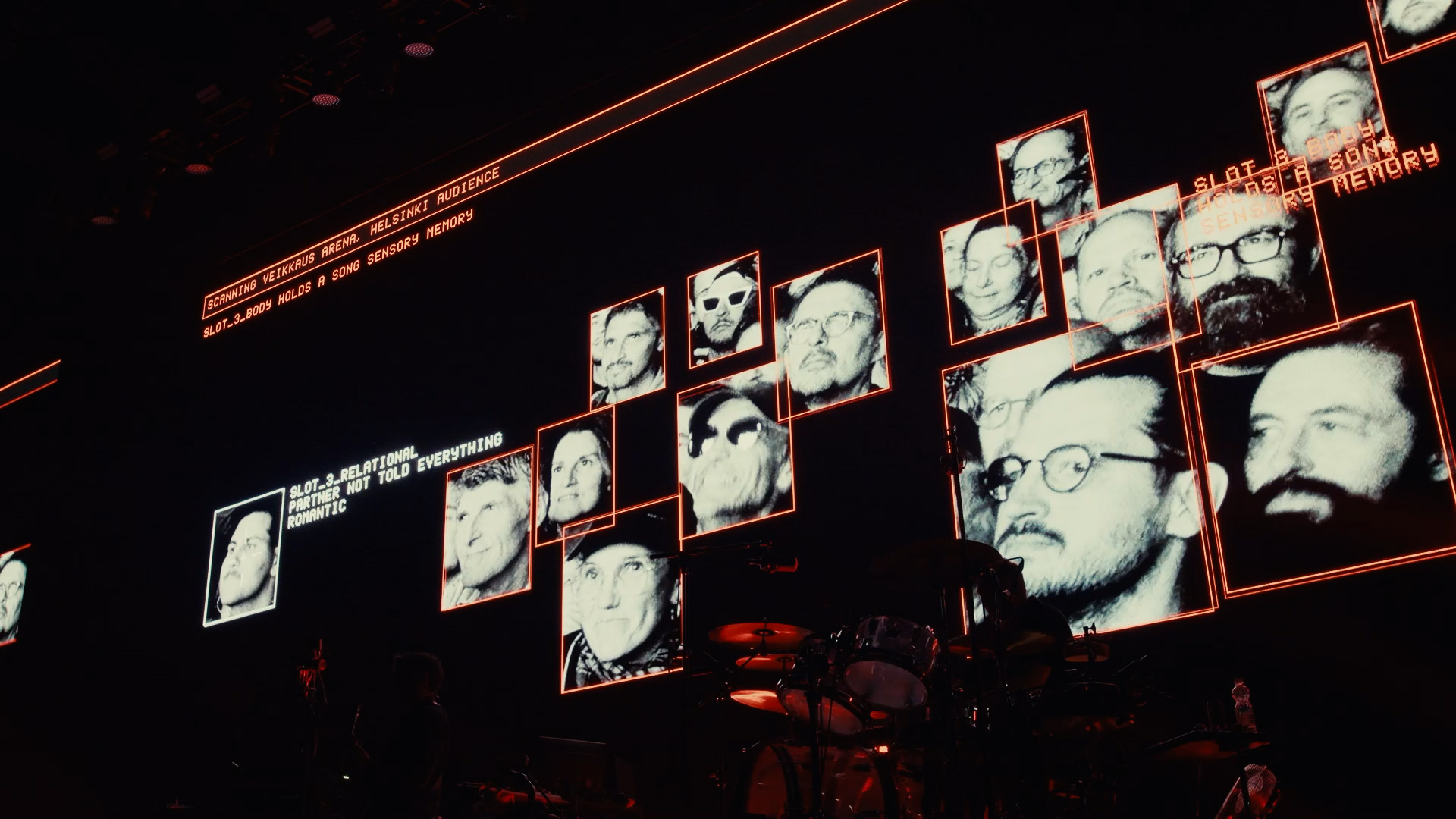
Custom-made facial recognition software will scan a 75,000-person crowd at Primavera Sound in Barcelona on Thursday, before cameras lock on to individuals, pull their faces up on screen and label them with “11 weeks no time off, burnout”, “unfinished books” and other satirical descriptors.
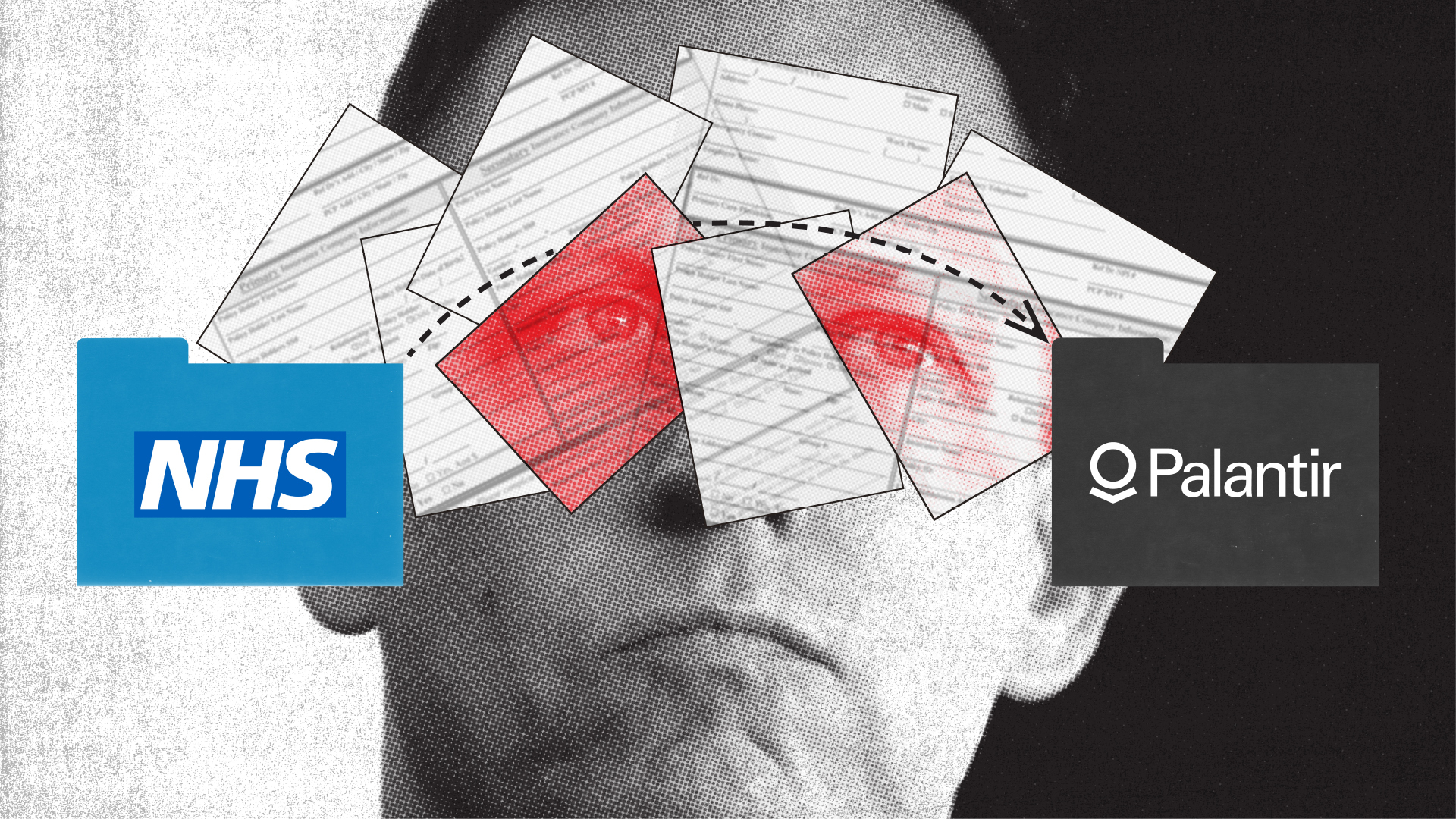
Founded 20 years ago by arch-libertarian billionaire Peter Thiel, with financial backing from the CIA, Palantir has become one of the world’s most infamous surveillance tech companies, counting the US and Israeli militaries, ICE, the FBI and the NHS among its clients.
Speaking exclusively to Novara Media in Helsinki, where the new show premiered, Massive Attack frontman Rob Del Naja explained that he wanted to draw the public’s attention to Palantir’s expansion from “kill chain tech” used in Gaza to accessing Britons’ medical records.
“We really need a much wider debate on the suitability of a company like this having such capture of our societal infrastructure,” he said.
The Bristol band’s intervention couldn’t be more timely. Just last month, London mayor Sadiq Khan blocked Palantir from a lucrative contract with the Metropolitan police, citing concerns over the company’s ethics. Its UK boss, Louis Mosley – a descendant of Britain’s most famous fascist – responded by claiming that Khan’s decision had put Londoners more at risk of rape and theft.
Meanwhile, a debate is raging within NHS England. In 2023, Palantir won a £330 million contract to provide technology for a new platform designed to improve data sharing across the service. But senior health workers have described the company as “evil”, saying its access to sensitive patient data is damaging trust.
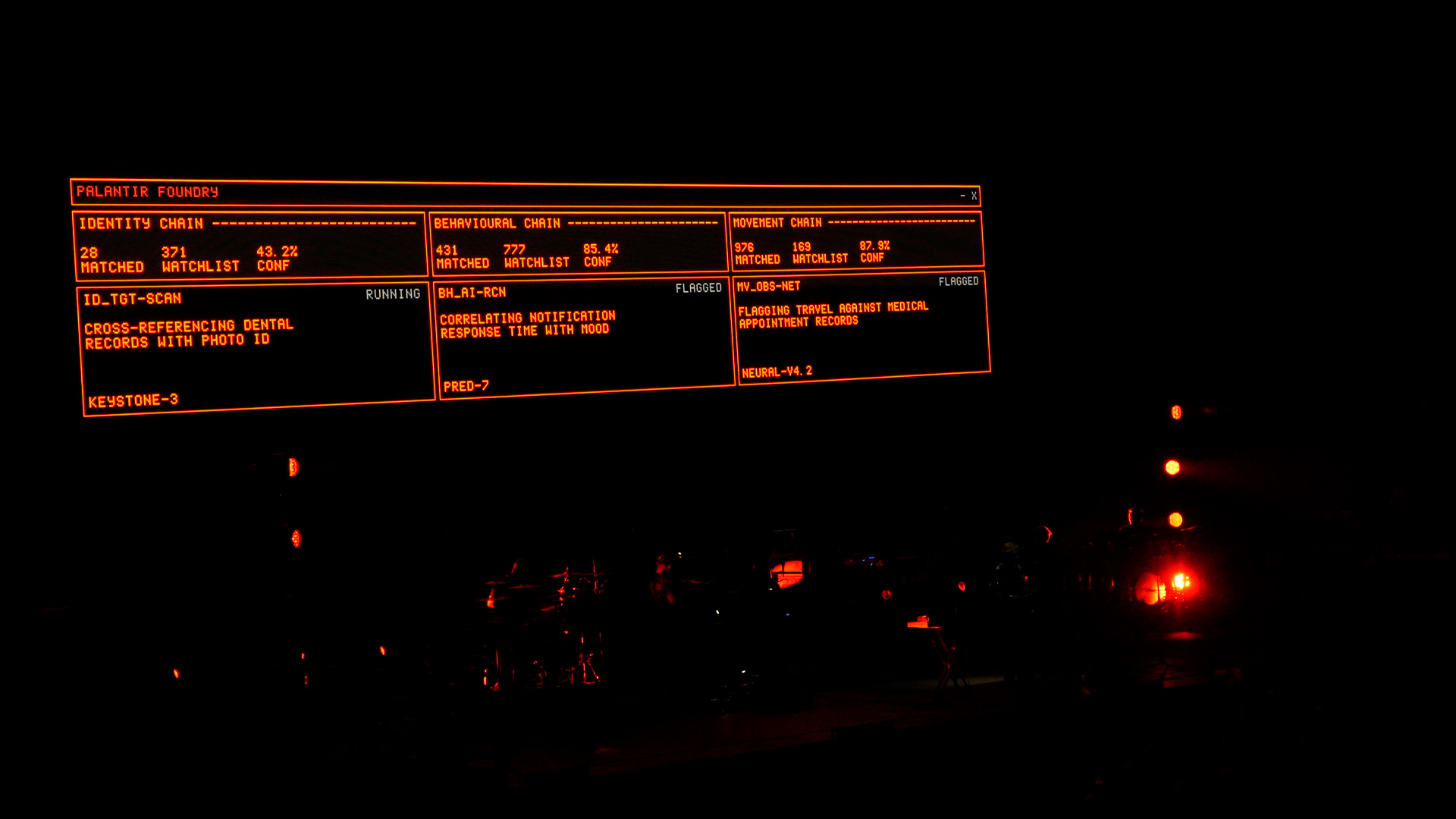
While the band’s rich critique runs throughout its two-hour set, which also features several videos from filmmaker and regular collaborator Adam Curtis, it centres on the facial recognition sequence, made with London-based art collective United Visual Artists.
“One visual element represents how a Palantir Gotham monitoring and ‘decision chain’ interface might look,” Del Naja explained. “Using facial recognition technology, it lands on groups and individuals – implying a consequential outcome for a given target.”
Fictionalised data about the audience is sifted through a rendering of Palantir’s two flagship products: Gotham, which is sold to governments and militaries, and Foundry, the civilian version. After ‘processing’ satirical datapoints, such as “number of couples versus groups versus solo”, and “logging e-scooter usage”, the cameras are initialised for lock-on, and a face detection effect starts singling out members of the crowd with red rectangular reticles and adding them to the database.
Palantir’s software merges separate databases, allowing companies or government agencies to navigate vast amounts of data more quickly and identify patterns within it. ICE, for example, uses a combination of body cam footage, data gleaned from social media and information gathered via Israeli-tech hacking software Paragon to build profiles of protestors who have resisted immigration raids. Maven, the US military’s Palantir-powered software platform, was recently blamed for the bombing of a girls’ school in Iran as part of Trump’s Operation Epic Fury.
In March this year, a video surfaced online of Cameron Stanley, chief AI officer at the US “Department of War”, giving a demo of the Maven dashboard. He waxes lyrical about optimised decision-making as he cheerfully adds targets to a kanban kill chain. Right-click to add to the target list, double-click to kill.

In Massive Attack’s rendering, the datasets are satire. But it’s not hard to imagine your information is sitting in a database that shows your Goodreads history, ChatGPT searches and wearable tech readings. Mosley stated in March that the company would be very happy to allow NHS data to be used for immigration enforcement if Reform won the next general election and wanted it to.
Founder Thiel – whose close links to JD Vance make him one of Silicon Valley’s most politically significant figures – initially said he wanted to apply lessons in fraud prevention learned at his first company, PayPal, to help the US government track terrorists. This is particularly frightening given that the definition of terrorist has now been so broadened as to include Palestine Action campaigners with paper signs.
“I find their declarations, objectives and moral framing pretty terrifying,” Del Naja said. “To enable AI systems to map police records, satellite tracked locations, health records and personal financial transactions and place all of that information – for the first time – into the hands of a company with an overt political agenda and social objectives of its own is a huge, potentially irreversible and dangerous overreach.”

As the song ‘Girl I Love You’ – one of the band’s most haunting, mournful tracks – rattles to a close, the screen shows a globe in which cities are labelled with their respective financial investments in Palantir. As the song ends, a quote appears across the screen.
“I no longer believe that freedom and democracy are compatible” – Peter Thiel, chairman of Palantir.
Gary McQuiggin is head of video at Novara Media.