What Does the Darlington Nurses’ Case Mean for Trans People? Experts Are Divided
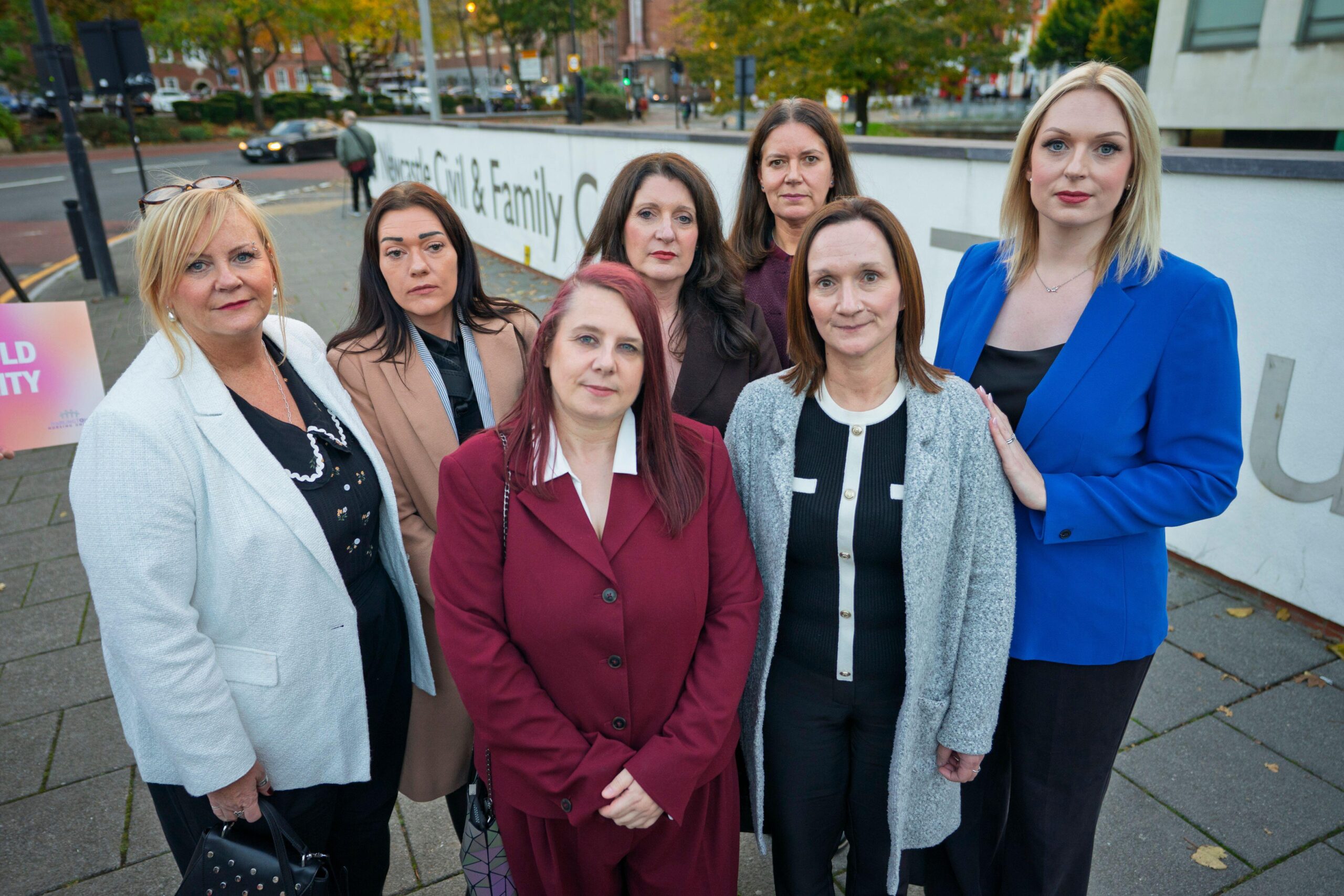
The anti-trans movement declared victory last week after eight gender critical NHS nurses in northeast England made to share a changing room with a trans woman won their discrimination case against their employer.
“All biological women, not just these brave nurses, should be celebrating this victory for common sense,” wrote gender critical journalist Julie Bindel in the Daily Mail, as the nurses began a victory lap that included the Houses of Parliament and most of the major national broadcasters.
The celebrations are not unwarranted. Unlike Sandie Peggie – another NHS nurse who, in December, claimed victory in her very similar case despite losing her key argument, namely that having her share a changing room with a trans woman amounted to unlawful discrimination – the Darlington nurses won this same argument.
However, as gender critical campaigners have presented the 134-page judgement as a definitive victory that will banish trans people from women’s spaces once and for all, experts say this is in fact overstated.
Equivocal.
In 2023, eight nurses at Darlington memorial hospital – Joanne Bradbury, Karen Danson, Mary Annice Grundy, Carly Hoy, Bethany Hutchison, Lisa Lockey, Tracey Anne Hooper and Jane Peveller – filed a discrimination claim against their employer for requiring that they share a changing room with Rose Henderson, a trans woman. Henderson had been employed at the trust, and using the women’s facilities, since 2019.
The nurses garnered significant media interest after they went public with their case in 2024, even catching the attention of health secretary Wes Streeting, who in June demanded the NHS urgently resolve the issue (regional chief nurse David Purdue told the court that Streeting had personally asked him to visit the hospital and discuss the situation).
On Wednesday, Judge Peter Sweeney issued his findings that County Durham and Darlington NHS Foundation Trust had indeed “violated the dignity” of the eight women by having them share a changing room with Henderson.
Judge Sweeney also found that the trust had harassed the claimants by not taking seriously their complaints about its “transitioning in the workplace” (TIW) policy, namely that it did not sufficiently account for the policy’s impact on gender critical and women staff.
On Monday, the trust apologised to the nurses, saying in a statement that it “did not adequately consider the concerns of a group of our colleagues”, and pledging to “rapidly review our policies.”
Anti-trans groups have emphasised the sweeping implications of the Darlington judgement. They have argued that it demonstrates the general unlawfulness of trans people using single-sex spaces, and have demanded that similar trans-inclusive policies be nixed.
Christian Concern is the ultra-conservative, anti-abortion pressure group that funded the nurses’ case. The group has previously projected the nurses’ legal costs at up to half a million pounds, and raised £27,740 in a recent crowdfunder; the ruling means that these legal costs will likely be reimbursed by the NHS trust, along with compensation. In a press release responding to the Darlington judgement, the fundamentalist group said it “confirms that the trust’s policy allowing men into women’s spaces is unlawful and violates the rights of female staff”.
Meanwhile, the prominent gender critical charity Sex Matters said “the government should act with urgency to withdraw the unlawful civil-service policy and similar unlawful policies across … public bodies”. The charity has since said it will consider legal action against the Cabinet Office over the civil service’s trans-inclusive policies.
Echoing many gender critical campaigners, Bindel declared the ruling “unequivocal”. Yet legal experts are far from agreeing on its implications.
In fact, the ruling has stoked an ongoing disagreement within the legal world – one played out in primary colours between anti-trans and pro-trans campaigners – over who can access single-sex spaces. Following several contradictory tribunal judgements, a resolution to this conflict appears only more elusive.
He said, she said.
Anti-trans campaigners argue that trans people’s exclusion from single-sex spaces is the natural conclusion of last year’s Supreme Court case. Brought by gender critical campaign group For Women Scotland, the judge concluded that “gender” under the Equality Act refers to “biological” sex, not to sex as defined by a gender recognition certificate.
For a short while last year, it seemed the gender critical interpretation of the Supreme Court judgement had won out. Just a week after the judgement was handed down in April, the Equality and Human Rights Commission (EHRC) issued guidance effectively advising that trans people be banned from single-sex spaces. However, the waters soon became muddied.
In October, the EHRC withdrew its interim guidance following a legal challenge by The Good Law Project. The legal campaign group is currently suing the government for issuing the guidance, arguing that the guidance undermines trans people’s human rights. Meanwhile, the EHRC is currently redrafting its guidance into a code of practice, though early signs suggest the second draft may be even more trans-exclusionary than the first, and the government is reportedly reluctant to lay it in parliament.
In practice, however, equality law is not determined by the EHRC, nor even by any single piece of legislation, but by the law’s application in the courts. This has historically led campaigners on both sides to set much store by, and often to simplify, individual cases and their outcomes – often disregarding the fact that many judgements are issued by lower courts and therefore readily challengeable, and are often ambivalent in their findings.
For their part, legal experts are circumspect about how much the Darlington ruling can be generalised.
A turning point?
One lawyer who welcomed the judgement is still quick to point out its limitations. Audrey Ludwig MBE is a gender-critical non-practising solicitor and legal consultant who specialises in equality law. Ludwig began her interview with Novara Media by stating that “obviously, as with all first-instance cases, it’s not binding precedent; it’s illustrative of how an employment tribunal may well find such a case [in the future]”.
Despite this, Ludwig thinks the Darlington case has wide-reaching implications. In her view, it indicates that the trust’s TIW policy is “basically unlawful”, because it “didn’t take into account the rights of this other protected group [people with gender critical views]”. Asked whether employers should be wary about jumping to conclusions about the implications of the case for their own policies, Ludwig said “no”. Others urge caution.
Robin Moira White is the UK’s first employment barrister to have undergone male-to-female gender reassignment. Speaking to Novara Media, she pointed out that the tribunal did not consider the legality of the trust’s transitioning in the workplace policy in itself, but rather, whether the trust implemented it in a way that discriminated against these particular eight nurses – which the judge found it did.
On this point, the judgement appears to support White, not Ludwig. “The act of the trust that falls [to the tribunal] for analysis,” wrote Judge Sweeney, “is the implementation of the TIW policy and the permission given to Rose under it to use the changing room.” It is a “jump”, White said, to suggest that his finding of discrimination renders the policy unlawful. It’s an even bigger leap, therefore, to suggest that other employers should alter their own policies to exclude trans people from single-sex spaces altogether.
‘A shield, not a sword.’
The framing of the debate around these employment tribunals gives a false impression of the law, said White. “The moment somebody says ‘sex-based rights’, I know they don’t understand employment law. There isn’t a right to a particular thing; people are protected against particular types of occurrences.”
In other words, the Equality Act gives neither cis nor trans women a “right” to access single-sex spaces. Instead, it says both must be protected from unfair treatment based on their gender, gender reassignment status or, in the case of the Darlington nurses, their gender critical beliefs (which, following Maya Forstater’s action against her employer in 2022, are classed as a protected characteristic under the Equality Act).
Equality law, said White, “is a shield, not a sword”. The problem with our present debate around it, she added, is that “a lot of people are attempting to turn a shield into a sword”.
Employers have long had to deal with clashes in protected characteristics – some conservative workers object to their colleagues’ homosexuality on religious grounds, for example – and to balance them in a way that avoids discrimination against both parties. The only right employees have, said White, is “the right to come to work and use the facilities with dignity and respect. An employer must find the least discriminatory way of achieving that.”
There is a piece of legislation, however, which obliges employers to provide “suitable and sufficient” separate toilets and washrooms for men and women – the 1992 Workplace (Health, Safety and Welfare) Regulations. These were introduced by John Major’s government to ensure that people of all genders could access work at a time when, for example, many factories lacked women’s toilets and changing facilities.
Sweeney found that the trust breached these guidelines: “We conclude that from the moment it permitted Rose to use the female changing room, the trust was in breach of the 1992 regulations,” he wrote.
However, White pointed out that, once again, this doesn’t mean that trans women must be banned from women’s toilets. The 1992 regulations offer principles, not methods of policing and enforcement, which might – as in the case of boys using women’s changing rooms with their caregivers – complicate the regulations in practice. The regulations also don’t offer a definition of gender, White said – and the Supreme Court judgement, which considered “gender” only as defined in the Equality Act, not in other pieces of legislation, doesn’t automatically apply to it.
Once again, gender critical campaigners disagree: in a blog for Christian Concern, head of policy Tim Dieppe wrote that “following the For Women Scotland [Supreme Court] judgment, it is clear that “men and women” means biological men and biological women. In any case, the 1992 Regulations preceded the Equality Act so the words used by parliament could not have meant anything other than biological sex.”
Views and views.
In White’s view, the NHS trust did not discriminate against the Darlington nurses by allowing a trans woman into a woman’s changing room, but rather by failing to provide them with adequate facilities when they made known their gender critical views.
She conceded that the trust dealt with the Darlington nurses “dreadfully”. For some time following the nurses’ complaints, for example, the trust did not provide any alternative changing facilities, and when it did, they were in an unsuitable, fire-unsafe office space. The person responsible for making these alternative arrangements, the court found, had not visited the hospital site. The whole episode demonstrated “extremely poor management,” said White.
Ludwig sees this mismanagement as more than simple ineptitude. “The management, as soon as people raise concerns, should have taken them seriously and not treated them as bigotry,” she said, pointing to the fact that trust managers set up a meeting to encourage the women to “broaden their mindset” and suggested they needed education and training on equality and diversity.
White adds a caveat. She says that while having gender critical beliefs is protected under UK law, and in this case, the eight nurses were discriminated against on the basis of their protected views, expressing them – for instance by harassing a trans colleague – is a different matter.
No ghettoes.
What should employers take from this? For Ludwig, it is simple: “Trans women can’t use single sex spaces, because they’re not single sex if they can use them.” White warns against drastic action.
“Employers have to be very careful, because there is a lot of partisan advice out there. I think employers should step back and think about how to accommodate everyone, every responsible employee, with dignity and respect. When employees come forward with concerns, do we listen to those and find solutions for them, and manage things effectively and with respect for all?”
“The ruling shows that if people come to you with problems, manage them actively. Take the lead. Do a proper job. Go and look at it. Don’t promise people things you’re not delivering.”
For the time being, it appears many workers and public bodies are approaching the ruling with circumspection. Responding to the Darlington judgement, the union Unison, which represents over 1.3 million public sector workers, stated that it was taking time to “assess what this means for Unison”, but that in the meantime its “policy remains the same and the union stands by its beliefs in the rights of our trans, non-binary and gender diverse members.”
So does this mean a bathroom ban on trans people? Not necessarily. In fact, the eventual solution the Darlington NHS trust settled on, albeit too late to stave off legal action – a separate individual changing facility for anyone to use – is the same one White endorses. “Make sure that if it’s easy to, there are some entirely private facilities people can use,” she advised.
She noted, however, that nobody should be compelled to use this facility under equality law. “Putting anyone into a ghetto is likely to be unlawful harassment,” White said. Yet the judgement suggests the trust did ghettoise Henderson, stating that in “alternative changing room facilities were found for Rose to use.” In an email to Novara Media, the trust denied this, insisting that no such bathroom ban was put in place: “The separate facilities were available for any colleagues to use, and this is how it was communicated.”
The tribunal judge, however, suggests that even if Henderson were to have been made to use separate facilities, it wouldn’t have been harassment, since she wouldn’t have been discriminated against on the basis of her gender reassignment, but on the basis of sex, ie. for being a “biological man”.
“Further, excluding Rose from the female only changing room would not have amounted to an act of direct discrimination on grounds of gender reassignment. The exclusion would not be on grounds of gender reassignment. If anything, it might be said to be on grounds of sex. However, Rose would be treated no less favourably than a woman who would also be similarly excluded from the male changing room.”
For lawyers, then, the upshot of this case remains disputed. Judge Sweeney’s reasoning was entirely different from that of the judges in Maria Kelly and Sandie Peggie’s cases. Each side tends to set more store by which one is more favourable to them (Darlington in the case of gender critical campaigners, Peggie and Kelly in the case of trans campaigners). Yet all three judgements are first-instance and therefore not binding on other courts. For the time being, it appears the question of a trans bathroom ban remains inconclusive. What’s certain is that expensive, protracted, psychologically gruelling legal fights will continue in the courts, as both gender critical and pro-trans campaigners await the EHRC code of conduct – the document that will likely guide employers more than any individual tribunal judgement – with bated breath.
Rivkah Brown is a Novara Media commissioning editor and reporter.