How Do We Beat the Far Right? With Unity
There’s no time for division.
by Jeremy Corbyn
3 February 2026
We have all seen the footage. On 7 January, an Immigration and Customs Enforcement (ICE) agent killed Renée Nicole Good in cold blood in Minneapolis. Renée’s six year-old daughter, whom she had just dropped off at school, would never see her mother again. Two weeks later, immigration enforcement agents killed again, wrestling Alex Pretti to the ground before shooting him multiple times.
State-sanctioned killings aren’t an accident – they’re a symptom of a deeper political sickness spreading across the world. That includes politicians in this country who have called for ICE-style raids. Reform UK has pledged to implement “a five-year emergency programme intended to identify, detain and deport illegal migrants in the United Kingdom” under its flagship policy programme, operation restoring justice. Reform has also promised to roll out “national scale enforcement through a new UK deportation command”.
For many people, this terrifying reality has already arrived. The number of raids in the UK has soared by 77% since Labour came into power; more than 50,000 people have been deported. For Labour, it is something to brag about. It has been utterly sickening to see this government post videos online of migrants being detained – all for social media likes.
Labour must surely know: you will not defeat Reform by copying Reform. You will only embolden them. Indeed, one of the main reasons why people are so worried about a Reform government is because Labour is doing its best to coronate them.
We need an alternative – and this requires more than just a different policy position. It requires a new kind of politics: one that harnesses the unifying power of solidarity to defeat the divisive tactic of scapegoating. One that unites working class people in all their diversity and empowers communities to wage campaigns where they live and work. One that stops treating politics as something that is done to people – and starts treating politics as something that is done by people.
This imperative led to the birth of Your Party. The surge of community-based victories in recent years – from the remarkable success of independent candidates in the 2024 general election, to the blossoming of local community independent groups in councils all over the country – demonstrated a demand for an alternative to the failed establishment politics. The extraordinary mobilisation for Palestine in response to Israel’s genocide provided the fuel for much of this movement, alongside the disgraceful attacks on the left of the Labour party undertaken by Keir Starmer.
At the heart of Your Party is a cross-community coalition. This is a unique source of pride and strength at a time when the project of the emboldened right – with the establishment’s willing participation – rests on stoking division. No other party quite embodies that anti-war, anti-austerity, socialist alliance that can unite communities of all faiths and none. No other party offers the same possibility of a mass movement.
I want Your Party to build on this strength. As the party’s political statement – passed overwhelmingly at its founding conference last November – put it, Your Party aims to be “a mass party for the many, rooted in the broadest possible social alliance, with the working class at its heart”.
I believe those words encapsulate the potential that inspired so many people to sign up when Your Party was first launched. Since then, the process of founding Your Party has been rocky, to put it mildly. But the potential is still there.
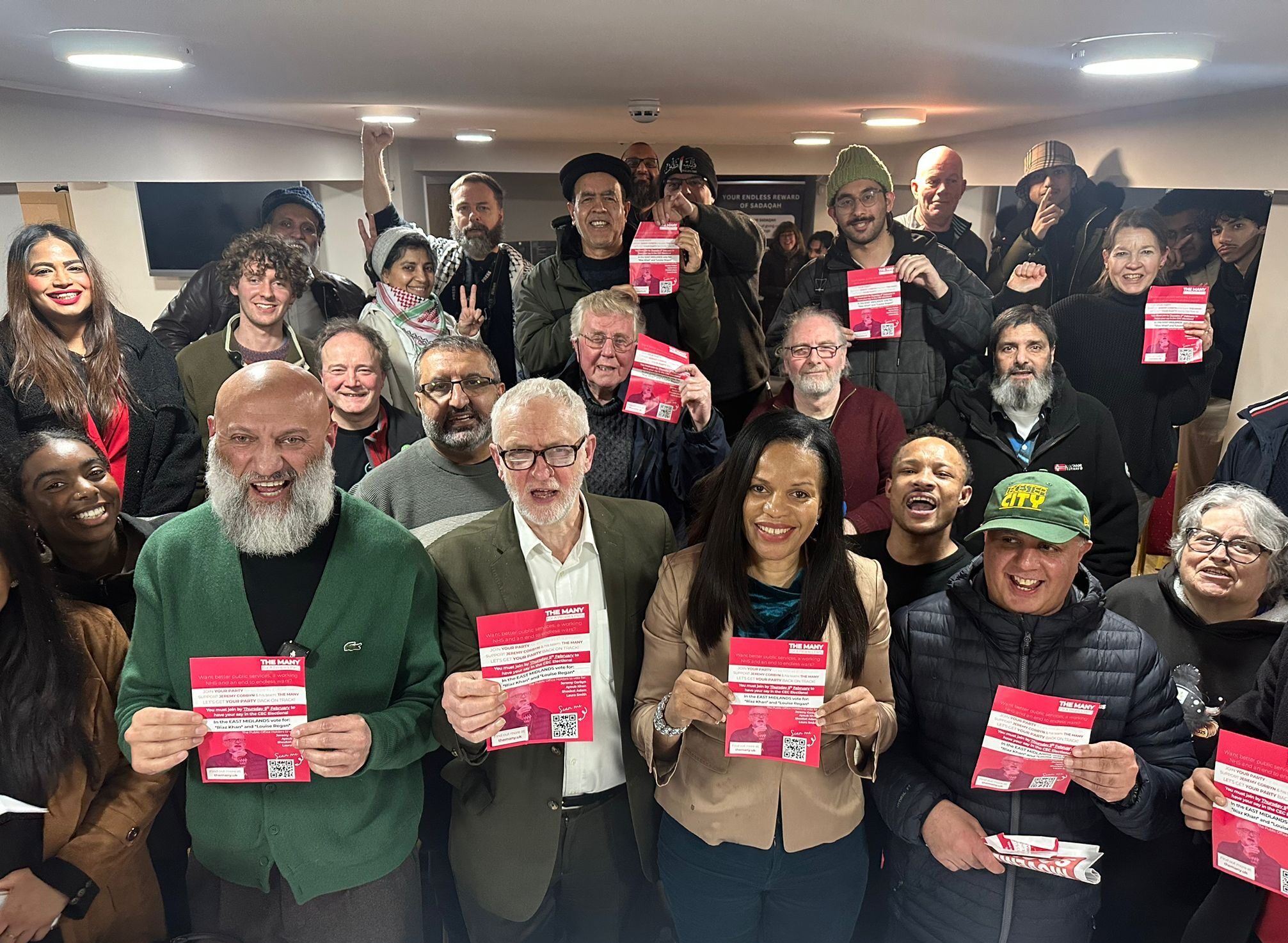
In the upcoming Your Party leadership election, I’m proud to be standing with The Many – the leadership team aiming to get Your Party back on track. I want us to move forward in an inclusive way; the more voices, ideas and creativity, the better!
Your Party will only succeed if it campaigns tirelessly and fearlessly on the issues that matter most to people in our communities: rising rents, soaring bills, a crumbling NHS and the rip-off of privatisation. We believe Your Party must stand up for the principles being demanded by millions of ordinary people, such as public ownership, wealth taxes, rent controls, disability justice, environmental sustainability and an end to wars around the world.
To build a party that stands for the many, we need as many people as possible to be part of it, with a real say in what it does. Upon election, I can announce The Many will establish members’ policy commissions to ensure Your Party’s proposals are shaped by the people they will affect.
A disability commission, for example, should be made up of members who themselves have disabilities, are in receipt of disability benefits or who care for those with disabilities – they know what they need. A housing commission, made up primarily of private renters, council housing tenants, housing association tenants and leaseholders, could finally design a system that treats housing as a human right for all.
An education commission could harness the skills and experiences of parents, teachers and volunteers to move away from a policy that synonymises education with competition, and toward a national education service that understands the concept of holistic, lifelong learning for all.
Your Party should not only be accountable to the community – it must be part of the community, and organise for the kind of society we deserve. When I was Labour leader, I was determined to set up community organising units. The basic idea behind them was to allow local communities to organise for themselves, given they know the issues they face. The Labour establishment didn’t like it, and did everything possible to undermine it. Eventually, Starmer scrapped it.
But free from the suffocating grip of Starmer’s Labour, in a new, democratic and member-led party we can do politics differently. I’m delighted that Your Party’s founding documents commit us to a community organising approach – from Palestine to the cost of living, I want Your Party to be a powerful grassroots campaigning force.
By organising in our communities, we will find the leaders of tomorrow. That’s why I’m also pleased to announce the socialist leadership programme. If we are elected to the central executive committee (CEC), we will establish this programme to train up a new generation of working-class socialist leaders. Leaders built up not from Westminster and the professional political class, but from community campaigns, workplace struggles and social movements.
I know that many people are frightened at the moment. When we watch videos of extrajudicial murders in US suburbs that look like dystopian movies and then witness the scapegoating of migrants dominating political discussion at home, it can feel like powerful forces beyond our control are taking the world in a very dangerous direction.
But we do have power; we do have agency. It is to be found in solidarity – solidarity in working-class struggles to take on the rich and powerful, and the solidarity of our communities in all their diversity.
Solidarity is our strength against the far right and its establishment enablers. It is the material with which we build a society for the many, not the few. This is our opportunity to ignite a mass political party that can change the political landscape forever.
We have no time to waste. So let’s get on with it.
More information about Jeremy Corbyn’s CEC slate The Many can be found at themany.uk. Anyone who joins Your Party by 5 February will be able to vote in the CEC elections.
Jeremy Corbyn is the independent MP for Islington North.