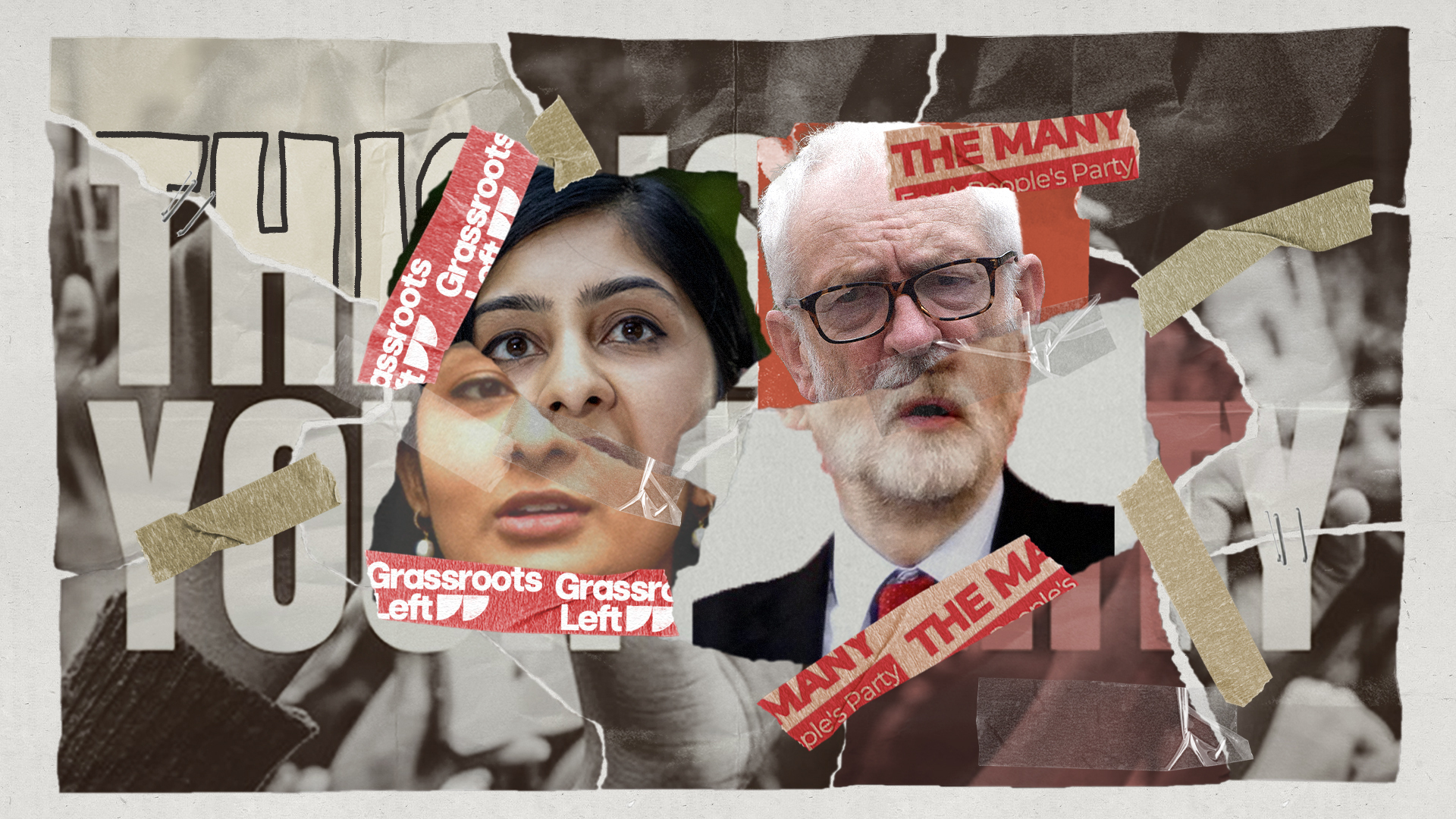
Whatever Happened to the ‘Enough Is Enough’ Campaign?
‘The biggest political fumble of my life.’
by Joe Todd
24 August 2026
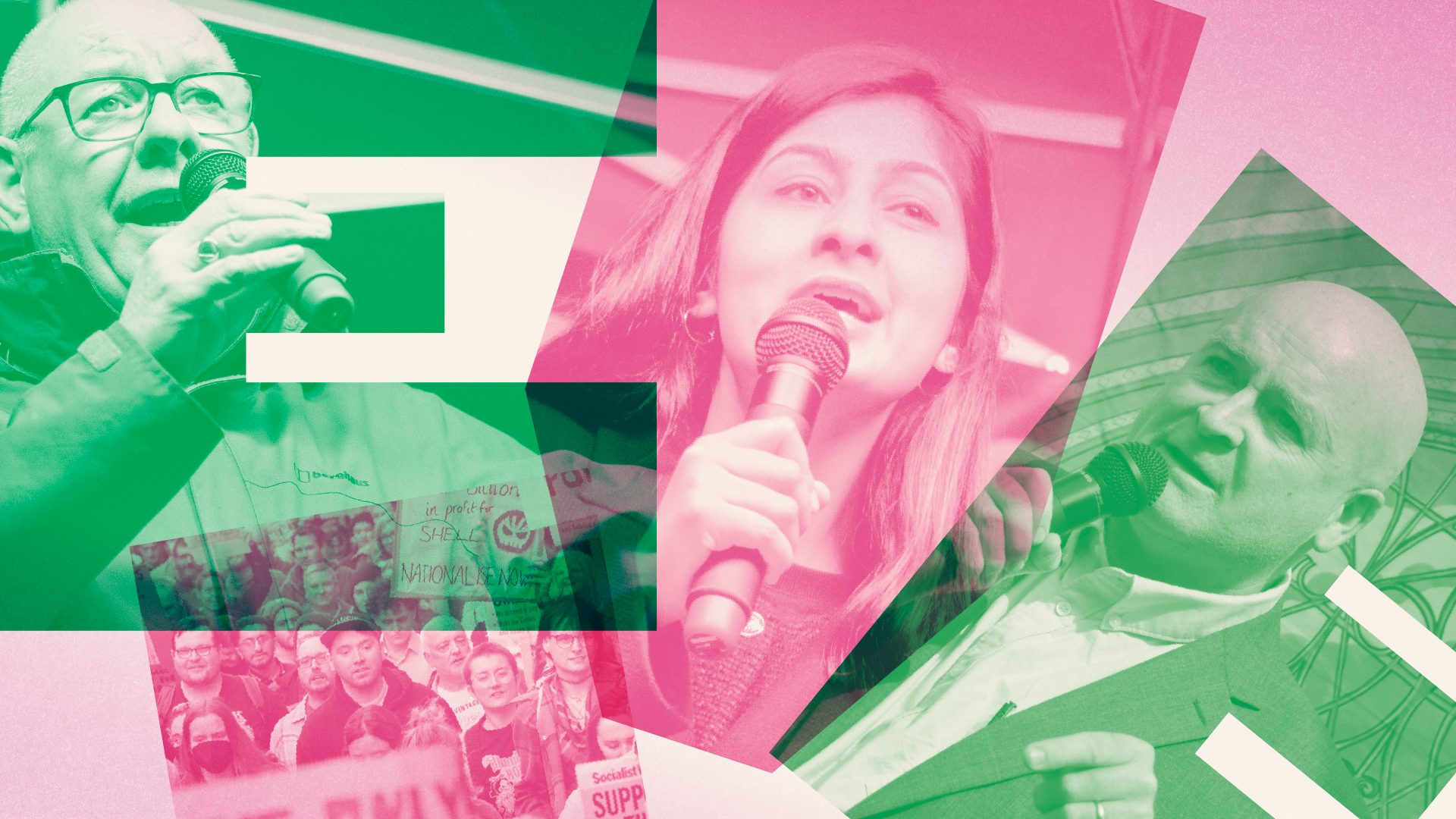
On Wednesday 7 September 2022, Glasgow’s Old Fruitmarket was packed out. Hundreds of people had queued around the block for the city’s biggest leftwing rally in years.
Mark Thomas, a local homelessness worker, remembered being excited.
“It was absolutely massive… It was something new,” he told Novara Media. “[The crowd] was a real mix. Young people who I’d never seen before.”
That September was the end of the UK’s hot strike summer. Inflation was skyrocketing, wages were collapsing and energy bills were set to triple. Hundreds of thousands had gone on strike: rail, mail, telecoms and port workers and more. Mick Lynch, the straight-talking former leader of the National Union of Rail, Maritime and Transport Workers (RMT), had spent the summer going viral, making the case for striking workers and skewering journalists on live TV.
Amid this crisis, a new campaign was born: Enough Is Enough.
Launched in August, Enough Is Enough promised to “turn anger” at the cost of living crisis “into action”. It was, by any measure, an overnight sensation. 150,000 people signed up on the first day alone; 450,000 by a fortnight later. Tens of thousands attended rallies nationwide, wanting to hear how to join a political movement to “win back dignity for working class people”.
But just a few months later, Enough Is Enough went pretty much silent. No more rallies. No more speeches. Just the odd post from a Twitter account. The most dynamic new campaign on the UK left had disappeared – and no-one seemed to know why.
“It feels like a missed opportunity,” said Thomas. “I felt annoyed. What was the point? Was it just a mailing list?”
Four years on, Novara Media spoke to nine co-founders, coordinating group members, organisers and key stakeholders – some of whom chose not to be named to protect their professional relationships – to find out what happened. Their recollections paint a picture of overwhelm, strategic contradiction and a desire for total control. Enough Is Enough didn’t collapse by accident: it was undone by the very organisations that created it.
‘We had a platform to create solidarity.’
Wind back to February 2022, and the pressure on the government was building. Prime minister Boris Johnson was flailing in the aftermath of ‘partygate’. Keir Starmer, leader of the opposition, was busy purging the Labour left. There was a political vacuum – and the cost of living crisis was only intensifying.
Chris Webb, then head of communications at the Communication Workers Union (CWU) and who spoke to Novara Media in July 2025, said it was clear working people “were pissed off” and something needed to be done.
That spring, in London pubs and Manchester curry houses, a small group of people hatched a plan. Led by an initial coordinating group made up of Webb, Chloe Koffman (another former staffer at the CWU), Ronan Burtenshaw and Marcus Barnett (then both editors of the socialist magazine Tribune), a meeting was held in London with representatives from Unite and the GMB, as well as Labour councillors, the staffers of leftwing Labour MPs, and Acorn, the community union.
The group shared a sense of urgency about the need to address the cost of living crisis, as well as a desire to reboot Labour party politics. They also didn’t want to become “just another lefty cultural campaign,” according to one co-founder who chose not to be named.
“The People’s Assembly [another campaign group] was putting on yellow jacket demonstrations in Liverpool that were attracting 25 people,” they told Novara Media. Don’t Pay, a campaign that signed up more than 100,000 people to stop paying energy bills and was described by energy firm E.ON as an “existential threat” to the sector was, they argued, also “going nowhere”.
The coordinating group soon agreed on some core demands for the campaign: a real pay rise, a cut in energy bills, an end to food poverty, decent homes for all, and a tax on the rich. What they didn’t have, however, was a collective vision for what the campaign would actually be.
According to one co-founder, Burtenshaw wanted “big names and big tweets” to build a media network, while representatives from trade unions wanted a “rally front” and a “massive defence force” for striking workers (Burtenshaw didn’t respond to requests for an interview). Nick Ballard, then Acorn’s head organiser who joined the coordinating group that summer, told Novara Media he and others had ambitions to go beyond rallies and “build an organisation that had an ongoing presence in communities”.
But with the sense that the moment was slipping away, these differences were put to one side. Throughout July, the team worked frantically to get ready for Enough Is Enough’s launch. The day came, and the group put out its first video, fronted by Lynch, Zarah Sultana (then a Labour MP, now Your Party) and CWU general secretary Dave Ward.
“People are fed up with the way they’re treated at work,” Lynch said, straight to camera. “We need to turn that mood into real organisation on behalf of the working class.”
The video went viral. Millions saw Enough Is Enough’s posts on social media, and within days, hundreds of thousands had signed up to the campaign.
“All of a sudden we had a platform to create solidarity,” said Webb. “Any attempt at a soft launch was gone.”
Ballard said that no-one had anticipated how quickly the campaign would take off. “The website crashed, the database crashed. It was expected there’d be appetite, but everyone was caught by surprise.”
With high-profile endorsements rolling in – journalist Caitlin Moran and future prime minister Andy Burnham backed the campaign, as did UFC fighter Molly McCann and celebrity chef Si King later down the line – so did enthusiasm from working class people across the country.
“I grew up with a lot of people tempted by the far right, and I found it mad who was sharing the link,” said one co-founder. “Usually they have nothing to do with the left”.
The group quickly announced a series of rallies. Lynch, Sultana and Ward addressed tens of thousands of people in cities across the country.
“The atmosphere was so positive, people were hugely behind it,” said Webb. “It wasn’t just a young student crowd. It wasn’t just an old left crowd. It was people from the shop floor.”
‘We kept on falling back on big celebs.’
But behind the scenes, divisions were already surfacing. Enough Is Enough’s north west regional organiser, who chose not to be named, told Novara Media it didn’t feel like the campaign was doing what it had set out to do.
“From the beginning, we were talking about creating new working class leaders,” they said. “But we kept on falling back on… big celebs to pump everything up.”
Some at the head of the campaign shared similar concerns. “There was a degree of Twitter addiction and dopamine rush replacing political organisation,” one co-founder told Novara Media.
“What was the point of the rallies?”, asked a key stakeholder, who chose not to be named. “After that, there was no channel for the energy to go.”
Acorn’s representative on the coordinating group said he pushed for the campaign to have a long-term strategy that included funnelling the thousands of people who’d signed up to Enough Is Enough towards action in their communities.
“We [at Acorn] have got structures built over a decade that are ready to absorb large numbers of members… But we never got access to the email list,” said Ballard. “Half a million people signed up and were ready to act, but were never directed to something.”
Part of the problem, said some on the coordinating group, was the unions’ desire for control of the campaign. The CWU and the RMT wanted Enough Is Enough to generate support for their strikes, but their representatives were suspicious of the formation of a new organisation with an independent power base. (The RMT declined to give an interview or comment for this piece.)
“A lot of people suddenly just started getting a bit nervous about where it was going,” said one Enough Is Enough co-founder. Tribune magazine’s representatives, they added, were also committed to the union line.
This was a problem for some co-founders, but also for external organisations who wanted to get involved and help shape the campaign. Multiple sources told Novara Media that those who got in touch – including campaign groups like Don’t Pay, other trade unions and MPs – were ignored and shut out, in part due to pre-existing factional differences.
“There was a unity to the core group of Enough Is Enough… that was claustrophobic,” one source close to the campaign told Novara Media. “They could have let some groups run with… stuff, but the control freakery of the unions… meant they held it tight.”
Webb disagrees that the coordinating group was too controlling, however. “No. Definitely not,” he said, when asked about it directly. “On the left, people will use words like control to replace [what is] in essence professionalism,” he argued.
With only a few trusted people at the centre of the campaign, overwork took hold. Interpersonal disagreements began to flare up. Tribune, its editors’ time split between Enough Is Enough and the magazine, published its winter issue late. One co-founder, who had taken on a great deal of responsibility within the campaign, burned out and stopped replying to messages, another co-founder said. Meanwhile, the CWU’s leadership was under pressure from rightwing parts of the union to justify how members’ money was being spent.
Despite this, the coordinating group ploughed on. But there was only so long that could last.
‘I have no idea why the campaign wasn’t handed over.’
1 October 2022 was the biggest day of strike action in over a decade. Tens of thousands of rail, postal and port workers all walked out together. Many of these workers were represented by the CWU and the RMT, and there were more strike days planned for the autumn.
Enough Is Enough mobilised its mailing list in support of the strikes. Thousands attended picket lines at over 45 events across the country. Time Out magazine even ran a feature encouraging readers to “join the Enough Is Enough campaign”.
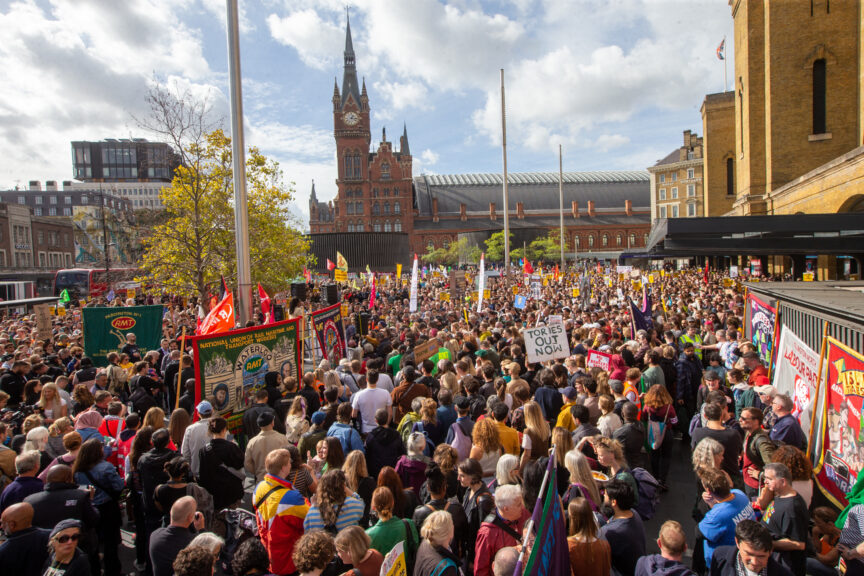
But even so, 1 October marked the beginning of the end of the involvement of both the CWU and the RMT with the campaign.
“The two biggest trade unions involved in the campaign were also giving resources in terms of my time, Dave [Ward], Mick [Lynch] and Eddie [Dempsey, of the RMT],” said Webb. “The truth of it is, after the weighing up of resources… the priority was to look after and defend our paying members.
“This meant our influence and involvement in Enough Is Enough was reduced significantly”.
Webb said that there was “no formal stepping-back”, however. “It was just that the… workload coming from the disputes just became so much.”
Another co-founder said they didn’t think this was the only reason. “[The] CWU got cold feet about wanting to do something that was a new, mass political force,” they suggested.
Others in the coordinating group felt like they’d been ghosted.
“It just petered out,” said the campaign’s north west regional organiser. “People stopped coming [to meetings]. None of the key players were turning up anymore. People stopped answering my calls.”
Ballard told Novara Media that Acorn organisers had the same experience. “In the end… we just stopped hearing from people,” he said. “[The campaign] became… so far down the list of priorities for the other organisations.”
Webb, however, was until March 2026 a director of Enough Is Enough Ltd, retaining control of its data and social media accounts (Webb clarified that this position was only for administrative purposes in the years the followed the campaign). Which begs the question: if the unions were no longer able to lead the campaign, why wasn’t control passed to those who did – with more organisers being made Enough Is Enough directors if necessary?
Webb’s answer was simple: some figures who fulfilled key functions weren’t replaceable.
“There wasn’t a long queue of people going, ‘Oh, we’d like to help out’,” he said. “It’s pretty hard to replace Mick Lynch and Dave Ward, you know. It’s pretty hard to replace people like myself in comms.”
A source from another trade union, who was for a time on the coordinating group, said they believed the unions weren’t actually too concerned about Enough Is Enough going quiet – especially with a view to the political situation after their disputes.
“There was an eye on the election in 2024. If you secured a three-year pay deal, and it was good for your members, you might be quite prepared to wait for a friendlier ear in No. 10,” they said.
Another Enough Is Enough co-founder agreed. “I guess the union line was: what a cool wave of activity that was. We got stuck in. Now it’s all wrapped up,” they said.
But Ballard, for his part, was frustrated, having assumed the campaign wouldn’t end there.
“We were willing to put almost everything we had into it, but that wasn’t the case for everyone else,” he said. “I have absolutely no idea why it [the campaign] wasn’t handed over. It’s a question I’ve asked myself plenty of times.
“I don’t know who was making the decisions, to be honest. There was no central decision maker who could say, ‘Yeah, let’s give this to so and so’… We’d have said, ‘Yeah – give it to us’.”
‘The biggest political fumble of my life.’
Many members of Enough Is Enough’s coordinating group regret what could have been.
“It feels like the biggest political fumble of my life,” said the campaign’s north west regional coordinator. “We could have had a… social movement that was visible in communities and organising at the football and running food banks… I honestly think it could have been the big thing.
“It takes a lot to mobilise people who’d never been involved in politics, and for that thing to just disappear and not do anything is incredibly demoralising and causes a lot of damage.”
For some, the main lesson of Enough Is Enough’s collapse is that the left has a problem when it comes to ownership and control. “The parallels with [what happened to] the new left party [Your Party] are obvious,” said a key stakeholder.
“For it to reach its full potential… it needed to be let off the leash a little bit, to be its own thing,” said Ballard, while another source close to the campaign said it was the “death grip” of a small group of individuals on the coordinating group “that killed it”.
But many of those who are most angry about Enough Is Enough’s collapse don’t necessarily think it was a backwards step for the left.
“After the devastating defeat of Corbynism… that energy was searching for a way to surface again. Politics isn’t like degrading uranium. We might have lost time, but we might have gained some things too,” the stakeholder said.
“The big lesson was that there is real appetite for a left populist programme and people will turn out,” said Ballard. “But you need an organisation to do it.”
This article was amended on 25/08/26 to clarify that Chris Webb spoke to Novara Media in July 2025, and that his position as a director of Enough Is Enough was, in the years that followed the campaign, only for administrative purposes.
Joe Todd is a researcher and writer. He co-hosts the Life of the Party podcast and writes the New Party, Old Problems Substack.